Wednesday Round Up #55

I’m off to a conference, so you’re getting the Wednesday round up a day early. The typical stuff on brain and anthro, plus some happiness, eating and other stuff thrown in. Enjoy!

Top of the List

Mo Costandi, Experience Induces Global Reorganization of Brain Circuitry
Plasticity in action, now showing that small changes can produce bigger changes elsewhere

Hugh Gusterson, Empire of Bases
The global reach of the US military. It’s no longer the military-industry complex, it’s just the military complex. It’s hard to fathom, and all that money that might be spent differently…

Dave Munger, Training in Working Memory Can Improve Preschoolers’ Performance in a Variety of Tasks
The title says it all. Train visual working memory, get benefits elsewhere.

Brian McKenna, How Anthropology Disparages Journalism
A call for anthropology to engage what could be one of its closest allies, as well as to take on what journalism offers for getting our message beyond the Ivory Tower

Gary Sherman and Gerald Clore, Clean and Virtuous: When Physical Purity Becomes Moral Purity
Scientific American: “How “embodied” metaphors, rooted in our physical understanding of abstract concepts, shape our view of the world.”

Brain

Deric Bownds, The Myth of Language Universals
Deric is as intrigued by this new Behavioral and Brain Science target article as I am, The Myth of Language Universals: Language diversity and its importance for cognitive science
Continue reading “Wednesday Round Up #55”

Grand Encephalon

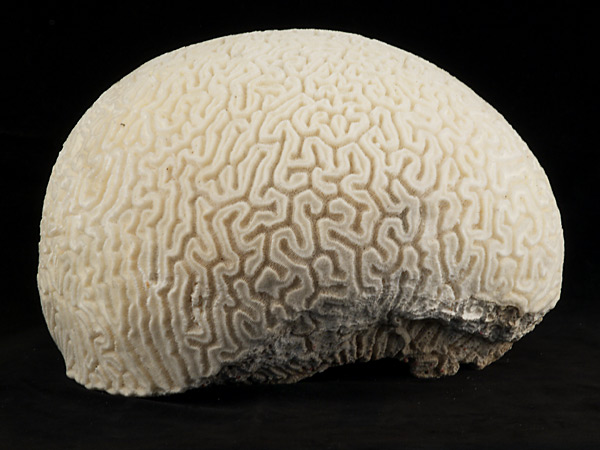
brain-coral-university-of-melbourneThe latest mind/brain Encephalon carnival is out at Ionian Enchantment. Lots of good stuff, so check it out. A couple of favorites include Dr. Shock’s look at online gaming (what a surprise there – and he reminded me that I need to check out Quake Live) and Podblack’s poetry – practive vs. impulse – debate.

ACP Internist is hosting this week’s medical blogging Grand Rounds in a well-done newspaper style format. Looks like there is broad support for health care reform among patients. The rise in number of psychiatrists in the US has gone hand-in-hand with increasing use of drugs and a proliferation of diagnostic categories, all to justify both the work and getting paid for it, argues Phillip Hickey. Neurofeedback is now being used to deal with ADHD, reports SharpBrains. And here’s a great debunking – we don’t actually lose the majority of our heat through our heads.

Thinking to change your brain: Sharon Begley in the WSJ

In January, The Wall Street Journal carried a short excerpt from science writer
Sharon Begley’s excellent, but unfortunately titled book, Train Your Mind, Change Your Brain. The article, How Thinking Can Change the Brain, is excellent, as is the book, which I’d highly recommend, but both engage in a couple of pervasive rhetorics for talking about brain function that I believe make it harder to really theorize about issues like neuroplasticity.

That is, although I like Begley’s work, some of the ways that she writes about the brain puts her readers, if they’re not already neuroscience savvy, two steps backwards before moving toward greater understanding. It’s sad because I think her book is one of the best works for a general readership on recent research, and the brain imaging projects with Tibetan monks which forms the central narrative of the book are fascinating on so many levels. Begley has a brilliant eye for turning research into story-telling and with the meditation research, she’s picked an ideal subject on which to exercise her skills.

If only she would stop carrying on about ‘Mind’ and ‘Brain’ like they were the two primary characters…

Continue reading “Thinking to change your brain: Sharon Begley in the WSJ”

What Is The Value of Neuroscience?

Jonah Lehrer has a great post, The Value of Neuroscience, over at The Frontal Cortex. He writes about struggling with a common question he got during his recent tour for his new book, How We Decide.

The question is, “What practical knowledge have we gained by looking at decision-making in the brain that we didn’t already have, either through introspection or behavioral studies?”

His answer is, “The best answer, I think, is that learning about the brain can help constrain our theories. We haven’t decoded the cortex or solved human nature – we’re not even close – but we can begin to narrow the space of possible theories.”

That is both an elegant and a practical answer – it claims neither too much nor too little for neuroscience, and provides a way to think about neuroscience. Ways of thinking are often much harder to grasp than what to think, where neuroscience churns out an enormous quantity of information but not necessarily an enormous range of hypotheses about people as people.

Lehrer’s answer echoes my own view of evolutionary theory, that its greatest utility is in limiting the range of possibilities when confronting the diversity and commonality of people’s behavior lives today and in the recent past. People are often aghast when I say this – but what about all the predictions, the selective forces, Darwin’s genius? But there is evolution’s strength – certain possibilities are more likely, and others are often not on the table. Combine that with the mechanistic understandings from neurobiology–the outcomes of evolutionary adaptations and present function–and suddenly the range of possibilities is constrained further.

Continue reading “What Is The Value of Neuroscience?”

Grand Stone

stone-mountainThe latest anthropology Four Stone Hearth carnival is out over at the Swedish Osteological Association – kudos on the new site!

They have a very entertaining skeleton dance video to open this edition, worth it just for that. Lots of archaeology this time, which is great to see (and what a suprise from an osteological association…). John Hawks discusses peer review and Micele Lamont’s new book. And since it’s a topic I hope to talk about in the future, check out Culturge’s Homo evolutis, based on the TED talk by Juan Enriquez.

The latest medical Grand Rounds is out at Doc Gurley. Kudos to her for running a live version of the carnival – the Internet sweeps into that venerable medical tradition. You can actually see the video of the live broadcast on her site!

There’s a slideshare on a basic intro to genetics from Medicine and Man. And for the culturally inclined, as well as those with heart disease (refrain from joke…), there is a revelatory piece from Dr. Rich on Where those cardiology guidelines come from.