Our Top Ten, Six Months In

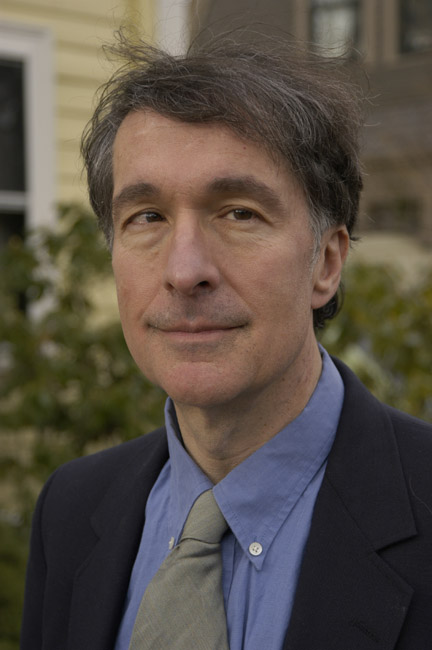
Both of us, Greg (intro here) and Daniel (intro here), have been posting for six months now. So it’s a good time to get a list of our top ten posts out to everyone. Thanks for all your support!

Poverty Poisons the Brain

Brain Doping Poll Results In

Cultural Aspects of Post-Traumatic Stress Disorder: Thinking on Meaning and Risk

Synesthesia & Metaphor — I’m Not Feeling It

Anthropology and Neuroscience Podcasts

Dopamine and Addiction — Part One

Steven Pinker and the Moral Instinct

The Legend of the Crystal Skull

How Well Do We Know Our Brains?

Bad Brain Science: Boobs Caused Subprime Crisis

For authorship, it’s a great mix: Greg wrote four of those posts, Daniel five, and Erin Finley, our newest blogger, also contributed one. We all look forward to providing more neuroanthropology over the next six months!

Science and the City Podcasts

Thanks to Laura over at Psique for pointing out a great source of podcasts, Science and the City, produced by the New York Academy of Sciences.

The podcasts cover the gamut, for example from scotch to champagne, and often have accompanying multimedia (a video clip, parts of the slide show, sometimes a wrap-up article). They are based on “interviews, conversations, and lectures by noted scientists and authors,” truly a diverse and high-quality group with a frequent focus on interdisciplinary topics.

Some relevant neuroanth ones?

Distortions of Memory, based on a public discussion between Deirdre Bair, Bruno Clement, Maryse Conde, William Hirst, and Edward Nersessian. They bring views from linguistics, literature, neuroscience, philosophy, and psychoanalysis to bear on our understanding of memory

Biology of Freedom: “Psychoanalysts and neuroscientists discuss the effect of the environment on brain activity and micro-anatomy” featuring Edward Nersessian, Pierre Magistretti, Francois Ansermet, Cristina Alberini, Daniel Schechter, and Donald Pfaff

Perception through the Five Senses: “A perfumer, a chef, a neurologist, a sound engineer, and a painter discuss how we take in the world” Just wondering, is the neurologist actually a phrenologist? Because he appears to be representing touch…

And for fun, learn about how to forage in Central Park.

Plus lots others ably summarized at Psique—so check them out!

This post also gives me the chance to point that Ginger is moving her Brain Science Podcast. Here’s the new site: http://docartemis.com/brainsciencepodcast/
Ginger’s most recent episode covered Michael Arbib on Mirror Neurons, definitely a relevant topic for us.

Also, the great series on applied anthropology continues, this time on the political construction of global infectious disease.

If you’re looking for more anthropology and neuroscience podcasts, check out my original comprehensive list—definitely one of our most popular posts.

Evolution Round Up

On the Basics

John Wilkins, What Is A Species?
The history and new emerging consensus on an old evolutionary consensus: on the origin of species

Todd Oakley, Coming to Grips with Common Descent
The real biggie in Darwin’s theory—common descent and the importance of phylogeny to understanding life

Robin Marantz Henig, Resolving Evolution’s Greatest Paradox
Marc Kirschner, systems biology, and how to get complexity from small, gradual changes. Also, the constraints on phenotypic variation enable evolutionary change. Includes a video.

PZ Myers, Historical Contingency in the Evolution of E. coli
Complex novelties can evolve, but depend not just on hopeful monsters but also the genetic background of the population

Andrew Brown, The Kindness of Strangers
Excellent biography of Robert Trivers, wunderkind of evolutionary theory

Neil Shubin, Your Inner Fish
Podcast with the author, curator at Chicago’s Field Museum of Natural History, of the same-titled book

Mo at Neurophilosophy, Synapse Proteomics and Brain Evolution
Synapses and their role in the history of life

On Humans and Other Primates

Randolph Nesse & Stephen Stearns, The Great Opportunity: Evolutionary Applications to Medicine and Health
Open-access article by two of the biggest names in evolutionary medicine in inaugural issue of the peer-reviewed Evolutionary Applications

Continue reading “Evolution Round Up”

Addiction Round Up

The posts go from the biological all the way through policy, so pick the spot that suits you best.

PZ Myers, Evolution of Alcohol Synthesis
Yeast fermentation and learning to drink your own poison

NewsWise, New Research Tracks Effects of Addictive Drugs on Brain
Summary of the Science article “Design Logic of a Cannabinoid Receptor Signaling Network that Triggers Neurite Outgrowth”—how signaling driven by drugs can lead to changes in cell connections and cytoarchitecture (surprises? roles for breast cancer proteins and “distributed decision-making” in neurite outgrowth)

Alok Jha, Scans Pinpoint Alcohol’s Effects on the Human Brain
Dampening fear and avoidance, and upping reward

BlogMeister, Genes and Environment Shape Women’s Path to Alcoholism
Study of the transitions towards alcoholism; genetics all the way through, different environmental factors at different stages (see the original study here)

The Neurocritic, Wake Up and Smell the Coffee?
Now this is epigenetics! Smelling coffee gets the genes going

Continue reading “Addiction Round Up”

The Everyday Brain and Our Everyday Life

Earlier this week I wrote about Jean-Pierre Changeux and Gerald Edelman, drawing on the New York Review of Books essay by Israel Rosenfield and Edward Ziff, How The Mind Works: Revelations. As I blogged then, “In the end I was still left with a ‘So what?’ Their hints at subjective psychology, the acting brain, and relational representation remained the side dishes, rather than the main course. I’ll deal with that main course later this week.” It’s Saturday, so I better keep to that promise.

Let me begin by just giving you the essay excerpts.

In general, every recollection refers not only to the remembered event or person or object but to the person who is remembering. The very essence of memory is subjective, not mechanical, reproduction; and essential to that subjective psychology is that every remembered image of a person, place, idea or object invariably contains, whether explicitly or implicitly, a basic reference to the person who is remembering.

The “rigid divide,” [Giacomo] Rizzolatti and Corrado Sinigaglia write in their new book, Mirrors in the Brain, “between perceptive, motor, and cognitive processes, is to a great extent artificial; not only does perception appear to be embedded in the dynamics of action, becoming much more composite than used to be thought in the past, but the acting brain is also and above all a brain that understands.”

For Edelman, then, memory is not a “small scale model of external reality,” but a dynamic process that enables us to repeat a mental or physical act: the key conclusion is that whatever its form, memory itself is a [property of a system]. It cannot be equated exclusively with circuitry, with synaptic changes, with biochemistry, with value constraints, or with behavioral dynamics. Instead, it is the dynamic result of the interactions of all these factors acting together.

Together, subjective psychology, an acting and embedded brain, and representation and action that are dynamic and relational present us with a new starting point when we talk about the intersections of neuroscience and psychology with anthropology. Starting with their conclusions, making it the beginning of something better, that would have been a really exciting essay for me to read.

As I wrote a couple days ago, Howard Gardner does get us closer to this new individuality. “Gardner brings a refreshingly unique take, neither the individual of science, bounded and rational, or the individual of philosophy and art, lone thinker and creative genius. Nervous system, individual experience, and subjective interpretation move us into a radically different domain—an individuality that lies firmly in the continua Gardner describes.”

Continue reading “The Everyday Brain and Our Everyday Life”

Brain vs. Philosophy? Howard Gardner Gets Us Across!

Jean-Pierre Changeux and Paul Ricoeur, both French scholars, wrote a book together entitled What Makes Us Think?: A Neuroscientist and a Philosopher Argue about Ethics, Human Nature, and the Brain. It consists of a series of discussions and debates the two held, an oral approach to knowledge given to us as written and translated word.

Together these two ably illustrate the biology/culture and science/humanities divide we have discussed recently. Changeux sees brains as more than just the material substance of knowledge and self; neurons serve as author as well. In contrast, Ricoeur brings phenomenology, interpretation, and reflexivity to the table, as well as a keen appreciation of the limits of human knowledge (and thus materialist claims, like those made by Changeux). Yet the first chapter of their book is entitled A Necessary Encounter, and then covers topics such as Body and Mind, The Neuronal Model and The Test of Experience, and Desire and Norms.

It was a true pleasure to encounter a lengthy and excellent review of this book by Howard Gardner, the psychologist and educator whose best known work is Frames of Mind: The Theory of Multiple Intelligences (Gardner even gives us a 25th year retrospective on the work). Entitled Mind and Brain: Only the Right Connections, Gardner sets up the theoretical debate at stake, provides us background on both scholars, and then perceptively takes us through their entire debate.

Here’s one excerpt to give you a sense of how Gardner sees Changeux, riding triumphant science, and Ricoeur, on the defensive, debating the brain:

When Changeux explains that the nervous system is active as well as reactive, Ricouer cautions that one should first speak of mental activities and not of the brain: “The discourse of the mental includes the neuronal and not the other way around.” Changeux responds: “What we wish to do is to link up the two discourses (material and mental) with each other” (p. 44). Here as elsewhere, Changeux seeks to effect connections, while Ricoeur insists on the ontological separation of the two realms.

Continue reading “Brain vs. Philosophy? Howard Gardner Gets Us Across!”