Monday Morning Artist: Sam Mangwana

The second in this occasional series, the featured artist today is the Congolese musician Sam Mangwana. He is one of the leaders of the Soukous genre, derived from the French “secouer” (to shake) and once known as the African rumba. That means it’s fun! I also find it fascinating how it mixes African and Latin rhythms and sound together.

This YouTube clip is just the music really, not much video, but it’s a great tune with Franco and TPOK Jazz.

If you like that, the best place I’ve found to listen to some of Sam Magwana’s music is over at Rhapsody.

Calabash Music, with the tag “Tune Your World,” also provides a list of some of Mangwana’s music, including short clips. Calabash gives a bio as well:

In his early years, Mangwana formally studied music as a member of the Salvation Army Chorus. While in his mid-teens, Mangwana began his professional career. At age 17, he became the lead singer of the group ‘Tabu Ley Rocherau’s Africa Fiesta’, in addition to singing with the band for over 10 years, Mangwana appeared with other popular Soukous bands. In 1976, he formed his own band called the ‘African All Stars’, in 86′ their single “Maria Tebba,” became a huge soukous hit. He sings in seven different languages, both African and European and has toured extensively inside and outside Africa, justifying his tag as the ‘International Sam Mangwana’ and the ‘Pigeon Voyager’. Mangwana serves up a blend of Cuban and Congolese sounds, seamlessly fusing them together. Mangwana’s style is referred to as the Congolese Rumba because he deftly takes Cuban styles and puts any number of Congolese (or Mangwanese) twists to it.

For more, you can look at Mangwana’s albums on Amazon. And here’s the unofficial Sam Mangwana website.

The Beautiful Brain

beautiful-mind-exhibit
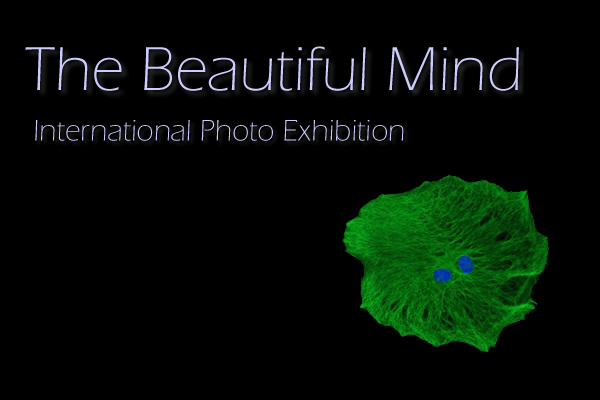
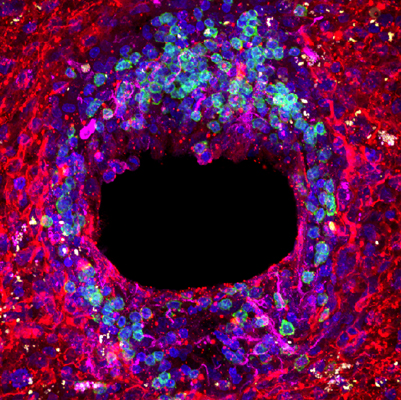
The Beautiful Mind is a spectacular online photo exhibition that features images of the brain taken by neuroscientists themselves. The enception.org site features a Flash display of the exhibit, with a useful roll-over feature where you can see the person who took the shot, where it was taken, and what anatomical feature is being displayed.

The online exhibit will become a traveling exhibition beginning in the new year, starting in London and then moving around Europe. The exhibition is being organized by CORTEX: Cooperation in Research and Training for European Excellence in the Neurosciences.

The hattip goes to Mind Hacks, who just featured the exhibit info in the post The Fire Within. Almost all The Beautiful Mind images use flourescence techniques, which we have shown before in Brainbows and More on Brainbow.

Below I feature some of the images. For more go for a visit to The Beautiful Mind.

Here are the photographers and their images:
-Carlos Barcia, Blood vessel, tumor, and infiltration of T cells
-Veronica Kurscha, Tranverse section of the spinal cord
-Matei Bolbora, Neural precursor cells from the embryonic striatum
-Jean-Marc Fritschy, Purkinje cell in the cerebellum

carlos-barcia-beautiful-mind

Continue reading “The Beautiful Brain”

101 Fascinating Brain Blogs

The Online Education Database published their list of 101 Fascinating Brain Blogs this week. There are psychology, psychiatry, technology, neuroscience, ethics and law, multidisciplinary, mental disorders and abnormal psychology, mental health and various brain blog categories. We land in the multidisciplinary category, along with fellow anthro blog Somatosphere.

If you see some that are missing, please feel free to leave a comment below. I didn’t see one on addiction, and recently I have been checking out Addiction Inbox.

One blog on the list that I didn’t know about is the Neuro-Journalism Mill, separating neuroscience stories in the press into wheat and chaff. No suprise that the chaff list is much longer…

I also discovered Half-Full, which covers “science for raising happy kids.” Television, family conflict, being connected – all things that happen in my house!

The hat-tip goes to Laura’s Psychology Blog, and it’s great to see that she too makes the list of 101 fascinating brain blogs.

The Year in Ideas

The New York Times has put up their 8th Annual Year in Ideas as part of their Sunday magazine. You can browse A to Z (well, W) and find short pieces on some of the outstanding developments across a breadth of arenas and disciplines. Definitely one of my favorite magazine issues of the year.

Here is one I found on Women in Power Are Set Up To Fail, or the “glass cliff” based on experimental research by Michelle Ryan and Alex Haslam:

83 businesspeople — roughly half of them women — [had] described to them two companies, one that was steadily improving in profitability and an-other that was steadily declining. The subjects were told to pick a new financial director for the firm and were presented with three candidates: a man and a woman who were identical in experience and a lesser-qualified male. The subjects were slightly more likely to pick a man to lead the successful firm but were far more likely to pick the woman to lead the failing one. Two other experiments with similar designs yielded the same result: When presented with men and women to lead a company that’s going down the tubes, people pick the woman.

The same issue also features a fun interview with Jonah Lehrer, who runs The Frontal Cortex blog and has a forthcoming book on How We Decide. Gotta love this quote, “I wrote the book because I would spend 10 minutes in the cereal aisle choosing between Honey Nut Cheerios and Apple Cinnamon Cheerios.”

Neuroanthropology Turns One!

November 2007. Washington DC. The annual American Anthropology Association meetings. Greg Downey and Daniel Lende sit down to talk about creating the Neuroanthropology blog. A few weeks later, on December 11th 2007 Greg sticks up the first posts.

They were The Goals of Neuroanthropology, an initial attempt at describing The Term ‘Neuroanthropology’, and the Prehistory of ‘Neuroanthropology’: Charles Laughlin. (Yes, it’s safe to say that’s the only time Greg has done three posts in one day!)

Daniel follows suit on December 17th, sticking up a post on Keeping Brains Agile. The blogging game is afoot.

Greg provides an introduction, Daniel does his own intro. And then things really start flowing. In the month of December we got 1267 on-site visits!

It did seem like a lot to us then! How things have grown. Last month in November we had a total of 22,744 onsite visits, plus another 16,000 or so reads through subscription feeds.

In the last year, we have delivered 580 total posts. Daniel (alias dlende) has written 389 of those posts, plus posted another 9 with students. Greg (gregdowney) has given us 137 posts.

Paul Mason has delivered 40 posts, including two that Greg got out for him while Paul was doing his field research. Erin Finley gave us two posts, and Marcela, a student of Greg’s, also published two. Agustin Fuentes provided one post early on.

Out of those our Top Ten goes:

(1) Cultural Aspects of Post-Traumatic Stress Disorder: Thinking on Meaning and Risk
(2) Synesthesia & Metaphor – I’m Not Feeling It
(3) Poverty Poisons the Brain
(4) Girls Gone Guilty: Evolutionary Psych on Sex #2
(5) About Neuroanthropology (doesn’t really count! so I’m doing the Spinal Tap 11 – our blog is just one louder)
(6) Identical Twins Not… Err… Identical?
(7) Grand Theft Auto: Liberty City
(8) Brain vs. Philosophy? Howard Gardner Gets Us Across!
(9) Brain Doping Poll Results In
(10) Understanding Brain Imaging
(11) Steven Pinker and the Moral Instinct

For our top referrers and search terms, you guessed it, after the fold. Continue reading “Neuroanthropology Turns One!”

60th Anniversary of the Universal Declaration of Human Rights

December 10th marks the 60th anniversay of the Universal Declaration of Human Rights. The UN is celebrating, with an entire website dedicated to the anniversary and the declaration itself.

My Notre Dame colleague Deb Rotman sent me the “Simplified Version of the Universal Declaration of Human Rights.” So here it is:

Summary of Preamble
The General Assembly recognizes that the inherent dignity and the equal and inalienable rights of all members of the human family is the foundation of freedom, justice and peace in the world, human rights should be protected by the rule of law, friendly relations between nations must be fostered, the peoples of the UN have affirmed their faith in human rights, the dignity and the worth of the human person, the equal rights of men and women and are determined to promote social progress, better standards of life and larger freedom and have promised to promote human rights and a common understanding of these rights.

A summary of the Universal Declaration of Human Rights

1. Everyone is free and we should all be treated in the same way.
2. Everyone is equal despite differences in skin colour, sex, religion, language for example.
3. Everyone has the right to life and to live in freedom and safety.
4. No one has the right to treat you as a slave nor should you make anyone your slave.
5. No one has the right to hurt you or to torture you.
6. Everyone has the right to be treated equally by the law.
7. The law is the same for everyone, it should be applied in the same way to all.
8. Everyone has the right to ask for legal help when their rights are not respected.
9. No one has the right to imprison you unjustly or expel you from your own country.
10. Everyone has the right to a fair and public trial.
11. Everyone should be considered innocent until guilt is proved.
12. Every one has the right to ask for help if someone tries to harm you, but no-one can enter your home, open your letters or bother you or your family without a good reason.
13. Everyone has the right to travel as they wish.
14. Everyone has the right to go to another country and ask for protection if they are being persecuted or are in danger of being persecuted.
15. Everyone has the right to belong to a country. No one has the right to prevent you from belonging to another country if you wish to.
16. Everyone has the right to marry and have a family.
17. Everyone has the right to own property and possessions.
18. Everyone has the right to practise and observe all aspects of their own religion and change their religion if they want to.
19. Everyone has the right to say what they think and to give and receive information.
20. Everyone has the right to take part in meetings and to join associations in a peaceful way.
21. Everyone has the right to help choose and take part in the government of their country.
22. Everyone has the right to social security and to opportunities to develop their skills.
23. Everyone has the right to work for a fair wage in a safe environment and to join a trade union.
24. Everyone has the right to rest and leisure.
25. Everyone has the right to an adequate standard of living and medical help if they are ill.
26. Everyone has the right to go to school.
27. Everyone has the right to share in their community’s cultural life.
28. Everyone must respect the ‘social order’ that is necessary for all these rights to be available.
29. Everyone must respect the rights of others, the community and public property.
30. No one has the right to take away any of the rights in this declaration.

You can more about the universal declaration here, at the Office of the High Commissioner for Human Rights.