Vidéothèque: Videos on Cross-Cultural Health, Sickness and Healing

The Vidéothèque : Santé, Maladie, Malheur is an absolutely incredible video archive on medical anthropology, with a particular focus on sub-Saharan Africa. I started exploring it when it was mentioned as part of the trance video links, but it’s so rich it deserves its own post – well over 100 video clips that are freely available in Real Media packaging.

Alain Epelboin
Alain Epelboin

The collection has been put together by Alain Epelboin, who has also contributed the lion’s share of footage. Other film makers include Beatriz Soengas, Sylvie Heslot, Susanne Fürniss and Claire Lussiaa-Berdou. The collection is hosted through Réseau Académique Parisien.

Alain Epelboin is a doctor and anthropologist who runs the Labotoire Eco-anthropologie et Ethnobiologie, which is part of the Centre National de la Recherche Scientifique. You can see a video of Alain discussing his work, as well as this informative article – both in French, as are most of the videos.

Some of the videos you can see include Ebola in Congo, this narrated documentary on the Aka of the Central African Republic and the Congo, Traditional Medicine, Culture and AIDS, and Mort et naissance de Masiki.

And here’s the entire list of the Santé, Maladie, Malheur videos.

The New Performance Enhancing Drugs

Enhanced Brain
By Andrew Hessert, Andrew Medvecz, Jimmy Miller, Jacquelyn Richard

Barry Bonds elevated his game to the next level with “the clear” and “the cream”, shattering legendary records in the process. Are scientists, students, and other academics about to do the same?

While stars such as Barry Bonds and Jason Giambi continue to defend themselves against their alleged use of performance-enhancing drugs, a new debate over the use of a different kind of performance-enhancing drug has begun to rage in the scientific world.
Barry Bonds Pumped Up
Cognitive enhancers like Adderall and Ritalin have commonly been used as a treatment for behavioral disorders such as Attention Deficit/Hyperactivity Disorder. However, these drugs are now becoming popular “performance enhancing” substances for healthy individuals trying to gain a competitive edge by boosting their overall cognitive function.

Henry Greely, a Stanford Law Professor, advocates for unrestricted availability of these drugs, claiming the enhancers will level the “cognitive playing field” and spark a new era of increased innovation. But Greely and other advocates fail to recognize the severe personal and societal consequences that such availability would generate, looking instead to a pharmaceutical solution that would, in the end, cause more problems than it would solve.

How They Work

Ritalin and Adderall have been on the market since the 1960s to treat conditions like ADD and ADHD (Center for Substance Abuse Research, 2005). While the specific mechanisms of these disorders have yet to be fully elucidated, cognitive enhancers have been successful in controlling or mitigating symptoms in patients. Ritalin (methylphenidate) and Adderall (dextroamphetamine) both inhibit dopamine reuptake, allowing dopamine signals to remain active for longer periods of time (Jones, Joseph, Barak, Caron, & Wightman, 1999). Provigil (modafinil), an alternative to the potentially addictive dopaminergic drugs, operates in similar fashion, but instead blocks reuptake of the neurotransmitter norepinephrine.

Continue reading “The New Performance Enhancing Drugs”

Tobacco Worse Than Cocaine?

Gas Deal
By Mariana Cuervo, Elizabeth Montana, Brian Smith, and Sadie Pitzenberger

Is your local gas station attendant a drug dealer? Most people would say no, yet he readily deals all day long with customers looking for their next nicotine fix. Nicotine, the addictive substance in tobacco, keeps its users hooked.

Even though most people do not consider tobacco to be a drug, this post will show that it is exactly that. Tobacco delivers similar neurobiological effects as illegal substances like cocaine, methamphetamine and marijuana, all more commonly associated with the word “drug.” With tobacco, however, advertising and the law contribute to the common perception that tobacco is not a drug.

Tobacco Products

Just like on the street corner, where you might be able to buy crack, marijuana or meth, a gas station offers different types of drugs. Tobacco itself comes in many forms: dip, snuff, cigars and, of course cigarettes.

Chewing tobacco or “dip” is a smokeless form of tobacco, which when packed into the lip allows nicotine to flow into the bloodstream via the gum line. Snuff, a finer form of tobacco, is snorted while cigarettes are smoked. Both provide an alternative way to get a nicotine high.

The ways in which these tobacco products are consumed mirror the techniques of cocaine consumption – coca leaves are chewed, cocaine is snorted, and crack is smoked. So how is tobacco different?
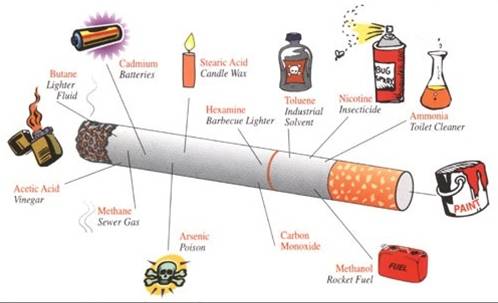
Cigarette Poisons
And just like marijuana tobacco is grown in the ground, picked and dried, and then rolled into cigars and cigarettes. Tobacco has nicotine while marijuana has tetrahydrocannabinol (THC). Both are responsible for getting the user high.

Continue reading “Tobacco Worse Than Cocaine?”

Ron Barrett and the Contagion of Swine Flu

ron-barrett
Ron Barrett, a medical anthropologist joining Macalester College, recently gave this interview Fears over Flu Can Be Contagious on NPR’s All Things Considered.

Ron discussed how his research on a breakout of plague in the northern Indian city of Surat provides insight into today’s reactions to swine flu. His basic point is that with infectious diseases, rumors and fears highlight existing tensions in a community, so stigma and panic can come to play a greater role in people’s reactions than the actual impact of the disease. Case in point – 78% of the medical professionals fled Surat, much more than the estimated third of the population that left.

Ron advocates the importance of transparency and providing reliable information. Otherwise, rumors can become more infectious than the disease itself. Twitter, for example, drove wild speculation about swine flu. So for reliable info, think Obama and his clear recommendations about what to do (wash your hands, cover your mouth when coughing), and not Joe Biden broadcasting fear on The Today Show.

Continue reading “Ron Barrett and the Contagion of Swine Flu”

Lende wins 2009 Ganey award

2009 Ganey F. Ganey award winner, Daniel Lende
Daniel didn’t even mention this to me, but looking for a photo of him for a poster, I came across this press release: our leading contributor also managed to pick up the University of Notre Dame’s 2009 Rodney F. Ganey, Ph.D., Faculty Community-Based Research Award for his many contributions to community-based research at Notre Dame.

Although he’s done a number of community-based research projects and supported student research (some of which we’ve read about on this site), the press release of the award also singles out his innovative design of the course, ‘Researching Disease: Methods in Medical Anthropology.’ In this class, Daniel has teamed up with local organizations like Imani Unidad, African American Women in Touch, Notre Dame Office of Alcohol and Drug Education, and a support group for veterans suffering with Post Traumatic Stress Disorder (PTSD) in order to place students where they can do research of real consequence to the local community. As the press release describes:

The research has since enabled community organizations to improve the conditions in hospital waiting rooms, educate the public about PTSD and provide better services to women living with HIV/AIDS. Findings have been published electronically on Neuroanthropology.net, and one project was turned into a guide book, “Underneath It All: Humor in Breast Cancer,” which has been used by McKinney-Arnold and Memorial Hospital in South Bend.

If you want to know more, go to the Notre Dame Anthropology news page to check out the video link, or see some of the reports Daniel has posted from the research on Neuroanthropology.net, including a number of pieces by the students themselves.

When Pink Ribbons Are No Comfort: On Humor and Breast Cancer
More Than A Waiting Room
Forever at War: Veterans’ Everyday Battles with Post-traumatic Stress Disorder
Just a Place to Talk: Women and HIV/AIDS

The Insidious, Elusive Becoming: Addiction in Four Steps

bowline_in_four_steps

Trying to describe the process of becoming an alcoholic is like trying to describe air. It’s too big and mysterious and pervasive to be defined… [T]here is no simple reason it happens, no single moment, no physiological event that pushes a heavy drinker across a concrete line into alcoholism. It’s a slow, gradual, insidious, elusive becoming.

-Caroline Knapp

Caroline Knapp wrote those lines near the beginning of her powerful memoir Drinking: A Love Story. Every year I use this book in my class on addiction. Students get drawn into Knapp’s clear and close account of how she began to drink so much, what it is like to be an alcoholic, and how she managed to get to recovery. Every year the book challenges my own thinking as well.

I used that last line—alcoholism as a slow, gradual, insidious, elusive becoming—to end my earlier post on Subjectivity and Addiction: Moving Beyond Just the Disease Model. There I argued that our two views of addiction, a popular one of getting hooked on things and a serious one about tolerance and destructive use, are crucial to understanding what addiction is.

For each category my class stuck up exemplars on the blackboard, from Facebook to hard-core drugs. Then I drew a between the two categories, using a thick two-headed arrow to indicate that the subjective and biological views interact. Both sides matter.

But I’ve realized that is not enough. That double-sided arrow remains woefully inadequate, a place marker that can end being two-faced, saying nothing of consequence, or double-edged, used simply to cut into the other side. That one symbol tells us little about the interactions themselves, about how people and disease mesh. It lends no insight into what Knapp shows us with her book—that addiction is an elusive and terrible becoming.

So how do you become an alcoholic or addict? How do you go from something fun to something all-encompassing? This question matters deeply. One fact, often overlooked in all the moral angst about addiction, is that most people who try alcohol or drugs do not end up addicted to them. They remain on the popular side. But some cross over. In the same passage as the opening quote, Knapp describes the end point: “Alcohol is everywhere in your life, omnipresent, and you’re both aware and unaware of it almost all the time; all you know is you’d die without it, and there is no simple reason why this happens… (8)”

Continue reading “The Insidious, Elusive Becoming: Addiction in Four Steps”