Slideshow on ‘Brain Rules’

Ian Boyle, a friend of mine here in Australia, just turned me onto SlideShare, a website where you can upload and share PowerPoint slide shows. I see myself losing more than a couple of hours into this as the downloading take some time, but there are some great neuroanthropology-related resources.

One of the slideshows that I came across immediately that may be relevant is one based on John Medina’s book, Brain Rules: The slideshow is titled, ‘Brain Rules for Presenters,’ and it was put together by Garr of Presentation Zen.

Darman’s eyes

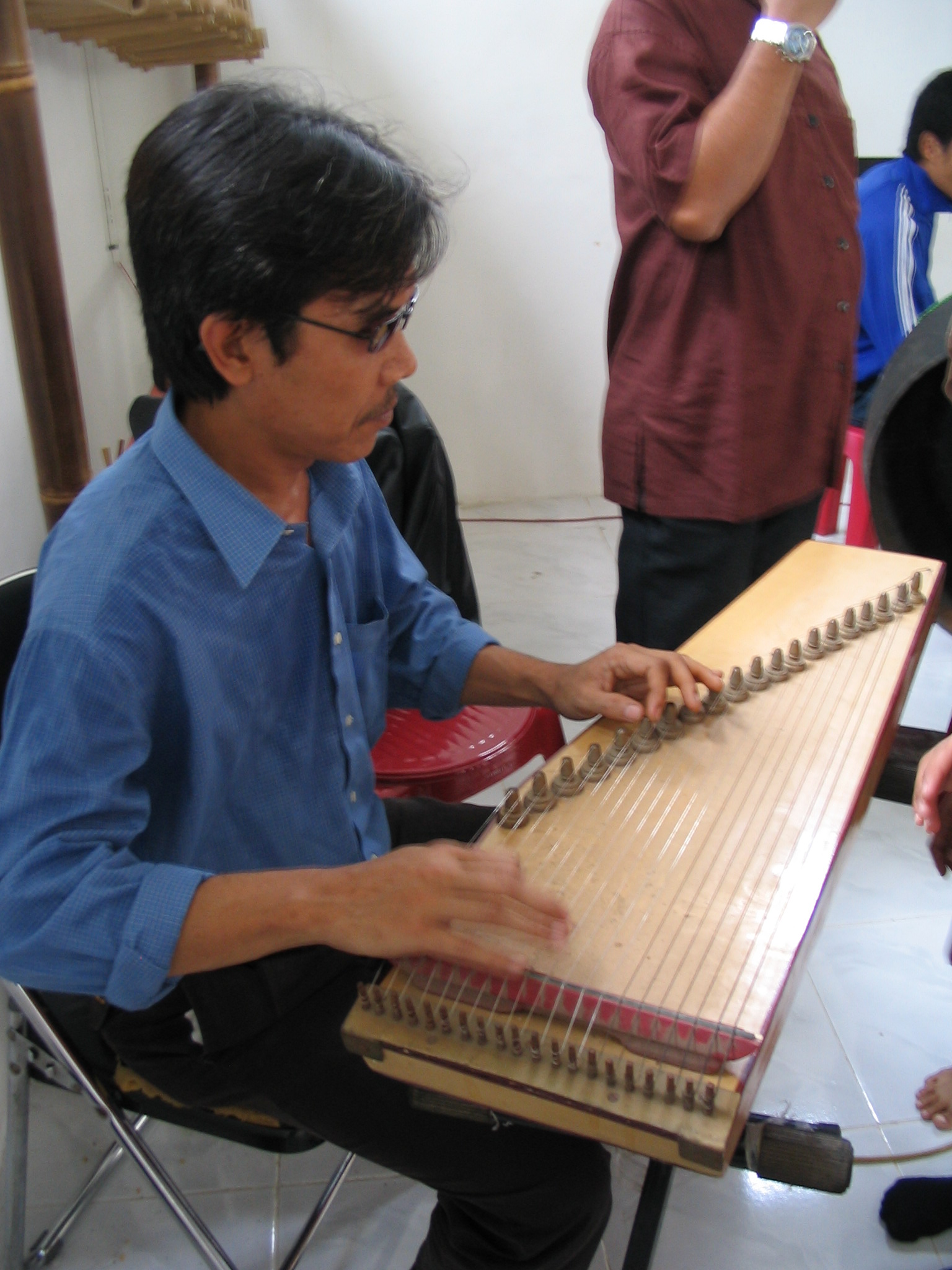
This is Pak Darman:Pak DarmanPak Darman


Although pictured playing the Kecapi (a traditional Sundanese string instrument), Pak Darman can also play the suling (a type of bamboo flute) and the tarompet (a double reed woodwind instrument). At home he works as a masseur but a large part of his income (which is not that large) comes from being hired for local performances. A regular gig for Pak Darman is accompanying Pencak Silat performances with the Tarompet.

In my last blog, I mentioned that Sundanese Pencak Silat musicians probably spend more time closely watching the movement of a performance than the audience or even the movement artists themselves. This puts Pak Darman in an interesting position. He can’t see the performances. Pak Darman is blind.

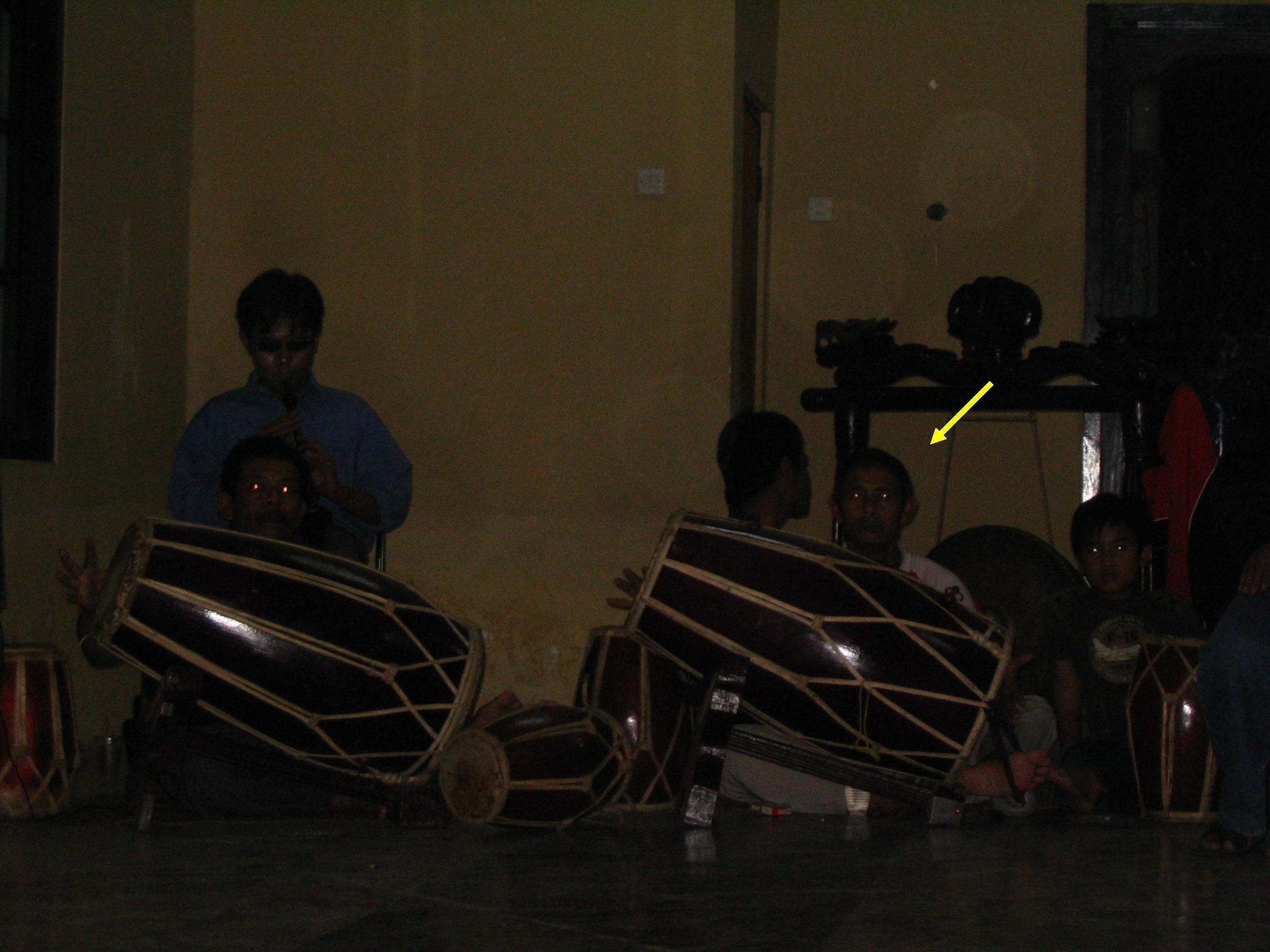
There is no question though that Pak Darman is a skilled Tarompet player and a respected Pencak Silat accompanist. During Pencak Silat Performances, Pak Darman has to respond immediately to changes in rhythm, speed and excitement. He has to match the intensity of a performance with his choice of melody, the loudness of his playing and the roughness of its delivery. In fact, his skill and knowledge of his craft is so deep that simply by listening to the improvisations played on the Kendang Anak, Pak Darman can quite often tell you who is performing Pencak Silat movements.

Continue reading “Darman’s eyes”

Oseng’s brain

I want to know what is going on inside this guy’s brain.
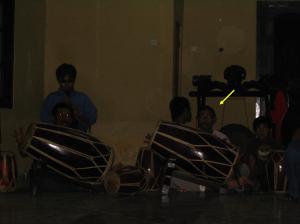
I am sure that we have all wanted to sneak peak into the brain of someone we know; a lover, a parent, or a colleague. In my case, I want to study the brain of my Kendang Pencak teacher, Pak Oseng. He has a highly trained skill that demands attention, musical ability and well-developed motion perception. The beauty of his skill to researchers is that it is both culturally unique and experimentally testable. His skill can inform us about mirror neurons, action and perception as well as enculturation, skill acquisition and the neuro-cultural nexus. For me, it could be a key to understanding one aspect of the relationship between music and movement in the human brain.

Oseng plays drums (Kendang Pencak) to accompany Sundanese martial arts (Pencak Silat) and he is one of the best around. He matches the moves of performing martial artists with corresponding rhythm, dynamics and intensity. His mimetic skill at bringing a musical component to punches, kicks, grapples and holds while sustaining an entertaining rhythm would be beyond the skill of most percussionists, but to Pak Oseng it has become second nature. He can sustain performances from 5 minutes long to a couple of hours without breaking a sweat (and that says a lot for someone who lives in the tropical climate of Indonesia). He can even do it while chain-smoking!

There are two sets of drums that are used to accompany Sundanese Pencak Silat performances. The Kendang Ibu (mother drum) sustains a steady tempo while the Kendang Anak (child drum) improvises freely in fitting with the moves of the martial artists performing. This free improvisation requires the close attention of the drummer to pre-empt moves such as punches that require to be accompanied by a loud hit of the drum. But it’s not always a 1:1 relationship between the sound and the movement. Drummers like Pak Oseng have to know how to build tension and how to read the body of the performer so that he can successfully accompany powerful moves while adding beauty to the flower of the movement (known as bunga).

Continue reading “Oseng’s brain”

Chicks dig jerks?: Evolutionary psych on sex #1

In our continuing exploration of facile examples of ‘evolutionary’ explanations for human behavior (usually described instead as ‘human nature’), I have another couple of exhibits: Do Jerks Get Laid More?, a great attack on recent research by Jill Filopovic at Feministe (h/t: Alternet); and Science Daily‘s story, Women Have Not Adapted To Casual Sex, Research Shows (which I’ll discuss in the next posts). Daniel already discussed some of the recent research on homosexuality in The Gay Brain: On Love and Science, but this piece, the first of two, is dedicated to recent ‘evolutionary’ work on male-female relations, especially arguments about what is ‘natural’ in sexuality including that all-important question, ‘What do women want?’

Some of the problems that beset these articles are pretty general objections a person could have to evolutionary psychology, so I feel like I want to go over them a little bit (but I’ll try to keep it short).

Why women like bad boys: ev psych explains

Jill Filopovic discusses a story, Do Jerks Get Laid More? Good news for psycho-narcissists, by Jessica Wakeman, which is commentary on a story in New Scientist, Bad guys really do get the most girls (a similar piece also appeared on ABC News). In other words, this story has been ricocheting around the Internets for a while, getting reposted and commented upon all over the place (such as here, here, here and, my favourite, here, where democracy confirms ev psych stereotypes). With all sorts of people having things to say, some share a bit too much about their own personal lives and some involve cueing up familiar cliches (‘nice guys finish last,’ for example, is a favourite).

Continue reading “Chicks dig jerks?: Evolutionary psych on sex #1”