Created by RPM at EvolgenDuring our panel at the American Anthropology Association last year, Prof. Naomi Quinn warned that ‘a flowchart is not a theory.’ She stressed the limits to the explanatory power of a simple diagram; her skepticism, of course, is entirely warranted.
But since I was one of the prime offenders with the explanatory flowchart, and I seem to be using them more and more, I wanted to offer a stalwart defense of the use of flowcharts and diagramming in neuroanthropology, especially as both contribute to the practice of partial explanation. So, to pick up a theme from a number of my posts, ‘yes-you’re-right-but-I-still-disagree,’ here’s why I find flowcharts particularly useful and think anthropologists should be doing a lot more diagramming to highlight complex patterns of causation, situating more broadly the parts of complex systems that they are exploring.
But before I go any further, I need to direct all our readers to the recent announcement of the first Neuroanthropology conference which Daniel posted. Although I want to post, I feel like I also want to keep drawing attention to this announcement. But on with it…
As with all of her comments, I felt that Prof. Quinn cut to the quick, highlighting an issue in a cautionary fashion rather than rejecting specific arguments our panelists were making (at least I don’t think she was just calling me out…). In the case of flowcharts, Prof. Quinn suggested that diagramming relationships was a preliminary step, not a final goal – at least that’s one of the ways that I took her comments – and I agree.
Cartoon by Hugh MacLeod at gapingvoid.comWe’ll be hosting Four Stone Hearth, the itinerant carnival of anthropology, on 15 July 2009.
So please send us links to your recent postings on anthropology of all sorts. If you can submit them to me by the 12th or 13th, that’d be brilliant; you can reach me at greg{dot}downey{at}mq{dot]edu{dot}au. If you’ve read something totally boss on someone else’s anthropology blog, please don’t hesitate to send along the link, and we’ll try to direct more readers to the piece.
Four Stone Hearth brings together the four subfields of anthropology: archaeological, linguistic, biological and socio-cultural. It’s a veritable anthro-polooza of anthro-blogilization, so make sure you’re part of it!
And check back after the 15th to see who showed up, and whether any of our guests drank too much and went crowd surfing or hooked up with someone inappropriate.
Credits: If you like this cartoon, visit Hugh MacLeod at Gapingvoid.com for many more of his back-of-a-business-card sketches.
Neural plasticity, artificial intelligence, vision, theory of consciousness, the internet, and cross-cultural interactions? Yes, all that and more in Robert Sawyer’s new novel WWW: Wake.
I just finished reading this book, and definitely enjoyed it – more for the ideas than for the writing, but then again, it’s not every day you find such a neuroanthropological tale! As for the story, it moves right along, so it’s a good summer read. As Publisher’s Weekly says, “Wildly thought-provoking.”
Here’s Sawyer’s tag: “The World Wide Web wakes up…” And while much of the story does revolve around artificial intelligence and how the Web might develop into an aware agent, the protagonist of the novel is Caitlin Decter, a blind teenager who is a math prodigy and internet whiz. That combination lets Sawyer explore neural plasticity (her visual cortex has mapped onto her navigation of the web) and Decter’s understanding and interactions with the emergent online being.
As Sawyer writes about Wake, “The World Wide Web will soon have as many connections as does the human brain. And, just as reflective, self-aware consciousness spontaneously emerged in Homo sapiens some 40,000 years ago so too might consciousness emerge in the vast network that is the Web.”
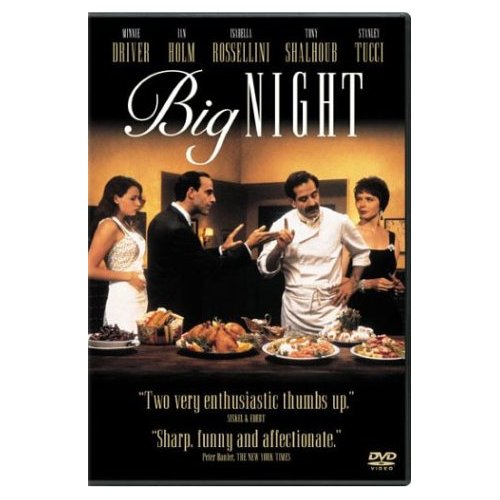
Welcome to Encephalon #71 – a Big Night here at Neuroanthropology, as we are hosting Encephalon for the second time (last year it was The Usual Suspects). Enjoy your multi-course mind feast!
Editor’s Selections What is this: ‘Too much’? HEY! It is never ‘too much’; it is only ‘not enough’! Bite your teeth into the ass of life and drag it to you!
For more on the 1996 film Big Night, you can see the IMDb site and Wikipedia. The quotes (with occasional slight modifications) were taken from two sources: IMDb and MovieQuotes.
Hello everyone! Neuroanthropology will be hosting the mind/brain carnival Encephalon scheduled for this coming Monday, May 25th. Please send your submissions to encephalon{dot}host{at}gmail{dot}com
Given our anthropological slant, we do take a wide view of mind/brain materials, including psychological anthropology, mental health, cross-cultural variation in behavior, and so forth. We also like the hard-core brain stuff. So just send your good stuff!
In a recent article in American Psychologist, Adam Cohen (2009) suggests that a number of fields in psychology have taken up the study of culture, but the results, although interesting, have been limited by what sorts of ‘culture’ have been investigated. As Cohen (2009:194) writes:
A person reading these literatures could be excused for concluding that there is a very small number of cultural identities (North American vs. East or Southeast Asian), that vary principally on the dimensions of individualism–collectivism or independent–interdependent self-construal—whether people are seen as inherently independent from others or whether social roles are most important in defining the self.
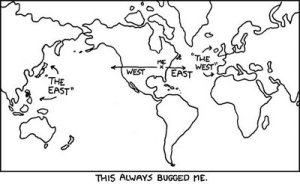
In this post, I want to provide a bit of a bibliography of some of the literature fast emerging on cultural difference in psychology, neuroimaging, and related fields, but also focus a bit on the consequences of this limited imagination in considering cultural difference, the almost exclusive focus on East-West contrasts. Just because I love a bit of controversy with my breakfast, I’ll suggest it’s a form of what Edward Said has called ‘Orientalism.’
Although Cohen brings up the issue and offers a few suggestions for how the problem might be addressed, I think his prescriptions would herald more of the same sickness, although perhaps spreading the infection to more hosts. That is, Cohen puts his finger on a serious problem in the psychological study of culture, but the prognosis won’t improve much unless we actually understand the root of the problem: it’s not studying Europeans (and European-Americans) and Asians (and Asian-Americans) that’s causing the whole problem. Part of it is misunderstanding what is being studied in the first place when cultural difference is under the lens.
This post is based on part of a talk I gave on Tuesday to the Centre for Cognitive Science (MACCS) here at Macquarie. When I got into the subject, I realized it was far more than I could possibly share in a 50-minute presentation, so I thought I’d post it here.



 In a recent article in American Psychologist, Adam Cohen (2009) suggests that a number of fields in psychology have taken up the study of culture, but the results, although interesting, have been limited by what sorts of ‘culture’ have been investigated. As Cohen (2009:194) writes:
 Neuroanthropology