John Sherry is an anthropologist who is also chair of the Department of Marketing at Notre Dame’s Mendoza School of Business. I had coffee the other day with John, and was struck by how similar some of our approaches are. What unites us is an interest in behavior, for me behavioral health and for John consumer behavior, and a belief that anthropology can help unite interdisciplinary understandings of behavior and experience.
I’ve also come across a new blog uiGarden, which is about “Weaving Usability and Cultures”. (I covered similar blogs on “anthropology, design, business” back in April). Several posts there at uiGarden caught my attention:
Dori Tunstall, Design Anthropology: What Can It Add to Your Design Practice?
“Anthropology is engaged with issues of the global flows of people and goods, human rights and social justice, global feminism, technology adoption, the social effects of the environmental degradation, and local sustainability practices—all issues that have become important to designers.”
At first the 48th edition looked like a round up of the Usual Suspects, a cop gone bad (the philosopher), a hit man (the critic), his hard-talking partner (the challenger), a hijacker (the pedant), and a con man (the hacker). But that line-up turned out to be fiction. More suspects got brought in; plot lines got complicated.
We anthropologists make lousy cops anyway. “To a cop the explanation’s always simple. There’s no mystery to the street, no arch criminal behind it all. If you find a body and you think his brother did it, you’re gonna find out you’re right.”
We’re going for the mystery.
Evolution
“We find the concept brilliant, but New York is difficult for new restaurants. How can we be certain that our money will be returned in the long run?” Keaton looks at Edie and smiles confidently. “It’s simple gentlemen, design versatility.”
Out of flesh and blood, evolution cobbles things together like our conjoined nervous and sensory systems. Courtesy of our imperfect eyes, the new blog Illusion Sciences gives us the peripheral escalator illusion. Felt like I was going to fall out of a tree, which is not a good thing for a primate. Language is a better thing, and Babel’s Dawn covers how to build that sort of new brain from old parts.
“A truck load of guns gets snagged, Customs comes down on N.Y.P.D. for some answers – they come up with us.”
Bloggers do cover the answers. Want to know how to get into problems? First, cut out the tryptophan, it will put you in a bad mood, a punishing mood; low serotonin and decision making just don’t mix!
Still, vision can be fallible, apt to get caught up in illusion, context making us see movement when things are really black and white. For, as Deric Bownds shows us, we want to see into the future to be able to grasp the present, sometimes seeing things that aren’t really there.
The Critique
“Alright, you all know the drill. When your number is called, step forward and repeat the phrase you’ve been given. Understand?”
As much as we like the revolution in neuroscience, brain scientists sometimes act like cops—they’re laying down the law. More than a little crooked criticism is needed.
What better than one of the real highlights of this line-up: Neurocritic’s Mirror Neurons Control Hard-Ons? The Mr. Bean photo comes directly from him, and captures everything that goes wrong with mirror-neurons-explain-the-world enthusiasm.
Mixing Memory wants in too, so he adds Sex = Mirror Neurons. Now I know why sleazy hotels have mirrors on the ceiling—it looks like mirror neurons need extra help getting aroused.
Not so with expressions of fear and disgust and the latest evolutionary psychology declaration of magnificent adaptive benefits. You mean, just mimicking facial expressions with no actual indication of a fitness benefit doesn’t convince you, Dr. X?
Paraskevidekatriaphilia. Say that five times fast before you ask what it is. No, you won’t figure it out that way, but it will make you laugh. And you need to laugh about the fear of Friday the 13th. Or in Romania, Tuesday the 13th. PodBlack continues with her good work placing research on superstition in the proper cultural, educational, and peer-reviewed context.
At the World Science Festival it’s guilt by assocation from being too Geek Friendly. The Science of Morality links to perps with long records of their own: Daniel Dennett, Patricia Churchland, Antonio Damasio and Marc Hauser.
“We know you can get to us, and now you know we can get to you.”
In Culture Shock, Mind Hacks describes how culture affects trauma (helped by one of our posts) and then takes us through the history and recent evidence on post-traumatic stress disorder. Conveniently, our own Erin Finley has just provided part two on her work on trauma among Iraq veterans, Cultural Aspects of PTSD, Part II: Narrative and Healing.
Sharp Brains enlightens us with an interview with Ori Brafman, author of Sway: The Irresistible Pull of Irrational Behavior. The hidden forces shaping our actions are as much cultural as they are individual. As Brafman says, “We take on the roles others ascribe to us.”
And sometimes we just remember things wrong, as described in The Anatomy of a False Memory. Patients with frontal lobe damage help identify some of the functional pathways involved in how we reconstruct memories. This type of research then brings us a thorny legal question: If we make memory up, can we ever swear to tell the truth?
Culture In Action: Technology
“I’ve got immunity now. What can you possibly offer me?”
At the very least, emerging technologies offer new ways to diagnose and deal with brain-related disorders. Brain Stimulant covers how ultrasound, coupled with a magnetic field, can now be used to shape neuronal firing, which will surely interest neurosurgeons looking for non-invasive techniques.
Isn’t that what activities like capoeira and ballroom dancing already do? Put differently, our technologies often take our brain’s capabilities along for the ride, as each step in the computer revolution shows us. Restless Minds argues that Google and Web 2.0 is about the “flow,” about a service that “enables an effortless flow of your data—and experience—[to] hold your attention.”
But technology has gone one step further in experience, attention, and identity—on-line virtual reality. Savage Minds provides a review of Tom Boellstorff’s recent ethnography of Second Life. We handle gaps in our roles and identities in everyday life with apparent ease; online “we lack many of the cues and strategies we rely upon in the real world.” Based on experience, people are developing new techniques and interpretations, from brb (be right back) to more leeway in letting people play their online identity.
So our brains live in a Material World, surrounded by technology everyday, everywhere. In Brazil mobile phones are used to build new relations and identities, to demonstrate one’s modernity, and thus raise questions about the importance of our bodies, the role of emotions, even addiction. As Sandra Rubia Silva writes, “Owning a mobile phone has become a way of being in the world.”
So, there you have it. Encephalon #48. Anthropology coming up with its usual suspects. Evolution, biology, critique, everyday synthesis, and culture.
The podcasts cover the gamut, for example from scotch to champagne, and often have accompanying multimedia (a video clip, parts of the slide show, sometimes a wrap-up article). They are based on “interviews, conversations, and lectures by noted scientists and authors,” truly a diverse and high-quality group with a frequent focus on interdisciplinary topics.
Some relevant neuroanth ones?
Distortions of Memory, based on a public discussion between Deirdre Bair, Bruno Clement, Maryse Conde, William Hirst, and Edward Nersessian. They bring views from linguistics, literature, neuroscience, philosophy, and psychoanalysis to bear on our understanding of memory
Biology of Freedom: “Psychoanalysts and neuroscientists discuss the effect of the environment on brain activity and micro-anatomy” featuring Edward Nersessian, Pierre Magistretti, Francois Ansermet, Cristina Alberini, Daniel Schechter, and Donald Pfaff
Perception through the Five Senses: “A perfumer, a chef, a neurologist, a sound engineer, and a painter discuss how we take in the world” Just wondering, is the neurologist actually a phrenologist? Because he appears to be representing touch…
John Hawks, Numbers, Amazon-Style
Numbers: universal phenomenon or cultural invention? Looks like Western linearity is acquired. Nice summary of a Science article by Stanislas Dehaene et al. that goes from the Mundurucu in Brazil to neural mapping
En Tequila Es Verdad, Carnival of the Elitist Bastards #1
Just what it says! A blog carnival celebrating experts, smart people, and other bad-ass riff-raff
We at Neuroanthropology are very pleased to be hosting Four Stone Hearth #42, blog carnival of anthropology, especially at our new digs (neuroanthropology.net is now our domain… we like the sound of that, domain). The global anthro-scape has been positively buzzing with excitement: new discoveries, familiar voices, and a few outlandish claims can be worth acres of text in the virtual world. We didn’t get a lot of submissions because we think everyone’s too busy blogging (that, or on summer vacation, we mean, busy with fieldwork). So this is what we’ve come up with. So, go ahead and grab your marshmallows, put a sausage on a stick, and gather round close because the Four Stone Hearth is ready to start cooking.
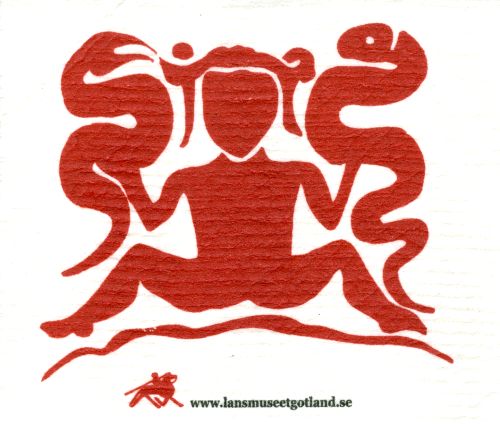
Aardvarchaeology, genitor of the Four Stone Hearth, sounds like he’s pretty busy at a conference on the Orkney Islands, but he does leave us with a piece on medieval archaeology, gender symbolism, and tourist brick-a-brack rolled into a single post. A Swedish county museum prints Iron Age images on dish cloths and sells them in their shop in Sacred Imagery on Dish Rags. Perhaps the most intriguing ‘wrinkle’ in this story of sacred images on kitchen linens is that one of Martin’s colleagues, Howard Williams, came across a Gotlander cloth featuring a ‘snake-witch’ design from a picture stone in När, a symbol interpreted as being of an empowered women ritual specialists for many archaeologists interested in gender. That’s right, a snake-grasping, legs-spread symbol of female strength on a souvenir dish cloth (must. ignore. irony.). The post includes a rollicking discussion of different examples of offensive tourist archaeo-schlock that are so pervasive in gift shops and museum catalogs.
In addition, Martin posts a short piece, Skamby Gaming Pieces on Display, with a really lovely photo of 9th century amber gaming pieces that he helped to exhume that have gone on display at the County Museum in Linköping. If your carbon footprint isn’t big enough to get there, check out the original post he wrote about them here. Congratulations to Martin on getting the artifacts publicly displayed; they’re striking. And condolences if you actually get the haggis you were contemplating eating…
Hot Cup of Joe brings us a discussion of the sunflower, Big Flower that Looks at Sun God. Remains of sunflowers has cast into doubt whether the plant was first domesticated in Mexico or eastern North America. Carl at HCJ points out the ritual dimensions of sunflower domestication and the likelihood that these played some part in its spread.
Mark Dingemanse, at The Ideophone, has a discussion of Joh. Bernard Schlegel’s assertion, published in 1857, that Ewe wasn’t a fully civilized language because it didn’t have enough adjectives (ironic, because the number of adjectives in a student essay is usually a reliable predictor of just how over-written it is…). Although Schlegel thought that the Bible would have the salutary effect of increasing Ewe adjectival creativity, a century and a half later, the Good Book still hasn’t led to the hoped-for linguistic proliferation. Check it out at Adjectives and the gospel in Ewe.
The extraordinarily prolific Anthropology.net , recently celebrating the one-year anniversary of its move to a new location (neuroanthropology feels your pain; we still can’t find our silverware…) has a great post on the panel, “What it means to be human,” held at this year’s World Science Festival in New York City. Turns out every speaker was wrong — don’t you hate when that happens?
Anthropology.net almost offers too many posts to choose from, so we’ll just highlight 4,000-year-old frozen hair mtDNA sequenced from a Greenlandic Saqqaq settlement (the title pretty much explains it). Turns out that Greenlanders are not closely related to Inuit, other Native Americans, or Europeans. And it also turns out that scholars who study Greenlanders produce very cool cladograms and map projections that pretty much march to their own drummer.
On Culture Matters, Stephen Cox has a short piece, Associated Press – shocked by the value of ethnography, on a recent presentation at the World Editors Forum in Goteborg, Sweden. According to Cox, the report has stirred up his co-workers as it found that, despite low expectations by Context-Based Research Group, the group that conducted the research, ethnography was ‘fun and transformative.’ We were left wondering what ‘context-based research’ was, if not ethnography?
Perhaps it’s hanging out and having some rum. Maximilian Forte at Open Anthropology gives us That’s Just Ole Rum Talk… Ah, field work in Trinidad, where the sweet ambivalent liquor runs from in de morning and then till I die, the names of two popular songs there.
And after fieldwork? How about a theory chaser! Rex at Savage Minds reconsiders the 1970’s through Said and Geertz; Erkan Sakareviews recent statements on culture by George Marcus, Michael Fischer, and Stuart Hall in Erkan’s Field Diary; and here at Neuroanthropology Maurice Bloch gave us the low-down on everyday, relevant anthropology.
Here at Neuroanthropology, we’ve been busy. We’ll just highlight a couple of posts. Daniel’s piece, New Humanities Initiative Proposal has been getting a ton of traffic. Anthropology seems so well poised to benefit from — and to strengthen — any attempt to reintegrate science and the humanities. And we’re also really pleased to have a new poster, Erin Finley, an anthropologist working with Iraq-war veterans, writing Cultural Aspects of Post-Traumatic Stress Disorder: Thinking on Meaning and Risk. A hearty welcome, Erin, both to Neuroanthropology and to Four Stone Hearth!
Although it’s not strictly anthropological, we couldn’t resist Thadd at Archaeoporn’s great take-down of Dr. Frank’s Joint Relief for Dogs and Cats, in Discovery Channel, Selling Out. Seems that the cable channel is flogging this particular miracle in a bottle, and Thadd carefully analyzes the active ingredients in Dr. Frank’s brew, pointing out the improbability that toxic substances at staggeringly low doses (there’s lots of 0s involved) might have beneficial effects on your pet’s joints.
The anthropology blogsphere is a rapidly growing community that has created a new space for all levels of the anthropological hierarchy to express themselves. It has also opened doors to engagement with those outside anthropology.
And on that note, we’ll cut to a bit of a mash-up: dense speedlinking to a host of pages on a single anthro topic. Like speed-dating, only less humiliating… And, as always, please feel free to post comments!
Topical round-up
Since a number of topics have circulated around on a variety of anthro-blogs, we thought we might do a couple of paragraphs of ‘topical round-up,’ pointing to a number of places where particular news was being discussed:
There’s short references on many other sites, but feel free to send links to your own discussion through the comments command. That’s it for Four Stone Hearth #42 — last person to leave, kick some dirt over the embers…

 John Sherry is an anthropologist who is also chair of the Department of Marketing at Notre Dame’s Mendoza School of Business. I had coffee the other day with John, and was struck by how similar some of our approaches are. What unites us is an interest in behavior, for me behavioral health and for John consumer behavior, and a belief that anthropology can help unite interdisciplinary understandings of behavior and experience.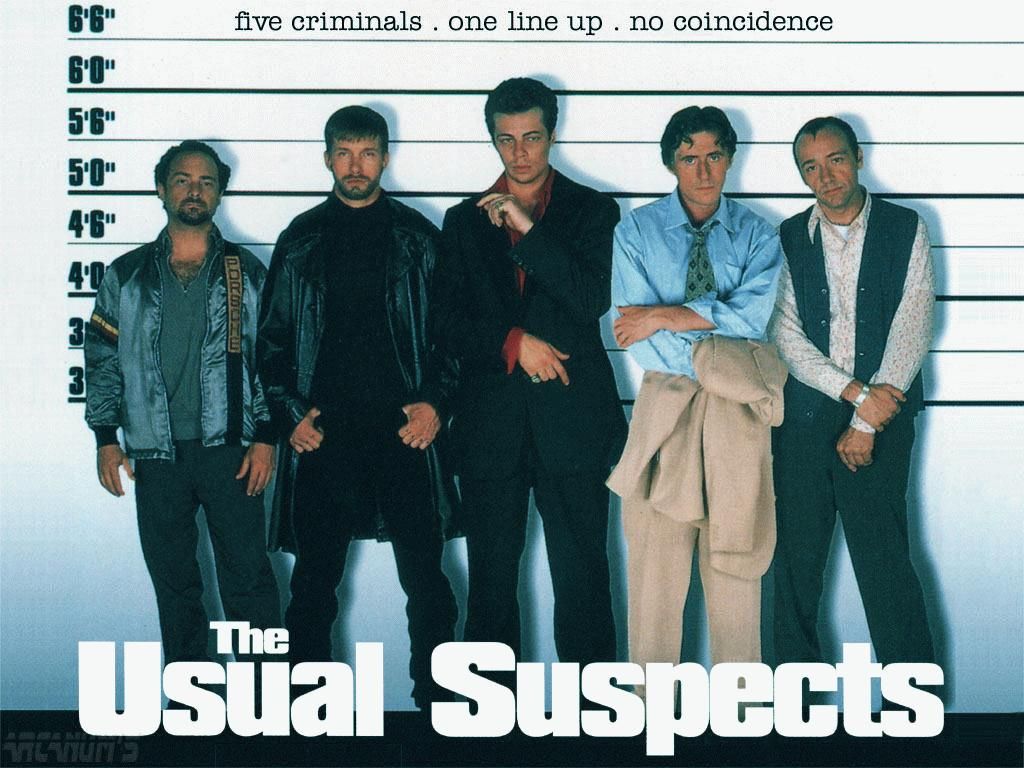








 Neuroanthropology