Wednesday Round Up #9

Tit-for-Tat, Game Theory and the Like

Michael Shermer, The Doping Dilemma
The rationality of doping—through game theory

Jim Rilling et al., The Neural Correlates of the Affective Response to Unreciprocated Cooperation
Anterior insula, left hippocampus, and left lingual gyrus light up when you are getting screwed (pdf)

Jim Rilling et al., A Neural Basis for Social Cooperation
Cooperating in the Prisoner’s Dilemma game lights up the reward centers! (pdf)

Jake Young, The Ruthlessness ‘Gene’ –or- Four Caveats in Interpreting Behavioral Genetics Studies
The Dictator Game, genes and mechanism, and media sensationalism

Ken Binmore, Review of Axelrod’s The Complexity of Cooperation
The tit-for-tat strategy is over-rated

Wendy Grossman, New Tack Win’s Prisoner’s Dilemma
Social recognition and team play wins hands-down…

Tully, Arrow’s Impossibility Theorem
Social choice theory, ranked preferences, and the failure of individual-based theories

Research Digest Blog, How Group Cooperation Varies Between Cultures
“students from less democratic countries like Saudi Arabia, Oman and Belarus tended to punish not only free-loaders, but also cooperative players, with the result that cooperation in their groups plummeted”

Joseph Henrich et al., Costly Punishment Across Human Societies
Pdf of the 2006 Science paper on the cross-cultural propensity to punish cheaters based on ultimatum and third-party punishment games

Mark Gimein, The Eligible-Bachelor Paradox
“How economics and game theory explain the shortage of available, appealing men”—grab hold of a good one and don’t let go…

Aging: Evolution and More

Neuroscientifically Challenged, Trying to Make Evolutionary Sense of Menopause
Good summary of previous debates, plus coverage of a new theory: avoiding female reproductive competition

Continue reading “Wednesday Round Up #9”

Darwin Online

Sue Sheridan, my colleague here at Notre Dame, has a post Darwin in His Own Words on her blog, Life of Wiley. I recreate it below since both the NPR story and the online link to Darwin’s works are great.

Darwin in His Own Words
There was a very interesting piece on NPRs Morning Edition about the new Darwin Online Project. They have made all of his writings, notes, letters, etc. available for free. Including free downloads of his books. Pretty cool. Apparently the site has been swamped with hits. Take that creationists!

As the Darwin Online site says, they got 7 million hits on April 17th. Wow! It should prove to be a great resource.

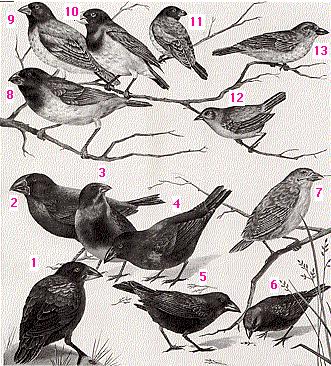
The New York Times also has an article on Darwin, What Darwin Saw Out Back. It covers the new exhibition at the New York Botanical Garden recreating Darwin’s experimental and observational work with flowers.

Here’s a relevant bit:

Though most people associate that book and Darwin’s ideas generally with his voyage to the Galápagos and his study of finches there, his work with plants was far more central to his thinking, said David Kohn, a Darwin expert and science historian who is a curator of the exhibition… “He was fascinated by plants,” particularly the way their variation and sexual reproduction challenged the idea that species were stable, a key idea in botany at the time. As Dr. Kohn writes in the exhibition catalogue, “plants were the one group of organisms that he studied with most consistency and depth over the course of a long scientific career” of collecting, observing, experimenting and theorizing. But Darwin studied more than flowers. He was intrigued by what Dr. Kohn calls the “behavior” of plants — how they move, respond to light, consume insects and otherwise act in the world.

Now if they would only do an exhibition on Darwin’s impressive work on molluscs to go along with the flowering plants and the Galapagos finches.

Red meat, Neandertals were meant to eat it

The Meat and Livestock Association (MLA) of Australia has these great television commercials featuring actor Sam Neill (and by ‘great,’ I don’t mean ‘scientifically accurate’). They’re all about how we humans were ‘meant’ to eat red meat. They’re obviously meant to counteract growing concern about red meat in our diet, in the environmental impact of livestock, and other issues, and they use evolutionary arguments to try to get Australians to ‘beef up’ the amount of red meat in their diet, because of course, Australians don’t eat enough meat (trust me if you’re not in Australia — that’s probably not the biggest health issue here, ‘lack’ of red meat in the Aussie diet). For more information on the campaign, check out the MLA’s webpage, ‘Red Meat. We were meant to eat it.’ (You can download the video of the ads from that site if, like me, you want to incorporate it into your lecture on human evolution and diet.)

Especially interesting is the third ad in the campaign, ‘Evolution.’ The text of that ad is:

‘Evolution’ set the scene for the story of red meat and its role in human evolution. It also highlights the bundle of nutrients in red meat making it a foundation food essential for brain development and function. Red meat. We were meant to eat it.

But an article by M. P. Richards and colleagues soon to appear in the Journal of Human Evolution suggests that the evolutionary prize for red meat-eating should have gone, not to Homo sapiens sapiens but to Homo sapiens neanderthalensis (or H. neanderthalensis). Richards and the research team examined carbon and nitrogen ratios in Neandertal bone collagen to figure out what the Neandertals were eating.

Continue reading “Red meat, Neandertals were meant to eat it”

Jeff Lichtman’s Brainbows

Take a genetically-engineered mouse and add color. That is what Jeffrey Lichtman, Jean Livet, and Joshua Sanes have done. Start by inserting genes that turn neurons fluorescent hues of yellow, red and cyan. Then add some more DNA that randomly expresses those three genes. Presto, rainbow brains.

As a Harvard Science piece reports, “By activating multiple fluorescent proteins in neurons, neuroscientists at Harvard University are imaging the brain and nervous system as never before, rendering their cells in a riotous spray of colors dubbed a ‘Brainbow.’ This technique… allows researchers to tag neurons with roughly 90 distinct colors, a huge leap over the mere handful of shades possible with current fluorescent labeling.”

So many colors in something as complex and elegant as a neuron produces striking images, and I have included many here. These images also permit the study of fields of neurons, from the life course of one neuron to the patterns of connections between neurons. Hence the emerging field of “Connectomics” which “attempts to physically map the tangle of neural circuits that collect, process, and archive information in the nervous system.”

I stumbled across Lichtman’s images in two publications recently. Harvard Magazine features his work, along with five other Harvard scientists, in this month’s feature article, Shedding Light on Life: Advances in Optical Microscopy Reveal Biological Processes as They Unfold. The magazine also provides an online collection of short video clips called Lights! Microscopes! Action! Across the Charles River, MIT’s Technology Review features Lichtman’s work as one of its Ten Emerging Technologies of 2008, complete with an accompanying video featuring Lichtman.

Continue reading “Jeff Lichtman’s Brainbows”

Bad brain science: Boobs caused subprime crisis

I’m too busy to be blogging right now; I’m putting in an application for academic promotion, and like much else in academe, that means reams of paper must be offered up to the cruel, fickle gods of bureaucracy. But this example of the reporting on brain imaging research, drawn to my attention by Amanda Marcotte of Pandagon’s, Using 15 college age boys and some reactionary reporting, we are able to blame the coming depression on boobage, couldn’t pass by without comment. Thank YOU Amanda for getting me worked up enough that I won’t need a morning cup of coffee to get through several hours working on my promotion application, if I can just get back to that. (Thanks also to Echidne of the Snakes.)

The article which inspired this train of commentary is ‘Sex and financial risk linked in brain,’ by Seth Borenstein, who probably needs some sort of award for this piece. I’ll let you decide:

A new brain-scan study may help explain what’s going on in the minds of financial titans when they take risky monetary gambles — sex. When young men were shown erotic pictures, they were more likely to make a larger financial gamble than if they were shown a picture of something scary, such a snake, or something neutral, such as a stapler, university researchers reported. The arousing pictures lit up the same part of the brain that lights up when financial risks are taken.

“You have a need in an evolutionary sense for both money and women. They trigger the same brain area,” said Camelia Kuhnen, a Northwestern University finance professor who conducted the study with a Stanford University psychologist.

Continue reading “Bad brain science: Boobs caused subprime crisis”

The Buzz about Epigenetics: Genes, Behaviour and the Environment

Our contemporaries in Behavioural genomics and Neurobiology are suggesting that epigenetics may be the key to understanding how the environment interacts with genes to produce obesity, longevity, sterility, mental illness, and maybe even cancer. But what is epigenetics? And, why is it important to Neuroanthropology?

Epigenetic processes provide a way for environmental factors to affect gene activity. These processes involve the chemical modification of the genome resulting in an alteration of gene expression. While the underlying DNA sequence remains unchanged, the activity of particular genes can be turned on or off. Nutrition, exposure to toxins and other exogenetic mechanisms can all be potentially involved in epigenetic activity. These environmental influences can act upon RNA transcripts, cellular structures, DNA methylation/chromatin remodeling, and even prions. For example, smoking can effect your epigenome which is believed to result in some forms of cancer.

Human research into epigenetics can be fraught with ethical dilemmas, and can take a number of generations before sufficient data is produced. But, this is where anthropologists come in. Behavioural and environmental data coupled with social statistics from communities across the world can provide scientists with useful data for analyzing long-term mental and physical health in relation to the environment and corresponding socio-cultural behaviours. Such data is particularly useful when collected from communities exposed to biological disasters or specific nutritional limitations.

To study epigenetics inside the very cells of our body, where most anthropologists are not able to venture, there is another option. Now, for the first time in an insect species, epigenetic modification has been identified and functionally implicated. The recent sequencing of the honey bee genome in 2006 has allowed scientists to discover genes that mediate epigenetic effects.

Continue reading “The Buzz about Epigenetics: Genes, Behaviour and the Environment”