Subjectivity and Addiction: Moving Beyond Just the Disease Model

By Daniel Lende

This week when students in my Alcohol and Drugs class spoke of their obessions, of MySpace and gambling and television and text messaging, they easily acknowledged their own subjectivity. Winning big, losing big; getting away from reality; having fun; becoming wrapped up in whatever particular compulsion is their own – they spoke of what it meant to them, why they did it, what sorts of feelings and experiences characterized that activity.

On Thursday I started class by asking them to write down their own definition of addiction. Unlike the descriptions of their own activities, there was a marked move towards a more causal and biological framework: “dependence” was the first word that came out of one small group discussion. Uncontrollable, using to fulfill a need, both physical and psychological, a disease – these were all other ways to characterize addiction.

Obsession did appear as well, the only clear link to a subsequent discussion on the popular sense of addiction, of what people mean whey they say they are addicted to Facebook, to a favorite food, to a friend or lover. “Need” came up too, but more as an afterthought, a recognition that sometimes their popular obsessions get too strong a hold on their everyday lives.

After discussing these two senses of addiction, as a problem and a type of involvement, we turned to looking at how the Diagnostic and Statistical Manual IV (DSM-IV) defines substance abuse and substance dependence. These are the guidelines that health professionals use to diagnose mental health problems.

For abuse, oddly defined as being the lesser problem, some of the main criteria include: “Recurrent substance use resulting in a failure to fulfill major role obligations,” “Recurrent substance-related legal problems,” and “Continued substance use despite having persistent or recurrent social or interpersonal problems.”

Continue reading “Subjectivity and Addiction: Moving Beyond Just the Disease Model”

Studying Sin

By Daniel Lende

“You study sin,” my dinner companion said with a smile at a recent conference. I reached for my wine, and after a modest sip (really!), replied, “Vicio. In Colombia it’s called vicio. Vices.”

In Colombia vicio covers a whole range of activities—video games, playing pool, and yes, drugs. Even better, when vicio becomes the adjective “enviciador,” favorite snacks and sweets come into the picture. People start to eat, and it’s hard to stop until every piece of candy is gone.

I like the Colombian category of vicio, because I see something common in the way people get hooked on things, the way they want and crave this or that. I have seen it with food, with sex, with gambling and smoking cigarettes in both the United States and Colombia. But I have seen “getting hooked” best with drugs.

In today’s world drugs stand in for sin pretty well. Just in April Pope Benedict XVI declared drug use a deadly sin. In the United States drug users are often seen as moral degenerates. In this moral model of addiction, people lack willpower. As the tagline to a recent HBO series on addiction went, Why can’t they just stop?

But with addiction, the disease model has slowly come to the fore, highlighted by Alan Leshner, the then-head of the National Institute of Drugs Abuse, declaring in Science that “Addiction Is a Brain Disease, and It Matters.”

Morals versus brains. Or culture versus biology. Just yesterday in a talk someone asked about gender, “So is this biology or is this culture?”

How can we escape this constricting dichotomy? As I discussed in an interview with Jonah Lehrer over at Scientific American’s Mind Matters, I think a focus on concrete problems is the way to go. Specifics will help get us to where we need to go, not theories based on old ideas.

Indeed, grand pronouncements of consilience or some over-arching theory forget about Newton and his very concrete apple. As the poet Lord Byron wrote:

When Newton saw an apple fall, he found
In that slight startle from his contemplation –
‘Tis said (for I’ll not answer above ground
For any sage’s creed or calculation) –
A mode of proving that the earth turn’d round
In a most natural whirl, called “gravitation;”
And this is the sole mortal who could grapple,
Since Adam, with a fall or with an apple.

Today we’ve got the physics of an apple down, and we are turning back to the problem facing Adam. The tree of knowledge is both tempting and sweet. So just how are we to understand the apple of my eye?

Translation

My concrete problem has been craving, that compulsive desire drug users can experience and which plays such a powerful role in relapse in excessive use and relapse. In both the popular accounts and scientific literature on addiction, dopamine often takes the blame for addiction. In understanding dopamine function, two prominent ways have been developed over the past decade – one focused on incentives and motivation, and the other on computation and learning. With addiction, the incentives and motivation approach has gained more traction, largely through the “incentive salience” work of Terry Robinson and Kent Berridge. Robinson and Berridge have often glossed dopamine function as “wanting” – and wanting just needs a little push to get to craving.

Their elegant work and sophisticated hypothesis testing have helped tease out a particularly thorny problem around addiction, that of pleasure versus desire. Earlier behaviorist theories largely assumed that pleasure was the ultimate reinforcer; no other mechanism was necessary to account for why animals went towards something rewarding. The work by Robinson and Berridge helped separate “wanting” versus “liking,” or as I explain to my students, the difference between that late-night craving for pizza, just a phone dial away, and that first exquisite bite of cheese and sauce and dough.

So the leap from lab to real life can be perilous. It’s a leap that I think anthropologists are better equipped to make than most. For my research on compulsive wanting and craving, what really made the difference was the combination of two strange bedfellows – evolution and ethnography. While for many that combination would be sinful in itself, the two helped take research on dopamine function and translate it into something I could use.

Continue reading “Studying Sin”

Craving and Compulsive Involvement Scales

By Daniel Lende

In the previous post Wanting to Craving: Understanding Compulsive Involvement with Drugs, I wrote:

Different domains of subjective involvement can be linked to dopamine [function] – wanting more and more, the sense of an urge or push to use (often not a conscious desire), and the heightened focus on places and actions and times that lead to using. The scale I developed showed good internal consistency, adding support that these three senses of compulsive involvement are linked. If you want to know more about the scale, I have done a separate post detailing the compulsive involvement scale in both Spanish and English versions.

So this post gives you those scales! But first a little information. The scale in Spanish consists of eight items and shows good consistency. For the English version I have not fullly tested the scale, and have deliberately included more items there (a total of 13). One aim of future research (collaboration, anyone?) would be to test the items and hopefully winnow the size down.

So without further ado, here are the scales themselves:

Lende Craving-Salience General

Lende Deseo-Salience en Espanol

If you don’t want to click on any version, some typical statements in English include: (a) At times I have started to use and use without thinking about anything else; (b) At times I have felt a powerful impulse or urge to go use; and (c) At times using feels like you want more and more.

If you do want to use these scales, please contact me (Daniel Lende) at dlende@nd.edu. I’d like to hear more!

Results with the Spanish version originally appeared in my 2005 article Wanting and Drug Use: A Biocultural Approach to Addiction (Lende Wanting pdf). Here are excerpts from that article that relate directly to creating the original scale and its use in my study:

Construction of the Incentive Salience Scale
Ethnographic Results
The incentive salience scale was created by drawing on the results of the questionnaire and the first interview. The first step in this process was identifying the common dimensions related to wanting and seeking drugs in the adolescents’ descriptions. One important thing that emerged early in this review process was that the dimensions of wanting, shifts in attention, and behavioral engagement applied to more than just anticipating and seeking out drugs, the main focus of Robinson & Berridge’s theory. The dimensions of incentive salience applied to both seeking out and using drugs, leading to a wider focus on how drugs and drug use were salient to users.

Based on this wider view of salience, six common elements were then identified in the adolescents’ descriptions. First, one of the most typical ways of describing addictive experiences in Colombia was “querer más y más,” to want more and more drugs. During my ethnographic research, this emphasis on wanting—the Colombian’s summary description of what addiction was—took on more relevance as I realized the diversity in positive appraisals and “rewards” from substance use, ranging from “forgetting everything” to riding a skateboard better. Other ways used to describe this experience included “deseo” and “sentir ganas,” to feel a desire to consume drugs. Overall, the emphasis on wanting and desire provided a clear indication of the relevance of the incentive salience approach to understanding drug abuse in this population.

Continue reading “Craving and Compulsive Involvement Scales”

Wanting to Craving: Understanding Compulsive Involvement with Drugs

By Daniel Lende

A long-time research project of mine has been to understand how adolescents get hooked on drugs. Querer más y más, as they say in Colombia, to want more and more. When people get addicted – whatever the substance may be – they often report urges, cravings, and obsessive thinking as a primary force in why they keep using or relapse. Knowing the consequences often doesn’t matter, especially in those moments when that desire feels hot as a knife.

The easiest analogy for me to help people understand this type of desire is to ask people to think about that one time they really craved something to eat. Yes, that time, when you just had to have it. Most people have experienced this one time or another. With substance abuse, craving like this often becomes an unpredictable constant, something that comes on in the morning or while walking by a favorite bar or seeing a friend who has that gleam in his eye and a crooked smile on his face.

So here is what I found in Colombia, reported in a 2005 Ethos article entitled Wanting and Drug Use: A Biocultural Approach to Addiction (click for the full paper: Lende Wanting pdf). The abstract goes:

The integration of neurobiology into ethnographic research represents one fruitful way of doing biocultural research. Based on animal research, incentive salience has been proposed as the proximate function of the mesolimbic dopamine system, the main brain system implicated in drug abuse (Robinson and Berridge 2001). The research presented here examines incentive salience as the mediator of the wanting and seeking seen in drug abuse. Based on field work with adolescents at a school and a drug treatment center in Bogotá, Colombia, this article addresses: 1) the development of a scale to measure the amount of incentive salience felt for drugs and drug use; 2) the results from a risk-factor survey that examined the role of incentive salience and other risk factors in addiction; and 3) the ethnographic results from in-depth interviews with Colombian adolescents examining dimensions of salience in the reported experiences of drug use. Incentive salience proved to be a significant predictor of addicted status in logistic regression analysis of data from 267 adolescents. Ethnographic results indicated that incentive salience applies both to drug seeking and drug use, and confirmed the importance of wanting, a sense of engagement, and shifts in attention as central dimensions of experiences related to drug use.

Several years later, I like to highlight several things about this research. First, different domains of subjective involvement can be linked to dopamine –wanting more and more, the sense of an urge or push to use (often not a conscious desire), and the heightened focus on places and actions and times that lead to using. The scale I developed showed good internal consistency, adding support that these three senses of compulsive involvement are linked. If you want to know more about the scale, I have done a separate post detailing the compulsive involvement scale in both Spanish and English versions.

Continue reading “Wanting to Craving: Understanding Compulsive Involvement with Drugs”

‘Party on, dude,’ pre-Columbian style

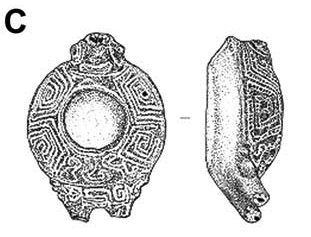
Red fine-walled ceramic snuff bowl from Puerto Rico
The UK Telegraph has run with a story, ‘Stone Age man took drugs, say scientists,’ about recent discoveries by a research team led by Quetta Kaye, of University College London, and Scott Fitzpatrick, of North Carolina State University. The drug taking ‘paraphernalia’ were dated to approximately 400 to 100 BCE, and were found in the Caribbean island Carriacou, 400 miles from where they probably originated on the South American continent. Daniel’s usually the one covering the posts on drugs (see, for example, his recent Drugs Round Up and the older Addiction Round Up), but I thought I’d put in my two cents on this one.

According to the Telegraph, the best guess for the mind altering substance involved is cohoba, a psychedelic substance produced from the ground seeds of the cojóbana tree. According to a quick surf around the web, cojóbana is likely a common name for Anadenathera peregrina, a tree native to both the Caribbean and South America, which also happens to be a good source of dietary calcium (the miracles offered by Mother Nature never cease).

Continue reading “‘Party on, dude,’ pre-Columbian style”

Drugs Round Up

Brain

Science Daily, Cocaine Addiction Linked To Voluntary Drug Use And Cellular Memory, Study Shows
Voluntary use, memory, and predisposition to use again—active choice matters, and from there, a short jump to meaning (why choose drugs…)

Alexis Madrigal, Memory Disruption Could Aid Addicts
Blocking associative memory in rats works. Are people next?

Hal Arkowitz and Scott Lilienfeld, Do-It-Yourself Addiction Cures?
Self-change happens, and it can work

Reuters, Feeling Poor Spurs Lottery Ticket Purchases
Research confirms what the lottery business already knows—feeling subjectively poor makes it more likely to buy that ticket to a quick-fix dream

Pure Pedantry, Ricardo Ricco & Epo Abuse and Heptaminol? Where Do They Even Find This Stuff
The scientific low-down on performance-enhancing drugs in the Tour de France

Jane Brody, Sorting Out Coffee’s Contradictions
Coffee and your health—sorting out the myths and the realities

Henry Fountain, It’s Always Happy Hour for Several Species in Malaysian Rain Forest
Alcohol-swigging small mammals like their fermented fruit

Mark Kern, The Seductiveness of Bad Habits
Health and unhealthy habits and addiction

Continue reading “Drugs Round Up”