
“Human ideas underline the biodiversity of the mind” claims Dr Saniotis in The Journal of General Evolution, (2007, volume 63, p619). But Can the mind really be mapped? This is the question Dr Arthur Saniotis asks in the latest volume of Eubios Journal of Asian and International Bioethics (2008 volume 18:5). Continue reading “The behaviourome: The Human Idea Map”
Colour, is it in the brain?

Colour is a perceptual interaction arising from our ability to discriminate between different wavelengths of light from within a narrow band of electromagnetic radiation. Light itself has no colour. The colour of a specific wavelength can change according to context. For example, in the above picture, despite having the same spectral reflectance, the ‘X’ appears to be different when set against the two different backgrounds (Albers J. 1975). Continue reading “Colour, is it in the brain?”
Edelman, Evolution and Encephalisation
The brain exhibits all of the properties of an evolutionary system. In the developing brain, there is an initial oversupply of neurons. The combinatorial possibilities that exist within and between neuronal groups is a source of variation that is selected from. The brain, which is only approx. 25% formed at birth, matures through processes of degeneracy and associativity. The dynamic interplay between the variation and selection of neuronal groups is a source of self-organisation. The brain has the capacity to store patterns of activation and to recreate acts separated in time from the original events. Memory biases the processes of organisation towards increased complexity. (For a more extensive explanation of the brain as an evolutionary system see Edelman 1987; 1993; 2004).
To be honest, I have not met many people who truly understand every aspect of Edelman’s theory of neuronal group selection (TNGS). In fact, if I have gone some way to understanding some part of his theory, then it has been largely through my reading of secondary literature material, returning frequently to his new books and then discussing his work with some of my friends Continue reading “Edelman, Evolution and Encephalisation”
Calvin the theologian and Calvin the theoretical neurobiologist
John Calvin, a Theologian from Strasbourg died the day before I was born. He taught an austere form of personal ethics supporting good hospitals, a proper sewage system, protective rails on upper stories to keep children from falling from tall buildings, special care for the poor and infirm, and the introduction of new industries. Continue reading “Calvin the theologian and Calvin the theoretical neurobiologist”
Les Fondations Françaises de la Neuroanthropologie
Mes recherches primaires se compose de l’intégration des neurosciences avec l’anthropologie et l’ethnologie, intégration qui offre un relativement nouveau champ de recherche, la neuroanthropologie.
Mon interêt a été particulièrement captivé par l’étude sur la complexité anthropo-sociale et la contribution du biologique et de l’imaginaire (La Méthode d’Edgar Morin) ainsi que le processus par lequel le monde social et culturel s’imbibe dans l’esprit dès l’enfance. Ainsi nous avons des créations culturelles qui peuvent se développer par l’histoire. Cependant nous devons considerer, non seulement l’évolution biologique de l’espèce mais, également, l’évolution culturelle de l’humanité (Jean-Pierre Changeux, 6th Kenneth Myer Lecture).
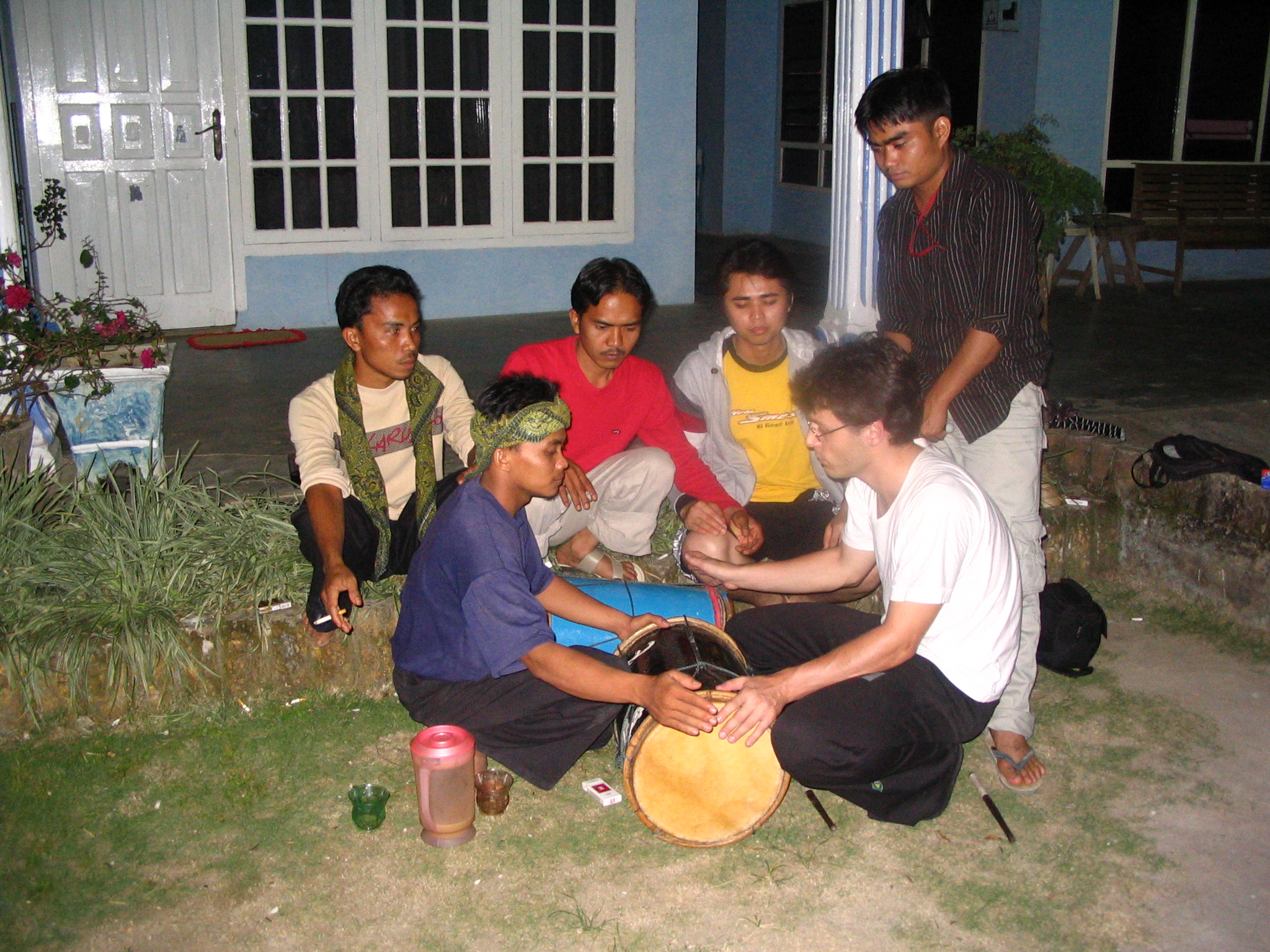
Specifiquement, J’essaye d’étudier l’interdependance circulaire entre la culture et le cerveau, c’est à dire étudier comment les processus du cerveau des individus sont conditionnés par la culture, et comment la culture est structurée par ces individus. Pour cette enquête, j’emploie la musique et le mouvement humain cultivé.
Continue reading “Les Fondations Françaises de la Neuroanthropologie”
 Neuroanthropology
