Life in the Dark

Photo of the Milky Way in the night sky.
Image by Pexels from Pixabay 

(I am republishing a lot of ‘legacy content’ from our PLOS Neuroanthropology weblog, which has been taken down, along with many of the other founding PLOS Blogs. Some of these, I am putting up because I teach with them. If you have any requests, don’t hesitate to email me at: greg.downey @ mq (dot) edu (dot) au. I suspect many of the links in this piece will be broken, but I will endeavour to try to slowly rebuild this content. I originally published this on 7 November 2010. I have also included at the end some of the most substantial comments from the comment thread.

I’m also trying something totally new…)

This post is available as a podcast at Anchor.fm.

My ex-wife, along with her many other jobs – paid and unpaid – is the local director of a campus exchange program that brings US students to Wollongong, New South Wales.  Because of her background in outdoor education and adventure therapy, she does a great job taking visiting Yanks on weekend activities that get the students to see a side of life in Australia that they might not otherwise see.  From Mystery Bay on the South Coast, to Mount Guluga with an Aboriginal guide, to abseiling (rapeling) in the Blue Mountains, to surf lessons at Seven Mile Beach, I think she does a great job, and I frequently tag along to help and enjoy being reminded of the distinctiveness of my adopted home.

Abdulai Abubakari holds his infant child, Fakia. (Peter DiCampo/VII Agency)

Invariably, either at the beach or in the Blue Mountains, at night, students will confront a clear, dark Australian sky, staggered at just how many stars fill the darkness from horizon to horizon. I’ve seen the US students – well, not all of them get into it – just stand, necks craned backwards, and stare.  What they thought was darkness was actually full of innumerable points of light.

I’m sympathetic because I had a similar experience one clear night in the Chapada Diamantina (the Diamond Plateau) in Brazil, when I couldn’t believe how, given real darkness, desert-like humidity, and clear, pollution-free air, the sky was crowded with sources of light, just smeared with stars.  For the first time, I felt like I understood the name, the ‘Milky Way,’ because I could see the uninterrupted blur toward the centre of our galaxy.

I was reminded of my experience with seeing stars, as if for the first time, and the reactions of the American students when I stumbled across the photos of Peter DiCampo (click here for Peter’s website), an American freelance photographer and former members of the Peace Corps who volunteered in the village of Voggu in rural Ghana.  His photo essay, Full Frame: Life without lights, is up at Global Post, an online American newspaper launched at the start of 2009.  His beautiful photos of life by flashlight, candle and gaslight, capture the atmosphere in this part of Ghana without electricity, and got me to thinking about artificial light and the way the sensory environment affects human development (additional photos at Peter’s personal website, including photos from darkness in Kurdistan).

Continue reading “Life in the Dark”

Manipulating student evaluations: the Downey Sales School method

Student evaluations are biased? Yes, yes, they are. Research has repeatedly shown that students’ evaluations of teaching quality show a range of biases. For example, Anne BoringKellie Ottoboni and Philip B. Stark argue on the LSE’s Impact blog that:

Student evaluations of teaching (SET) are strongly associated with the gender of the instructor. Female instructors receive lower scores than male instructors. SET are also significantly correlated with students’ grade expectations: students who expect to get higher grades give higher SET, on average. But SET are not strongly associated with learning outcomes.

Even given their limitations and outright unfairness, universities are not likely to give up student evaluations soon.

So I offer you another alternative: How I manipulate student evaluation scores. Using techniques I first learned while a door-to-door salesman as an undergraduate, here are tried and tested techniques for improving your evaluations, from the keyboard of a 25+ year university veteran. Buckle up — this may sound cynical — but I hope to persuade you that my goals and methods are not only ethical, but actually might improve your teaching. 

Photo by Aldiyar Seitkassymov on Pexels.com
Continue reading “Manipulating student evaluations: the Downey Sales School method”

Getting around by sound: Human echolocation (first published, 14 June 2011)

(We are republishing ‘legacy content’ from our PLOS Neuroanthropology weblog, which has been taken down, along with many of the other founding PLOS Blogs. Some of these, I am putting up because I teach with them. If you have any requests, don’t hesitate to email me at: greg.downey @ mq (dot) edu (dot) au. I suspect many of the links in this piece will be broken, but I will endeavour to try to slowly rebuild this content. I originally published this on 14 Junne, 2011. Comments have been pasted in at the end of the post from the original. A podcast version of this post is available here.)

Daredevil_65As any fan of the adventures of Daredevil knows, being blind in comic books can give you superpowers.  Matt Murdoch was blinded by a radioactive accident that he befell because he tried to save a blind pedestrian from the truck carrying the waste (ah, the irony…). Murdoch developed a kind of ‘radar’ sense that allowed him to prowl Hell’s Kitchen, rooting out the miscreants and lowlifes who, like the blind Man Without Fear, preferred to lurk in the dark.
Although his personal life proved that nice guys often finish, if not last, certainly with a heavy burden of angst and personal tragedy, Daredevil built upon the observation that deprivation of one sense can lead to heightened ability in others.

Although the Man without Fear may seem implausible, in fact, researchers have examined a number of blind individuals who seem to develop extraordinarily acute echolocation, a kind of active sonar that they use by clicking to produce echoes from their surroundings.  In a recent edition of PLoS ONELore Thaler from the University of Western Ontario, with Stephen Arnott and Melvyn Goodalereport on brain imaging research that tries to sort out how individuals who can echolocate – who have what one blind activist calls ‘flash sonar’ – accomplish this perception neurologically. Do they use an especially acute sense of hearing, or do they develop another kind of sense, able to transform echoes into spatial perception?

What the researchers found, in short, is that blind individuals who could echolocate did not really have better ‘hearing’; on normal tests of hearing acuity, they scored the same as two sighted subjects who could not echolocate.  However, when a recording had echoes, parts of the brain associated with visual perception in sighted individuals became extremely active, as the echolocators were able to extract information from the echoes that was seemingly not accessible to the control subjects who were sighted.

Continue reading “Getting around by sound: Human echolocation (first published, 14 June 2011)”

“If you have the power to hit people over the head whenever you want, you don’t have to trouble yourself too much figuring out what they think is going on, and therefore, generally speaking, you don’t. Hence the sure-fire way to simplify social arrangements, to ignore the incredibly complex play of perspectives, passions, insights, desires, and mutual understandings that human life is really made of, is to make a rule and threaten to attack anyone who breaks it. This is why violence has always been the favored recourse of the stupid: it is the one form of stupidity to which it is almost impossible to come up with an intelligent response. It is also of course the basis of the state.”

David Graeber, Fragments of An Anarchist Anthropology

davidgraeberbio


Photo from: https://colectivolibertarioevora.wordpress.com/2015/11/02/david-graeber-entrevista-do-anarquista-norte-americano-a-proposito-do-seu-ultimo-livro-burocracia/

David Graeber: 1961-2020

david graeber

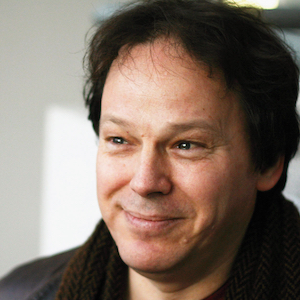
Anthropologist, activist, and author David Graeber, author of some of the most popular and cutting recent works in our discipline, has passed away at 59 according to his widow, artist and writer Nika Dubrovsky. Some news outlets are saying that the causes are unknown; other suggest he had contracted COVID. 

As author Matthew Rozsa quotes in Salon, historian Rutger Bregman has said:

Shocked to hear that David Graeber has passed away, one of the greatest thinkers of our time. And a phenomenal writer.

I agree. I wrote an extended piece about David on PLOS Neuroanthropology in 2011 that I reposted here last year: David Graeber: anthropologist, anarchist, financial analyst*. Even then, it was clear that his work was crucial, and there have been hugely influential works since then on “bullshit jobs,” the Occupy movement, and bureaucracy.

Continue reading “David Graeber: 1961-2020”

Delusions, odd and common: Living in the prodrome, part 2 (originally 10 January 2011)

(We are republishing ‘legacy content’ from our PLOS Neuroanthropology weblog, which has been taken down, along with many of the other founding PLOS Blogs. Some of these, I am putting up because I teach with them. If you have any requests, don’t hesitate to email me at: greg.downey @ mq (dot) edu (dot) au. I suspect many of the links in this piece will be broken, but I will endeavour to try to slowly rebuild this content. I originally published this on 1 January, 2011. Comments have been pasted in at the end of the post from the original.) 

Author Rachel Aviv talked at length with a number of young people who had been identified as being ‘prodromal’ for schizophrenia, experiencing periodic delusions and at risk of converting to full-blown schizophrenia, following some of the at-risk individuals for a year.  In December’s Harper’s, Aviv offered a sensitive, insightful account of their day-to-day struggles to maintain insight, recognizing which of their experiences are not real: Which way madness lies: Can psychosis be prevented? (Freely accessible pdf available here.)

Psychiatric Research by Ted Watson

Aviv’s piece was really moving and inspired this post and an earlier one. The first part (Slipping into psychosis: living in the prodrome (part 1)) provides some sense of Aviv’s interviews, especially the story of ‘Anna,’ a woman who feared that she, like her mother before her, might be losing her grasp on reality.  In addition, the earlier post covered the controversy surrounding the attempt to formalize a diagnosis in the DSM-V of ‘prodrome’ and the ethical problems created by trying to identify who is at risk of ‘going mad.’

This post is my more speculative offering, contemplating the relation of the content of delusions to the cultural context in which they occur. How do the specific details of delusions arise and how might the particularity of any one person’s delusions affect the way that a delusional individual is treated by others?  Are you mad if everyone around you talks as if they, too, were experiencing the same delusions?

Continue reading “Delusions, odd and common: Living in the prodrome, part 2 (originally 10 January 2011)”