Wednesday Round Up #16

My Octopus Teacher

Gordon W. Hewes — a four-field anthropologist with an encyclopedic, visual sensibility. He was interdisciplinary before it was cool.

There’s No Homunculus In Our Brain Who Guides Us

The cognitive-map theory has inspired decades of experiments and become a ubiquitous and widely used concept. Edward Tolman, a professor at the University of California, Berkeley, introduced the concept in a famous 1948 paper “Cognitive Maps of Rats and Men.” Three decades later, the neuroscientist John O’Keefe tried to put an electrode in the amygdala of a rat but inserted it instead into the hippocampus, the bilateral brain region deep in the temporal lobe, critical to memory formation. O’Keefe’s instrument began recording the firing pattern of a single cell that strangely seemed to correspond to the rat’s physical location in space. For O’Keefe, these “place” cells were evidence that the hippocampus was the site of Tolman’s cognitive map.

But the cognitive map has also been called the theory that refuses to die. The idea that there is an innate geometric representation of the environment in our brains has dissenters in brain science, anthropology, and psychology. As the neuroscientist Richard Morris points out in The Hippocampus Book, maps are things that people look at to extract information. “Adopting this term for the neural activity of a region of the brain seems to carry with it the mental baggage that there must be some cryptic homunculus that is ‘looking at’ the map to do likewise,” he wrote.2 There is no mechanistic explanation of how humans extract information from this map but because the map is such an easily understood concept, it lives on as a “beguiling metaphor.”

The Fog of the Pandemic Is Returning

The first major change to beset the testing system is entirely because of Trump. Two weeks ago, the CDC changed its official guidance about when Americans should get a coronavirus test. The agency had once maintained that everyone who was exposed to the virus should get tested for it. Now it altered this advice: If someone was exposed to the virus but did not yet have symptoms of COVID-19, they did not necessarily need a test, the guidance said.

New Climate Maps Show a Transformed United States

Taken together, some parts of the U.S. will see a number of issues stack on top of one another — heat and humidity may make it harder to work outside, while the ocean continues to claim more coastal land. The table below ranks the most at-risk counties in the U.S. if all of the perils were combined. You can also sort by individual climate risk to see how each one stacks up, with higher numbers being worse in all categories. The projections are for 2040-2060 under RCP 8.5.

A Biden victory cannot bring normal back

The liberal centre raises hell about the falsehoods of Trump and Johnson, which are undeniably flagrant. However, the brazen fabrications of yesterday – most obviously, those that led to the catastrophe in Iraq, for which there has never been a proper reckoning – did much to pave the way for those of today. And yet only last month, Colin Powell, who personally presented the fallacious case for the invasion of Iraq to the United Nations, was paraded as a star turn at the Democratic National Convention.

Likewise, when Tony Blair recently popped up to warn Johnson against flouting international law by breaching certain aspects of the Brexit withdrawal agreement, the lack of self-awareness on display was breathtaking. It’s not that Blair’s point was wrong, but the fact that he was the one making it allowed the Tories to issue the obvious riposte that their transgression of international law would pale in comparison to his.

Even if the liberal centre were in a stronger position to highlight the cynicism and dishonesty of Trump and Johnson, that wouldn’t be enough without changing the political conditions that gave rise to them. After all, neither Trump nor Johnson came out of nowhere. Trump inherited an apparatus of invasive state surveillance and militarised borders from a predecessor who himself presided over mass deportations, while in Britain, it was New Labour that first indulged bogus moral panics about asylum seekers and laid the foundations for today’s hostile environment.

Both Biden and Starmer might win elections simply by appearing to offer their respective electorates a steady hand. But mounting, interrelated crises stare us in the face: environmental, economic, social and political. Addressing any of them would require, for starters, radically curbing the prerogatives of capitalist vested interests wedded to a destructive status quo. It’s not enough just to install more competent and polite managers, and otherwise leave the same arrangements in place.

Evolutionary Anthropology in the Time of COVID-19

It is imperative that we see this pandemic as a biosocial event. Though SARS-COV2 is a biological entity that has specific biological, deleterious, pathological impacts on the human respiratory system (among others), the biological information is meaningless without the social, historical, political, and economic context. Fuentes gives the example of hand washing. If you understand the structure of the coronavirus, you would see how just some soap and water lifts the outer layers and can save billions of people. But that knowledge of biology is completely useless when there is no access to running water like in a refugee camp or a homeless encampment, or even in some of the Indigenous reservations here in the United States.

A Whistleblower Says Facebook Ignored Global Political Manipulation

The 6,600-word memo, written by former Facebook data scientist Sophie Zhang, is filled with concrete examples of heads of government and political parties in Azerbaijan and Honduras using fake accounts or misrepresenting themselves to sway public opinion. In countries including India, Ukraine, Spain, Brazil, Bolivia, and Ecuador, she found evidence of coordinated campaigns of varying sizes to boost or hinder political candidates or outcomes, though she did not always conclude who was behind them.

“In the three years I’ve spent at Facebook, I’ve found multiple blatant attempts by foreign national governments to abuse our platform on vast scales to mislead their own citizenry, and caused international news on multiple occasions,” wrote Zhang, who declined to talk to BuzzFeed News. Her LinkedIn profile said she “worked as the data scientist for the Facebook Site Integrity fake engagement team” and dealt with “bots influencing elections and the like.”

Wednesday Round Up #15


America Is Trapped in a Pandemic Spiral

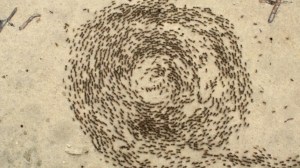
Army ants will sometimes walk in circles until they die. The workers navigate by smelling the pheromone trails of workers in front of them, while laying down pheromones for others to follow. If these trails accidentally loop back on themselves, the ants are trapped. They become a thick, swirling vortex of bodies that resembles a hurricane as viewed from space. They march endlessly until they’re felled by exhaustion or dehydration. The ants can sense no picture bigger than what’s immediately ahead. They have no coordinating force to guide them to safety. They are imprisoned by a wall of their own instincts. This phenomenon is called the death spiral. I can think of no better metaphor for the United States of America’s response to the COVID-19 pandemic.

The U.S. enters the ninth month of the pandemic with more than 6.3 million confirmed cases and more than 189,000 confirmed deaths. The toll has been enormous because the country presented the SARS-CoV-2 coronavirus with a smorgasbord of vulnerabilities to exploit. But the toll continues to be enormous—every day, the case count rises by around 40,000 and the death toll by around 800—because the country has consistently thought about the pandemic in the same unproductive ways.

When the World Isn’t Designed for Our Bodies

If we’re overly besotted with objects that promise assistance, maybe that’s because our default objects—the givens of the built world—can seem so incompatible with our needs. Look down. Your chair, Hendren declares, is murdering you. (The historian Galen Cranz has noted correlations between chair use and “back pain of all sorts, fatigue, varicose veins, stress, and problems with the diaphragm, circulation, digestion, and general body development.”) Yet long stretches of sitting are a societal norm. Why? Hendren invokes the chair’s historical function: in many cultures, including corporate culture, throne-like seats symbolize power and status. We may also be drawn to chairs’ animal charisma, to their torsos, bottoms, and four sturdy legs.

Regardless, Hendren argues, we could be sitting so much more comfortably if furniture makers were to attend as closely to matters of substance and sustainability as they do to matters of style. Disability activists, of course, have been making such arguments for years. One corollary of universal design—the idea that my perfect chair equals your perfect chair—states that improvements undertaken with disabled bodies in mind are likely to benefit everyone. (The telephone, for instance, emerged out of Alexander Graham Bell’s work with deaf students.)

Hendren gives universal design a hearing, but she would rather remain alert to difference. The book thus lingers over “diffuse design,” which thrives on grassroots connections. In the diffuse model, artists, guided by local desires, make bespoke modifications to a received archetype.

Think 2020′s disasters are wild? Experts see worse in future

“A year like 2020 could have been the subject of a marvelous science fiction film in 2000,” Cobb said. “Now we have to watch and digest real-time disaster after disaster after disaster, on top of a pandemic. The outlook could not be any more grim. It’s just a horrifying prospect.”

“The 2030s are going to be noticeably worse than the 2020s,” she said.

University of Michigan environment dean Jonathan Overpeck, a climate scientist, said that in 30 years because of the climate change already baked into the atmosphere “we’re pretty much guaranteed that we’ll have double what we have now.”

Expect stronger winds, more drought, more heavy downpours and floods, Abdalati said.

At 31, I have just weeks to live. Here’s what I want to pass on

I imagined settling down in my 30s or 40s with kids, a mortgage and so on. Or maybe I wouldn’t. Maybe my friends’ children would call me Uncle Elliot as their parents gathered in the kitchen looking slightly concerned about their single 45-year-old friend about to set off travelling around Mongolia. Either way, growing older with my mates and living my life to the full was always my ambition.

Of course, the second part of this storyline won’t be written now. It’s a shame I don’t get to see what happens. But everybody dies, and there will always be places and experiences missing from anyone’s life – the world has too much beauty and adventure for one person to see. I will miss marriage or children, blossoming careers and lives moving on. But I’m not alone in my life being cut short, and I think my time has been pretty good.

Is America in the Early Stages of Armed Insurgency?

Meanwhile, a powder keg is building. FBI background checks for gun sales hit 3.9 million in June—an all-time high. Many of them were for first-time gun buyers—by definition untrained, possibly rash in their actions. An estimated 20 million Americans carry a gun when they leave their homes. It takes just a few trigger-pullers to set off a conflagration; even in intense insurrections, such as the postwar rebellion in Iraq, only 2 percent of insurgents actually fired their weapons.

Kilcullen sees a pattern similar to the patterns that precipitated insurgencies in Colombia, Libya, and Iraq. The key factor is the rise of fear. He cites Stathis Kalyvas’ book The Logic of Violence in Civil War as observing that fear, not hate, drives the worst atrocities. “Every civil war and insurgency of the last 50 years has been driven by fear,” Kilcullen told me. Today’s politics and social tensions are dominated by three fears: fear of other social groups, fear that those other groups are encroaching on one’s territory, and fear that the state no longer has the ability to protect the people.

Things do not have to get worse. “Incipient insurgency” doesn’t mean “inevitable insurgency.” We are still in the very early phase of this rampage—a “pre-McVeigh moment,” as Kilcullen puts it. And the extent of disorder has been exaggerated, usually for political motives. When violence has occurred during protests, it has been confined to just a few blocks; it hasn’t spread throughout a city. Contrary to Trump and other Republican politicians, New York is not a “hellscape,” Portland is not “ablaze all the time,” and Chicago is not more dangerous than Afghanistan.

How to Deal With the Anxiety of Uncertainty

“Waiting periods are marked by two existentially challenging states: We don’t know what’s coming, and we can’t do much about it,” Sweeny explains. “Together, those states are a recipe for anxiety and worry. People would often rather deal with the certainty of bad news than the anxiety of remaining in limbo.”

That’s what researchers at three institutions in the UK found in a 2013 experiment, when they attached electrodes to 35 subjects and asked them to choose between receiving a sharp shock immediately or waiting for a milder one. The vast majority chose the more painful option, just to get it out of the way. “It’s counterintuitive,” admits Giles Story, one of the academics behind the study. “But it’s a testament to how anxiety-inducing and miserable it can be to have things looming in the future.”

How Scientists Discovered the Staggering Complexity of Human Evolution

From the rich assortment of fossils and artifacts recovered from around the world in the past century, however, paleoanthropologists can now reconstruct something of the timing and pattern of human evolution. The finds clearly show that this single-file scheme is no longer tenable. Evolution does not march steadily toward predetermined goals. And many hominin specimens belong not in our direct line of ancestry but on side branches of humankind—evolutionary experiments that ended in extinction.

From the outset, our defining traits evolved not in lockstep but piecemeal. Take our mode of locomotion, for example. H. sapiens is what anthropologists call an obligate biped—our bodies are built for walking on two legs on the ground. We can climb trees if we need to, but we have lost the physical adaptations that other primates have to arboreal life. Fragmentary fossils of the oldest known hominins—Sahelanthropus tchadensis from Chad, Orrorin tugenensis from Kenya and Ardipithecus kadabba from Ethiopia—show that our earliest ancestors emerged by around seven million to 5.5 million years ago. Although they are apelike in many respects. all of them exhibit characteristics associated with walking on two legs instead of four. In Sahelanthropus, for example, the hole in the base of the skull through which the spinal cord passes has a forward position suggestive of an upright posture. A bipedal gait may thus have been one of the very first traits that distinguished hominins from ancestral apes.

Excellent thread on advances in research on human evolution from a premier science writer – she highlights all the pieces she has written that provide an excellent recounting of the explosion in research over the past 20 years.

In the Animal Kingdom, the Astonishing Power of the Number Instinct

If these bacteria are in dilute water solutions (where they are alone), they make no light. But when they grow to a certain cell number of bacteria, all of them produce light simultaneously. Therefore, Vibrio fischeri can distinguish when they are alone and when they are together.

Somehow they have to communicate cell number, and it turns out they do this using a chemical language. They secrete communication molecules, and the concentration of these molecules in the water increases in proportion to the cell number. And when this molecule hits a certain amount, called a quorum, it tells the other bacteria how many neighbors there are, and all bacteria glow. This behavior is called “quorum sensing”: The bacteria vote with signaling molecules, the vote gets counted, and if a certain threshold (the quorum) is reached, every bacterium responds.

Getting around by sound: Human echolocation (first published, 14 June 2011)

(We are republishing ‘legacy content’ from our PLOS Neuroanthropology weblog, which has been taken down, along with many of the other founding PLOS Blogs. Some of these, I am putting up because I teach with them. If you have any requests, don’t hesitate to email me at: greg.downey @ mq (dot) edu (dot) au. I suspect many of the links in this piece will be broken, but I will endeavour to try to slowly rebuild this content. I originally published this on 14 Junne, 2011. Comments have been pasted in at the end of the post from the original. A podcast version of this post is available here.)

Daredevil_65As any fan of the adventures of Daredevil knows, being blind in comic books can give you superpowers.  Matt Murdoch was blinded by a radioactive accident that he befell because he tried to save a blind pedestrian from the truck carrying the waste (ah, the irony…). Murdoch developed a kind of ‘radar’ sense that allowed him to prowl Hell’s Kitchen, rooting out the miscreants and lowlifes who, like the blind Man Without Fear, preferred to lurk in the dark.
Although his personal life proved that nice guys often finish, if not last, certainly with a heavy burden of angst and personal tragedy, Daredevil built upon the observation that deprivation of one sense can lead to heightened ability in others.

Although the Man without Fear may seem implausible, in fact, researchers have examined a number of blind individuals who seem to develop extraordinarily acute echolocation, a kind of active sonar that they use by clicking to produce echoes from their surroundings.  In a recent edition of PLoS ONELore Thaler from the University of Western Ontario, with Stephen Arnott and Melvyn Goodalereport on brain imaging research that tries to sort out how individuals who can echolocate – who have what one blind activist calls ‘flash sonar’ – accomplish this perception neurologically. Do they use an especially acute sense of hearing, or do they develop another kind of sense, able to transform echoes into spatial perception?

What the researchers found, in short, is that blind individuals who could echolocate did not really have better ‘hearing’; on normal tests of hearing acuity, they scored the same as two sighted subjects who could not echolocate.  However, when a recording had echoes, parts of the brain associated with visual perception in sighted individuals became extremely active, as the echolocators were able to extract information from the echoes that was seemingly not accessible to the control subjects who were sighted.

Continue reading “Getting around by sound: Human echolocation (first published, 14 June 2011)”

Wednesday Round Up #14

This photo in the Guardian illustrates so well the social forces, and their material approaches to society and change. The caption reads, “Protesters demanding justice for Breonna Taylor are confronted by far-right activists and self-described militia members during their march to Churchill Downs earlier Saturday.” Normally I put a photo or video to open the round up, but this time, go check out the original.

Greg already posted about the death of Graeber. But I want to also include some pieces here. David Graeber, activist scholar and public anthropologist, passed away this past week. Graeber was one of the organizing forces behind Occupy Wall Street and is credited with coining “We are the 99 percent.” He also wrote the best-selling book Debt: The First 5000 Years, and popularized the idea of “bullshit jobs.” Here are testimonials to his impact by colleagues in the New York Review of Books, David Graeber, 1961–2020.

This 2015 piece of his remains as relevant today as when he wrote it, Ferguson and the Criminalization of American Life.

The Department of Justice’s investigation of the Ferguson Police Department has scandalized the nation, and justly so. But the department’s institutional racism, while shocking, isn’t the report’s most striking revelation.

More damning is this: in a major American city, the criminal justice system perceives a large part of that city’s population not as citizens to be protected, but as potential targets for what can only be described as a shake-down operation designed to wring money out of the poorest and most vulnerable by any means they could, and that as a result, the overwhelming majority of Ferguson’s citizens had outstanding warrants.

Many will try to write off this pattern of economic exploitation as some kind of strange anomaly. In fact, it’s anything but. What the racism of Ferguson’s criminal justice system produced is simply a nightmarish caricature of something that is beginning to happen on every level of American life; something which is beginning to transform our most basic sense of who we are, and how we—or most of us, anyway—relate to the central institutions of our society, in ways that are genuinely disastrous.

Neural networks differentiate between Middle and Later Stone Age lithic assemblages in eastern Africa

The analyses above support many of the classical typological indicators of the transition: backed pieces, bipolar reduction, and blades all explicitly indicate the LSA; core tools, Levallois flakes, point technology, and scrapers all either indicate phases of the MSA or contra-indicate the LSA. Levallois blades and points did not reach statistical significance as indicators, and this may suggest the need to subsume these into a single ‘Levallois’ category in future analyses. There are also potential issues of non-independence: for example, experimental evidence suggests that bipolar reduction may be directly linked to the production of functionally microlithic tools [73,74]. The typology employed here does not distinguish between side- and end-scrapers, which some [e.g. 38] have argued to be another signature of the transition. Backed pieces, bipolar and blade technologies (especially the presence of bladelets) commonly, though not exclusively, focus on smaller tools sizes, which may indicate some interaction with a key change in size of lithic technology associated with the LSA, in contrast the role core tools can play in MSA assemblages. The typology employed does, however, demonstrate considerable power in discriminating between LSA and MSA assemblages, and in delineating changes within the MSA. By using a presence / absence classification, sample size is maximised, and maximum discriminatory power is achieved as a result.

Regardless of one’s confidence in the terms ‘LSA’ and ‘MSA’, the above analyses demonstrate that their current usage reflects a very real division in the data. The finding that LSA assemblages are indicated by the presence of backed pieces, bipolar technology, and blades, for example, could be re-written as: ‘the term ‘LSA’, as used by archaeologists working in eastern Africa, refers to an industrial complex marked by assemblages that contain backed pieces, bipolar technology, and blades’. The analyses reported above demonstrate that it is possible to distinguish between these polythetic industrial complexes as they have thus far been employed by archaeologists to describe variability in the lithic record. Had these analyses failed to find technological differences between assemblages labelled ‘LSA’ and ‘MSA’, the natural conclusion would have been that these terms are arbitrary and essentially meaningless. That the 2-way analyses achieve correct classification rates of almost 99% and pick out constellations of technologies that differ significantly in terms of probability of presence between the two industrial complexes suggests that the terms ‘LSA’ and ‘MSA’ remain highly valuable.

In summary, the analyses reported above employ neural networks to establish a total of 7 technologies that either distinguish between MSA and LSA assemblages or highlight changes within the MSA of MIS3-5 in eastern Africa; in doing so, they successfully classify over 94% of assemblages to the correct industry or period.

Oliver Burkeman’s last column: the eight secrets to a (fairly) fulfilled life
I quite liked this one. Here’s an excerpt:

The capacity to tolerate minor discomfort is a superpower. It’s shocking to realise how readily we set aside even our greatest ambitions in life, merely to avoid easily tolerable levels of unpleasantness. You already know it won’t kill you to endure the mild agitation of getting back to work on an important creative project; initiating a difficult conversation with a colleague; asking someone out; or checking your bank balance – but you can waste years in avoidance nonetheless. (This is how social media platforms flourish: by providing an instantly available, compelling place to go at the first hint of unease.)

High blood pressure and diabetes impair brain function – study

Doctors examined brain scans and medical data from 22,000 volunteers enrolled in the UK Biobank project and found significant structural changes in the grey and white matter among those with diabetes and high blood pressure.

The same individuals tended to fare worse on cognitive tests that measured their thinking speed and short-term memory, raising the possibility that the medical conditions were driving mental decline.

Why do you feel lonely? Neuroscience is starting to find answers.

“The recognition of the impact of social isolation on the rest of mental health is going to hit everyone really soon,” Tye says. “I think the impact on mental health will be pretty intense and pretty immediate.”

Yet quantifying, or even defining, loneliness is a difficult challenge. So difficult, in fact, that neuroscientists have long avoided the topic.

Loneliness, Tye says, is inherently subjective. It’s possible to spend the day completely isolated, in quiet contemplation, and feel invigorated. Or to stew in alienated misery surrounded by a crowd, in the heart of a big city, or accompanied by close friends and family. Or, to take a more contemporary example, to participate in a Zoom call with loved ones in another city and feel deeply connected—or even more lonely than when the call began.

This fuzziness might explain the curious results that came back when Tye, before publishing her first scientific paper on the neuroscience of loneliness in 2016, ran a search for other papers on the topic. Though she found studies on loneliness in the psychological literature, the number of papers that also contained the words “cells,” “neurons,” or “brain” was precisely zero.

David Graeber pushed us to imagine greater human possibilities
Another appreciation of Graeber.

There’s a section heading in a piece David published in 2018 that embodies his cheerful, insurrectionary verve: it says, simply, “Time for a re-think”. Actually it’s a collaborative work, an essay he co-wrote with his fellow anthropologist David Wengrow that is, apparently, the seed for their forthcoming book. That essay had a humorously ambitious title, “How to change the course of human history (at least, the part that’s already happened)”. It did so by questioning the conventional idea that human beings originated in egalitarian hunter-gatherer bands and then somehow fell from grace into inequality; that small is egalitarian, and big is hierarchical; and that, since we’re 8-billion big, we’re doomed. Like so much of his work, it looked at the wild variety of human societies as an invitation to … Well, as he said in The Utopia of Rules: “The ultimate, hidden truth of the world is that it is something that we make, and could just as easily make differently.” His body of work is a series of invitations to make differently.

“If you have the power to hit people over the head whenever you want, you don’t have to trouble yourself too much figuring out what they think is going on, and therefore, generally speaking, you don’t. Hence the sure-fire way to simplify social arrangements, to ignore the incredibly complex play of perspectives, passions, insights, desires, and mutual understandings that human life is really made of, is to make a rule and threaten to attack anyone who breaks it. This is why violence has always been the favored recourse of the stupid: it is the one form of stupidity to which it is almost impossible to come up with an intelligent response. It is also of course the basis of the state.”

David Graeber, Fragments of An Anarchist Anthropology

davidgraeberbio


Photo from: https://colectivolibertarioevora.wordpress.com/2015/11/02/david-graeber-entrevista-do-anarquista-norte-americano-a-proposito-do-seu-ultimo-livro-burocracia/

David Graeber: 1961-2020

david graeber

Anthropologist, activist, and author David Graeber, author of some of the most popular and cutting recent works in our discipline, has passed away at 59 according to his widow, artist and writer Nika Dubrovsky. Some news outlets are saying that the causes are unknown; other suggest he had contracted COVID. 

As author Matthew Rozsa quotes in Salon, historian Rutger Bregman has said:

Shocked to hear that David Graeber has passed away, one of the greatest thinkers of our time. And a phenomenal writer.

I agree. I wrote an extended piece about David on PLOS Neuroanthropology in 2011 that I reposted here last year: David Graeber: anthropologist, anarchist, financial analyst*. Even then, it was clear that his work was crucial, and there have been hugely influential works since then on “bullshit jobs,” the Occupy movement, and bureaucracy.

Continue reading “David Graeber: 1961-2020”