Disparity, Disorder, and Diversity

cropped_copy_of_sampson_photo_by_tony_rinaldo
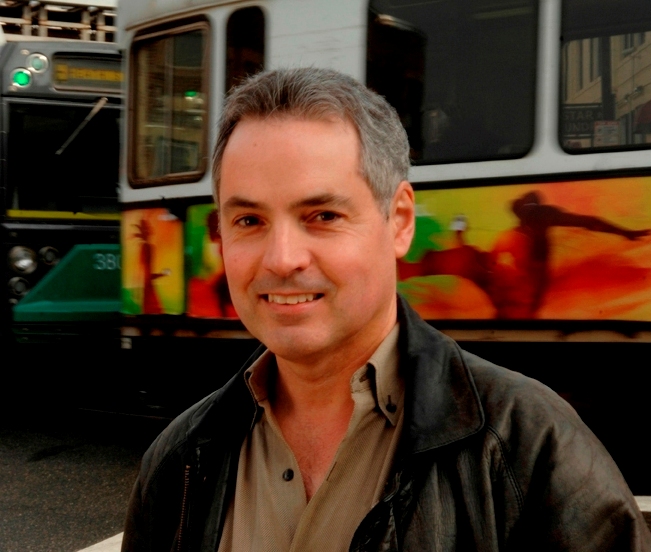
Robert Sampson has just published Disparity and diversity in the contemporary city: social (dis)order revisited in the British Journal of Sociology (BJS). It comes out of the annual BJS lecture that Sampson had the honor to give last fall. This paper focuses on both objective and subjective disorder, in particular highlighting the importance of subjective disorder for understanding the impact of disparity.

In his paper Sampson is basically taking on the Broken Windows approach to disorder, that visible and quite real signs of disorder encourage people to engage in criminal and other deviant acts. In one sense, Sampson wants to bring Durkheim back into the picture, that anomie – or a spirit or sense of disorder – is also vital to sociology.

As he says, “My general thesis is that perceptions of disorder constitute a fundamental dimension of social inequality at the neighborhood level and perhaps beyond… I argue that the grounds on which perceptions of disorder are formed are contextually shaped by social conditions that go well beyond the usual suspects of observed disorder and poverty, a process that in turn molds reputations, reinforces stigma and influences the future trajectory of an area (6).”

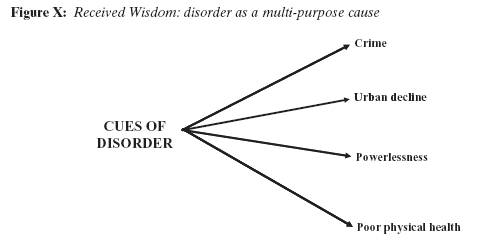
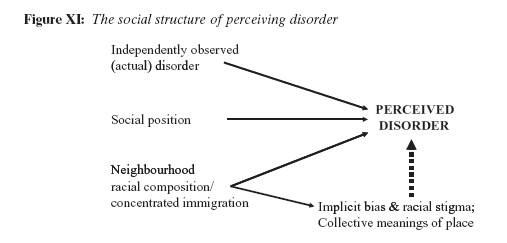
Sampson brings an intriguing mix of photoethnography, historical and theoretical analysis, and quantitative data from Chicago. His main thrust is to say that “because the link between cues of disorder and perception is socially mediated, it is malleable and thus subject to change.” He wants to get away from a mono-causal view of disorder to an understanding of disorder as something more complex and interactive, as these two contrasting figures from his paper show.
sampson-disorder-as-cause

sampson-perceiving-disorder

Continue reading “Disparity, Disorder, and Diversity”

Early Oliver Sacks and Neuroanthropology Today

Here’s a 1986 video with Oliver Sacks, where he discusses his work and his early book, The Man Who Mistook His Wife for a Hat.

I found his description of his approach striking:

As a neurologist, as a physician one is concerned with patients and with people in jams, in predicaments. In particular predicaments that are being caused by their nervous system acting up, either their brain, their spinal cord, their peripheral nerves, maybe some disease, maybe some damage. As a neurologist you want to find out what exactly is the matter for the nervous system and what you can do about it, but you are equally concerned with the effect of this on the person, how it may alter their world, their inner experience and if need be, how they can cope best, live and survive in an altered world. And so this way you have to be equally sensitive and equally knowledgeable about the anatomy and the chemistry of the nervous system but also to all the things that make a life and make a world for an individual… One is rooted in the neurosciences at one end and in psychology and in phenomenology and in just what it is to be a person.

In some ways the patients I write of can seem very remote from ordinary life and from normality. But in other ways I think one can… I think as a physician one has to be able to, one has to try to imagine what it is like for them and enter into their situation and their world and relate it to one’s own.

That same impulse inspires neuroanthropology—the bringing together of our nervous systems, individual experience and coping, and our surrounding world, the consideration of the things that make a life. That really is the core of it.

What has changed in the twenty plus years since Sacks spoke is that we are now in the position to take this impulse and direct it into our scholarship. Rather than individual cases and rare neurological problems, we can now speak of establishing a field of inquiry that addresses how we are human through this synthesis.

So what has changed to make this possible? I see the development of four areas as making our work possible. Take one of these four away, and we probably wouldn’t be speaking about neuroanthropology right now. These bases make possible what we now want to do.

Continue reading “Early Oliver Sacks and Neuroanthropology Today”

Catching fly balls: taking a step forward

Nolan Catholic High Lady Vikings catcher Martha Thomas zeroes the apparent acceleration of a pop-up
Dan Peterson, probably my favourite blogger on sports science, has a recent piece in Science Daily on How Baseball Players Catch Fly Balls. He usually posts on his excellent blog, Sports Are 80 Percent Mental. His post, as usual, is excellent, but I wanted to take issue with the slightest of details (because that’s just how I am): why do novice outfielders often take a step forward when the crack of a bat and the launch of a ball indicates that a fly ball has just been hit in their direction?

As a former and largely inept outfielder for the Ascension Catholic Church ‘Steamrollers,’ 2nd grade and under team (I was more of a junior soccer player), I well remember our coach, Dr. Wickersham, telling us repeatedly, and to little effect, ‘don’t start running forward until you know the pop-up is going to fall in front of you.’ I also clearly remember the sinking feeling when, after failing to heed his advice, a fly ball flew over my head as I charged toward it, ultimately landing almost precisely where I had been standing the instant that ball was hit.

Peterson discusses a recent paper in the journal, Human Movement Science, ‘Catching fly balls: A simulation study of the Chapman strategy,’ by Dimant Kistemakera and colleagues. Kistemakera and his team set out to test the slight variations between the trajectories fielders took when running to intercept a fly ball, and the trajectories predicted by Seville Chapman’s ‘strategy’ of using the acceleration of the ball in one’s vertical field to control whether one was too close or too far from home plate to make the catch.

Continue reading “Catching fly balls: taking a step forward”

Wednesday Round Up #57

I’m feeling chaotic today…

Michael Merzenich, Brain Plasticity and Culture
Merzenich sits down to talk with Bruce Wexler, author of Brain and Culture, in this video

Sandra Aamot & Sam Wang, Computers vs. Brains
Key differences between the two, and why computers are not likely to “out think” humans as soon as some predict

Steve Ayan, How Humor Makes You Friendlier, Sexier
Scientific American on the benefits of humor and the latest scientific research on laughter

Pology Magazine – South America
Pology is an online magazine written by anthropologists acting much more as journalists. These are first-person snippets of fieldwork and local life from around the globe, as well as photo essays. While the whole world is covered, I picked the continent of Colombia to highlight.

Vaughan Bell, On the Frontiers with the Neural Gene Mappers
Mind Hack on the new Wired article – includes this great placement of research into context: “As far as we know, all learning in the brain happens through proteins, meaning that experience, learning, thought, motivation – or any other ‘psychological level’ process we can think of, acts through the many, complex and not fully understood regulation processes.”

Abnormal Interests, Follow the Leader
Chimpanzees versus humans – the importance of cultural imitation for us. Quite a good video. See also Afarensis, where there was some interesting discussion.

Continue reading “Wednesday Round Up #57”