Ron Barrett and the Contagion of Swine Flu

ron-barrett
Ron Barrett, a medical anthropologist joining Macalester College, recently gave this interview Fears over Flu Can Be Contagious on NPR’s All Things Considered.

Ron discussed how his research on a breakout of plague in the northern Indian city of Surat provides insight into today’s reactions to swine flu. His basic point is that with infectious diseases, rumors and fears highlight existing tensions in a community, so stigma and panic can come to play a greater role in people’s reactions than the actual impact of the disease. Case in point – 78% of the medical professionals fled Surat, much more than the estimated third of the population that left.

Ron advocates the importance of transparency and providing reliable information. Otherwise, rumors can become more infectious than the disease itself. Twitter, for example, drove wild speculation about swine flu. So for reliable info, think Obama and his clear recommendations about what to do (wash your hands, cover your mouth when coughing), and not Joe Biden broadcasting fear on The Today Show.

Continue reading “Ron Barrett and the Contagion of Swine Flu”

Wednesday Round Up #62

This week it’s packed – some great stuff up front, plenty on the anthro and the brain sides, art/learning/research and video games, and finally advice if you’re starting out tenure-track.

Top of the List

Research Digest, It’s Those Voodoo Correlations Again … Brain Imagers Accused of “Double Dipping”
More methods problems for imaging researchers – using the same data twice, first to find the area and then to show that area is really the one responsible for whatever hypothesis is at stake. For more commentary, see Neuroskeptic, Mind Hacks, and Newsweek

Chris Patil & Vivian Siegel, This Revolution Will Be Digitized: Online Tools for Radical Collaboration
A hive mind of creative intellects beyond institutional and geographical constraints… Sandy at the Mouse Trap both reacts and provides a condensed version in Science 2.0: What Is and What Needs to Be

Michelle Chen, Color-Blinders: Race, Genes and Justice
Are we post-racial when it comes to inequality? If only. Michelle reacts to William Saletan’s Slate piece, Mental Segregation: Inequality, Racism and Framing

Dave Munger, How Are Numbers Related to Your Body Movements? Depends on How You Read Words
Recognizing numbers, reacting with your hands, and the impact of culture – it’s SNARC in action

Jessica Palmer, Why Has Science Been Neglecting to Study Sin?
The geography of lust and the other deadly delights. See all the maps at Gene Expression. And the original article appeared in the Las Vegas Sun.

Alan Kazdin & Carlo Rotella, The Messy Room Dilemma
Coping with kids and their behavior (i.e., holding onto illusions of changing them) – ideas about reinforcement and advice on “when to ignore behavior, when to change it” from Slate

Anthropology

L.L. Wynn, Making Ethics Training Ethnography Friendly
Great discussion over at Culture Matters of many pertinent issues related to ethnographic methods, ethical work, and human subjects review

Continue reading “Wednesday Round Up #62”

Lende wins 2009 Ganey award

2009 Ganey F. Ganey award winner, Daniel Lende
Daniel didn’t even mention this to me, but looking for a photo of him for a poster, I came across this press release: our leading contributor also managed to pick up the University of Notre Dame’s 2009 Rodney F. Ganey, Ph.D., Faculty Community-Based Research Award for his many contributions to community-based research at Notre Dame.

Although he’s done a number of community-based research projects and supported student research (some of which we’ve read about on this site), the press release of the award also singles out his innovative design of the course, ‘Researching Disease: Methods in Medical Anthropology.’ In this class, Daniel has teamed up with local organizations like Imani Unidad, African American Women in Touch, Notre Dame Office of Alcohol and Drug Education, and a support group for veterans suffering with Post Traumatic Stress Disorder (PTSD) in order to place students where they can do research of real consequence to the local community. As the press release describes:

The research has since enabled community organizations to improve the conditions in hospital waiting rooms, educate the public about PTSD and provide better services to women living with HIV/AIDS. Findings have been published electronically on Neuroanthropology.net, and one project was turned into a guide book, “Underneath It All: Humor in Breast Cancer,” which has been used by McKinney-Arnold and Memorial Hospital in South Bend.

If you want to know more, go to the Notre Dame Anthropology news page to check out the video link, or see some of the reports Daniel has posted from the research on Neuroanthropology.net, including a number of pieces by the students themselves.

When Pink Ribbons Are No Comfort: On Humor and Breast Cancer
More Than A Waiting Room
Forever at War: Veterans’ Everyday Battles with Post-traumatic Stress Disorder
Just a Place to Talk: Women and HIV/AIDS

Two Cultures Conference

two-cultures
This Saturday May 9th, The New York Academy of Sciences will host the conference The Two Cultures in the 21st Century. Co-sponsors include Science & the City, Science Communication Consortium, and ScienceDebate 2008.

The conference will pick up the debate initiated by C.P. Snow in 1959, that an inseparable gulf has opened between the sciences and the humanities and that we are the worse off because of that.

The main keynote speaker 50 years later is E.O Wilson, the evolutionary biologist and author of Consilience: The Unity of Knowledge (otherwise known as unification on science and evolution’s terms). To add substance to the conference, we have former congressman John Porter and Segway inventor Dean Kamen.

I’ve actually heard EO Wilson speak, it’s well-worth it. And there are plenty of other presenters that day, including Kenneth Miller, author of Finding Darwin’s God; Science Friday’s Ira Flatow, and science journalist Carl Zimmer. You can see the full list of invited speakers – definitely heavy weights in science and communication, which might be a better name for the conference. How to get science across to the public is one of the main concerns of most of them.

You can still register; the conference is being held at the New York Academy of Sciences in downtown Manhattan.

For those of you actually interested in CP Snow, Peter Dizikies had an illumating essay Our Two Cultures on Snow’s ideas and how they have stood the test of time back in March. And by coincidence, Stanley Fish just wrote God Talk in today’s Think Again, where he asks if belief in science is more irrational than belief in God, or more broadly, questioning our reliance on “science, liberal rationalism and economic calculation” for guidance on what to do.

Cynthia Mahmood and Political Violence

Cynthia Mahmood is associate professor of anthropology at the University of Notre Dame and a great colleague of mine. She is also now a star on YouTube. Here Cynthia explains how she approaches understanding political violence as an anthropologist:

About six minutes in, Cynthia discusses the present case of Pakistan, and expounds further in a press release accompanying the video, U.S. must help calm nuclear-armed Pakistan.

“Right now, we’re finally seeing that the heartland of the region’s instability, in fact, is in Pakistan, and that the problem President Obama is having to deal with is not just what to do about Osama bin Laden and al Qaeda, but what to do about the very serious and urgent danger that a nuclear-armed nation is on the verge of either collapse or takeover by radical Islamists.”

Continue reading “Cynthia Mahmood and Political Violence”

Escaping Orientalism in cultural psychology

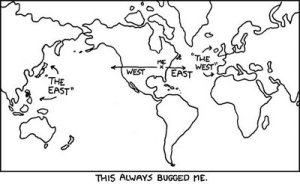
eastwest1In a recent article in American Psychologist, Adam Cohen (2009) suggests that a number of fields in psychology have taken up the study of culture, but the results, although interesting, have been limited by what sorts of ‘culture’ have been investigated. As Cohen (2009:194) writes:

A person reading these literatures could be excused for concluding that there is a very small number of cultural identities (North American vs. East or Southeast Asian), that vary principally on the dimensions of individualism–collectivism or independent–interdependent self-construal—whether people are seen as inherently independent from others or whether social roles are most important in defining the self.

In this post, I want to provide a bit of a bibliography of some of the literature fast emerging on cultural difference in psychology, neuroimaging, and related fields, but also focus a bit on the consequences of this limited imagination in considering cultural difference, the almost exclusive focus on East-West contrasts. Just because I love a bit of controversy with my breakfast, I’ll suggest it’s a form of what Edward Said has called ‘Orientalism.’

Although Cohen brings up the issue and offers a few suggestions for how the problem might be addressed, I think his prescriptions would herald more of the same sickness, although perhaps spreading the infection to more hosts. That is, Cohen puts his finger on a serious problem in the psychological study of culture, but the prognosis won’t improve much unless we actually understand the root of the problem: it’s not studying Europeans (and European-Americans) and Asians (and Asian-Americans) that’s causing the whole problem. Part of it is misunderstanding what is being studied in the first place when cultural difference is under the lens.

This post is based on part of a talk I gave on Tuesday to the Centre for Cognitive Science (MACCS) here at Macquarie. When I got into the subject, I realized it was far more than I could possibly share in a 50-minute presentation, so I thought I’d post it here.

Continue reading “Escaping Orientalism in cultural psychology”