Le Brésil au XIXème et XXIème siècle

Le Brésil au XIXème et XXIème siècle:
Une étude sur la croissance de la population, de l’urbanisation et de la pollution dans le monde en voie de développement

Le Brésil est un pays caractérisé par d’importants contrastes entre la pauvreté et la richesse, la beauté et la pollution, les “bidonvilles” et les “gratte-ciel(s)”. Dans le monde en voie de développement, le Brésil est considéré comme un exemple de ce qui peut arriver autre part lorsque l’urbanisation est probable. La population urbaine augmente beaucoup plus rapidement dans les pays en voie de développement que dans les régions plus développées. Qu’arrivera-t-il alors, lorsque le modèle de consommation des sociétés hautement urbanisées deviendra global? Avec la croissance de la population devenue incontrôlable, quelles seront nos limites?

“Où que j’aille, la nuit ou le jour, les choses que j’ai vues, je ne peux plus les voir.”
Extrait  de l’ “Ode on Intimation of Immortality”
de  William Worsdworth , 1770 – 1850

Continue reading “Le Brésil au XIXème et XXIème siècle”

Finissez cette citation: « Bien entendu, il y a encore un gouffre béant entre ce que nous savons actuellement et la compréhension réelle… »

Finissez cette citation :

« Bien entendu, il y a encore un gouffre béant entre ce que nous savons actuellement et la compréhension réelle… »

Complete this quote :

“Of course, there remains a yawning chasm between present knowledge and any actual understanding of…”

Continue reading “Finissez cette citation: « Bien entendu, il y a encore un gouffre béant entre ce que nous savons actuellement et la compréhension réelle… »”

Charlie Rose is back on the brain


Heidi Tan from the Charlie Rose show sent me an announcement about a recent broadcast because we had previously posted on discussions of the brain on Rose’s show (Find part one of that series here on YouTube or, better yet, go to the Charlie Rose website for the whole series of [currently] four episodes). Last night’s episode, ‘The Social Brain,’ included discussion with panelists Cornelia Bargmann of Rockefeller University, Giacomo Rizzolatti of the University of Parma (Italy), Gerald Fischbach of the Simons Foundation, Kevin Pelphrey of Yale University and co-host Eric Kandel of Columbia University. The group discusses social interaction, mirror neurons, autism, aggression, learning and the need for greater research on the ‘social brain.’

“Although many aspects of social behavior are learned, one of the striking things we’re going to hear about is that some aspects of social behavior are determined by individual genes that have profound effects on how we act, whether we bond together as individuals, degrees of aggression, and other things.” (Eric Kandel, Nobel Laureate, Columbia University)

If you missed last night’s episode catch it again tonight on Bloomberg Television® at 8PM and 10PM ET, or listen to the interview simulcast on Bloomberg Radio. Bloomberg Radio is broadcast on 1130AM in the New York Metropolitan area and is available on XM and Sirius. There’s also a version online, but because my Internet connection is so slow right now, I can’t really watch it: go to http://www.charlierose.com/ if you want to check it out.

A transcript of the discussion can be found here.

Continue reading “Charlie Rose is back on the brain”

Wednesday Round Up #99

Dirk Hanson, The Addiction Inbox Top Ten
The most popular posts over at very well done The Addiction Inbox: The Science of Substance Abuse

Ethan Watters, How the US Exports Its Mental Illnesses
Another great piece by Watters over at New Scientist of the globalization of US mental health concepts (or ethnopsychologies). For more, see some good commentary over at Mind Hacks

Michiko Kakutani, A Rebel in Cyberspace, Fighting Collectivism
The artist and computer scientist Jaron Lanier fights against the hive mind and digital Maoism (i.e., the wisdom of the crowd) and the importance of developing a unique voice in his new book You Are Not A Gadget

Vaughan Bell, The Ominous Power of Confession
125 proven cases of wrongful conviction based on false confessions – Mind Hacks covers an excellent yet disturbing paper

Stephen Casper, Book Review: Warwick Anderson, The Collectors of Lost Souls: Turning Kuru Scientists into Whitemen
“This marvelous book deliberately forces us to re-imagine the meaning of sojourn, scientific discovery, colonialism, and sorcery, while at the same time providing us with an account of the discovery of Kuru, a lethal neurological disease, and the science that ultimately determined its etiology. In a narrative grounded in sources found in archives in Papua New Guinea, Australia, and the United States, and further developed through oral histories with scientists, anthropologists, and the Fore people, Anderson shows us that the prion – an infectious protein supposedly discovered in the laboratories of Britain and the United States – was a thing constructed first through colonial aspirations and global imaginations.”

Continue reading “Wednesday Round Up #99”

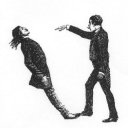
Complete this quote: “Before any attempt is made to hypnotize a Subject for the first time it is highly desirable that the Hypnotist…”

How would you complete the following quote from Eric Cuddon‘s 1938 book, Hypnosis: Its Meaning and Practice?

“Before any attempt is made to hypnotize a Subject for the first time it is highly desirable that the Hypnotist…”


Continue reading “Complete this quote: “Before any attempt is made to hypnotize a Subject for the first time it is highly desirable that the Hypnotist…””

Four Stone Hearth #84 is Gelada-ful

image from the BBC

The new, Four Stone Hearth #84! (Gratuitous Gelada Edition), is up at A Primate of Modern Aspect, and it’s especially Geladicious! If you don’t get it, you’re just going to have to go check it out, this itinerant web carnival of all things anthropological. (And, no, it’s not a reference to a delicious frozen dessert…)

I especially liked Eric Michael Johnson’s post, Bonobos and the Emergence of Culture, on Susan Savage-Rumbaugh’s TED lecture, Susan Savage-Rumbaugh on apes. It’s not a long comment, but check out the discussion as well. It’s really intriguing to watch the commenters struggle to dichotomize biology and culture when the bonobos are making a mangle of them. I do think Savage-Rumbaugh is over-invested in the argument that bonobos are specifically human-like (Comparison with Tasmanians? Ouch. But the bonobos are very cute when roasting marshmallows and learning to drive a golf cart). The fact that bonobos are ‘culture susceptible,’ shall we say, is sufficient to make a mess of biology v. culture and to highlight the way that the ‘extended mind’ concept can help us think about brain enculturation to build basic cognitive capacities. Johnson writes:

I challenge you to watch Kanzi build a fire and perform activities that require precise hand-eye coordination (including the making of stone tools) and conclude that this is a difference of kind rather than merely a difference of degree.

Also interesting is Zinjanthropus’s own post, So… Did knuckle walking evolve twice?, about a case of convergent evolution. Krystal D’Costa does a really nice ethnography of gold in the South Asian community, based in NYC: Sometimes All That Glitters Is Indeed Gold (JH3). And Beast Ape has a short but well cited piece on baboon fathers sorting out paternity of their female friends’ kids, Friendship, fatherhood, and MHC in baboons; it suggests baboon daddies are likely not able to sniff out their own offspring.