
How would you complete this unfinished quote?
“The convergence of neurology and cross-cultural research provides…”

How would you complete this unfinished quote?
“The convergence of neurology and cross-cultural research provides…”
Back to the old categories approach, with thanks to my student Casey Dolezal for help. So top of the list, then anthropology and writing for a broader public, mind, a nature/culture mix of anthropology, health, and finally some good stuff on addiction at the end.
Top of the List
Sharon Begley, The Depressing News about Anti-Depressants
Prozac Nation needs to face the data – anti-depressants don’t work as well as we thought, especially for more mild cases of depression (no better than placebos in the meta-analysis)
Michael Greenwell, Howard Zinn – 1922 to 2010
The “radical historian” Howard Zinn is remembered.
Lorenz, Pecha Kucha – The Future of Presenting Papers?
Papers presented the Pecha Kucha way – a visual speed presentation – is becoming more popular. Papers are not read but instead shown on a screen in 20 images, displayed for twenty seconds each.
Natalie Angier, Abstract Thoughts? The Body Takes Them Literally
The NY Times gets embodied!
Rosa Golijan, A Virtual Jam Session
Very cool music video – a rap/jazz fusion – put together by people playing virtually together
Kirstin Butler, Reading the Red Book
Carl Jung’s lifework now published and reviewed
Eric Taub, The Web Way to Learn a Language
A useful overview of how to learn a language online
Writing and Anthropology’s Public Presence
Chris Kelty, Why Is There No Anthropology Journalism?
A call to report more queries, debates, and findings from anthropology
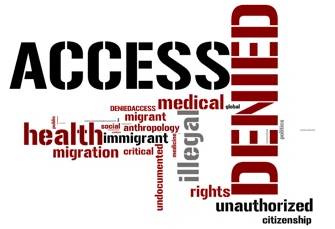
Access Denied is a great new anthropology blog on immigration and health. In particular, the editorial team focuses on the “vital global health challenge: unauthorized migrants’ and immigrants’ lack of access to health care services.”
As they write about their initiative:
Do unauthorized im/migrants have a right to health? To medical care? To publicly funded care? In this blog, medical anthropologists host a lively conversation among scholars, activists, policymakers and others on the complex and contentious issue of unauthorized migration and health. We approach the issue comparatively, with attention to power, cultural context, and historical depth. Through empirically grounded, critical dialogue, we aim to rethink current debates and inform policy about unauthorized migration and the right to health care.
Recent posts include What do Haitian Earthquake Survivors and the Super Bowl Have in Common?, which addresses the mounting controversy over stopping survivors of the Haitian earthquake from entering Florida to receive urgently needed health care, and Chutes and Ladders: Comprehensive Immigration Reform and Health Care Access for Undocumented Workers, which provides a long-term view of immigration and health using the lens of Mexican illegal immigrants to Idaho.
The Access Denied team also puts together regular News Round Ups, with the most recent one delving into the serious problems surrounding deaths among immigrants held in custody by US Immigration and Customs Enforcement.
The overall site delivers a complete package, including an extensive working bibliography, a good list of web resources on immigration and health, and most importantly Access Denied’s recommendations for Action Steps you can take to address the problems surrounding immigration and health.
Access Denied was founded by a great group of people, including Sarah Willen, a friend of mine from graduate school and now assistant professor at Southern Methodist University, and Heide Castañeda, an assistant professor at the University of South Florida, whom I had the pleasure of meeting on my recent trip there.
Other founding members include Nolan Kline, a graduate student at the University of South Florida, and Jessica Mulligan, a post-doc at the Holleran Center for Community Action and Public Policy. You can see the entire team here, including profiles of the founders and guest contributors.
Those guest contributors have included some outstanding senior people, including Didier Fassin, who just joined the prestigious Institute for Advanced Study at Princeton, on Illegal Immigrants as the Last Frontier of Welfare, and Peter Guarnaccia, Professor in Human Ecology at Rutgers, on Health Care Reform Is Intimately Linked to Immigration Reform.
For even more, go check out the new medical anthropology blog Access Denied.
Finissez cette citation :

« Comment s’effectue cette mise en mémoire culturelle ? La rèponse… »
How would you complete the following unfinished quote?
“How does this cultural memory work ? The answer…”
“As our environment continues to change around us, the question Albrecht would like answered is, how deeply are our minds suffereing in return?” (Daniel Smith, 2010)
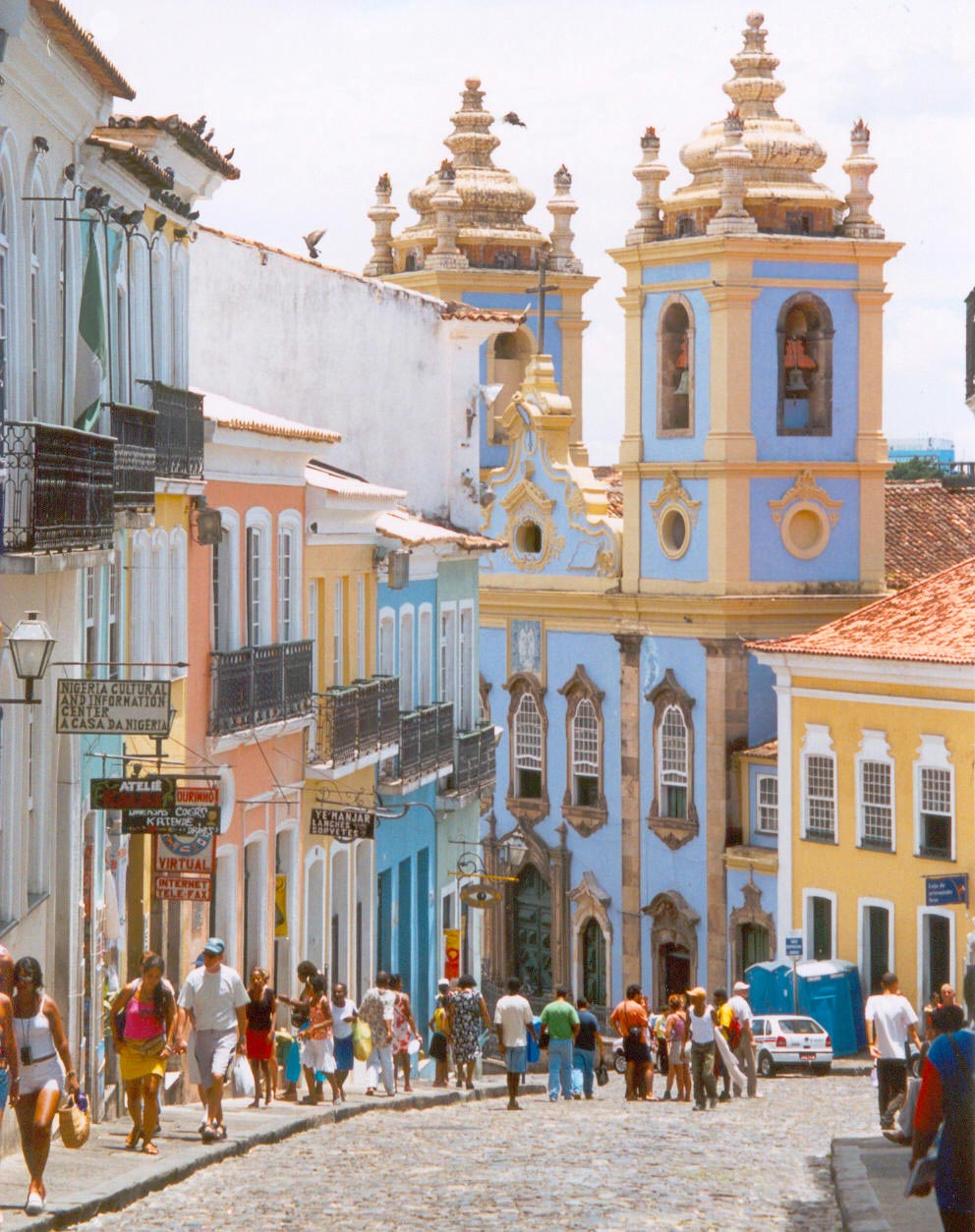
Pelourinho is the historical and cultural drawcard for tourists visiting Salvador da Bahia in Brazil. A lively epicentre of music, dance and restaurants, the area merits its prized holiday destination status. Tourists who visit the Mercado Modelo in Pelourinho might venture beneath this popular market into the slave chambers below and become aware of the tragic history of slavery that haunts the region. What many tourists might not know, however, is that the Pelourinho district underwent massive restoration efforts under the government during the 1970s and the 1990s. The area had become home to the poor and they were offered no more than a month’s wages or nothing at all to vacate and relocate. Studies show that of the 1300 families living in Pelourinho in 1992, only about 200 were able to remain in the neighbourhood (Collins, 2004:212). Those who have seen the changes can tell you how much the tourist development of Pelourinho affected the lives of the people that lived there. But even without a mastery of Portuguese, you don’t have to wander far off the pretty streets of Pelourinho to see a community in disarray. In my own travels, I encountered pregnant women high on drugs, old drunken men wielding screwdrivers as weapons and seven year olds with pocket-knives and guns. You only have to look at the long queue of tourists that line up daily at the tourist-police bureau to understand the amount of crime that plagues the region. Tourists are not being robbed by poor people that hate them, the tourists are being robbed by people who are indifferent to them.
The local government has not stopped removing people from their homes in their bid to increase tourism. There are still attempts to forcefully move people out of the coast-dwelling shanty-towns in order to erect 5-star resorts and luxury wharfs. One of the communities that I worked with in the Alto da Sereia were actively involved in public actions to resist these attempts. There are people who care, but I have to admit that Brazil was the first place where I learnt that indifference really is the opposite of love. So many people have grown up learning to be indifferent to their situation as a psychological survival strategy against solastalgia. This culturally entrained indifference is the source of a lot of crime in Brazil. In my own country, Australia, I am starting to see the cultural entrainment of ‘indifference‘ taking place in another sphere of human concern that affects our homes and where we live.
Continue reading “Solastalgia, Soliphilia and the Ecopsychology of our Changing Environment”
Made it to 100! Still the mash-up form, but I stuck a bunch on video games at the game over…
Carolyn Sargent, Who Are We in the Public Imagination?
The Society for Medical Anthropology has a new blog Voices from Medical Anthropology. Here the current SMA president asks how we present ourselves as medical anthropologists. Comments encouraged!
Chris Kelty et al., Outlaw Biology? Public Participation in the Age of Big Bio
Looks like a fascinating symposium this coming Friday and Saturday (Jan 20th & 30th) at UCLA. Plus just a fun site to explore.
Dr. Shock, The Neuroscience of Jazz
Tom Beek playing, plus fMRI studies of jazz improvisation
Mary Hrovat, Civilization Founded on Beer?
“Patrick McGovern, an archaeologist who studies human exploration of fermented beverages, believes that it might have been the desire for reliable access to alcohol, not food, that spurred the farming revolution that swept Neolithic culture…”
 Neuroanthropology