Sites for Science and Humanities Exploration

So there is a great new aggregrator out there – Science Blogging! It provides a live feed on some of the best science content from blogs around, including Scienceblogs.com, Discover Blogs, and Scientopia.

Science Blogging is the creation of Anton Zuiker, Dave Munger, and Bora Zivkovic. Here Bora describes the initiative:

The page will aggregate RSS feeds from all the major (and some minor) science blogging networks, group blogs, aggregators and services. As the site develops further, it will also encompass other online (and offline) science communication efforts, including Twitter feeds, links to major scientific journals and magazines, ScienceOnline annual conference, and the Open Laboratory annual anthology of the best writing on science, nature and medical blogs.

If you’re more inclined to the humanities, Sympoze might be more to your tastes. Sympoze has the tagline of “social bookmarking for academics,” and while it does have categories for the natural and social sciences, most of the content/aggregation seems focused on philosophy on present.

Here is what Sympoze is about:

Sympoze is a fast and easy way for academics to collectively share, promote, and find high quality online content.

How It Works

The process starts when an academic finds something online that they like (e.g, a blog post or a paper) and submits it to Sympoze.

Once a user submits a link, the rest of the Sympoze community (also academics) can promote the content by voting it up if it’s in their discipline. Popular submissions will automatically be promoted to the front page so everyone (including non-users) can see what’s popular in various academic fields.

Since voting accounts are limited to academics who have (or are currently pursuing) graduate degrees in the various academic disciplines, the popular stories reflect the opinions of actual academics. However, everyone will be able to view the content that academics vote up and down.

Link to Science Blogging.

Link to Sympoze.

Travel to Colombia!

I love traveling in Colombia – one of the best places I’ve ever visited, with so much to do and see. And a nice place to make home as well! So here are some travel articles to whet your appetite!

The beautiful photo to the right was taken by Carlos Andres Rivera, and is a shot of Popayán, Colombia – that’s where I taught for a semester a few years back. Sr. Rivera has an entire Flickr site of his photos on Popayán.

Seth Kugel, Old Friends, White Water and Roast Ants in Colombia
A trip to Santander, “known as Colombia’s adventure tourism hot spot”

Seth Kugel, In Colombia, Pillories and the Lonely Planet People
Next Seth heads to Popayán (one of my favorite Colombian cities, of course) and its beautiful surrounding region, from visiting the Guambiano indigenous people to the magnificent archaeological site San Agustín

Stephen Ferry, Showcase: It Couldn’t Be, but It Is
Photographic blog post on Sucre, Colombia – just some great shots

David Carr, Villa de Leyva, a Graceful Window on Colonial Colombia
A beautiful colonial town fairly close to Bogotá, one of the gems of the country.

Anand Giridharadas, Love and Cartagena
A guide to a weekend trip to Colombia’s best known tourist city, a spectacular coastal city complete with fortified walls. And if you want to know where to eat, see For Foodies, Cartagena Is Now on the Map

Anand Giridharadas, 36 Hours in Bogotá, Colombia
Touring the best of Colombia’s capital and largest city! Get the photo tour in A Weekend in Bogotá

Kevin Gray, Before Night Falls
A long meditation on a trip to Bogotá, going from a Cold Play concert to Sunday brunch in Usaquén while nursing a hangover

Juan Forero, Ex-Rolling Stones Manager Emerges In South America
From Rolling Stones to Ratones Paranoicos! Andrew Loog Oldham now works in Bogotá – nice piece from NPR, complete with the radio segment, online video, and more

Matthew Fishbane, Above the Clouds in a Secret Colombia
El Cocuy National Park – a place I’ve always wanted to visit. The roof of the Andes, including peaks above 17,000 feet

Alison Ince, A Volcanic Mud Bath in Colombia
Soaking in the mud at Volcan del Totumo near Cartagena

Beth Lizardoon, The Other Side of Colombia
A trip near Santa Marta, another great Colombia coastal city, complete with rafting trip

Grace Bastidas, A Drug-Runners’ Stronghold Finds a New Life
Medellín reborn!

Cali Travel Guide
The Wikitravel Site!

Mongabay.Com, Colombia – Highlights of 2010
A whole bunch of photos from people traveling to Colombia, slated to the nature side

Suggestions for the Wednesday Round Ups???

I just posted the latest Wednesday round up. Since coming back from a summer hiatus, I’ve tried to mix things up a little bit. Well, really added more features – a photo at the beginning, video in the middle, a personal note, a poem or some literary tidbit at the end. Do you like these additions? Have any other suggestions for the Wednesday round ups?

Also, how important is the Wed round up for you? It takes a fair amount of work to put together, rarely posts huge numbers… I guess my question is whether it’s too long. Would you prefer to have shorter round ups? Or any other ideas?

Please leave a comment, or send me an email if you want. daniel.lende over at gmail dot com

Wednesday Round Up #117

This week the top, then anthro, mind, and alcohol and drugs as a chaser. I stuck the mini-reflection piece after the top. And there’s a little poetry at the end.

The photo is an x-ray of a dozen roses, taken by Hugh Turvey. You can see more of Hugh Turvey’s work over at CNTV.

Thanks to my graduate assistant Naheed Ahmed for helping put this one together.

Top of the List

Rebecca Seligman & Ryan Brown, Theory and Method at the Intersection of Anthropology and Cultural Neuroscience
Abstract for a strong article on how the fields of anthropology and neuroscience can collaborate in understanding the human brain and its socio-cultural context.

Floyd Bloom et al., A Judge’s Guide to Neuroscience: A Concise Introduction
Can the field of neuroscience help the legal system in determining a defendant’s culpability? This question along with others is explored in a comprehensive introduction to neuroscience.

Philip Swift, The Octopus: Eight Footnotes
Tentacles galore! Octopus references in Japanese culture, anthropological theories, and the World Cup.

Melody Dye, Don’t Bite: In Sum, Dear Readers
Irresistible discussion of “self control” based on research with children and their ability to refrain from eating cookies. Really, you need to give in and go read it!

Jef Akst, I Hate Your Paper
Ever had a paper rejected by a journal for unfair reasons? In this article, Akst examines problems with the peer review system and possible solutions.

Impact Lab, Top 10 Photos of the Week
Some funny pictures of cowboy training, a “green” RV, stadium seating in North Korea, and more… I needed that after the rejection.

Neuroantropologia
Get your neuroanthropology in Italian, flavored towards the neuro side.

Bill Yates, Neuroscience of Murder and Aggression: Part 1
A commentary on the TEDs talk by Jim Fallon, the neuroscientist who found that he had neurological traces of a pattern found in murderers. It provides a nice discussion of multiple causation, cultural reinforcement and cultural buffering.

Livia Blackburne, How Language Affects Thought — plus book giveaway!
Discusses two recent studies where studies in which subjects’ natal language affected ability to answer time related questions after answering spatial ones (English v. Mandarin Chinese) and gender-related associations with words that had grammatical gender in Spanish and German.

Rob Mitchum, The Disparity of Pills
Covers a recent study that explored disparity in medication use by patients based on ethnic group. The take-away: even allowing for income, education and access to insurance, the statistical difference between majority and minority populations persisted, suggesting that pharmaceutical access is affected by other, possibly harder to quantify, factors

Interlude

I woke up too early, thoughts of my class, posts, emails, and articles cluttering my mind. I sat at the computer, no coffee, and soon after got the Blue Screen of Death. Would that my mind could suffer that same crash, rebooting against the clutter, or at least finding sleep. But such design is not my or Microsoft’s strength. But at the least I can wish for purity of purpose.

Anthropology

Continue reading “Wednesday Round Up #117”

The Web Instead of Traditional Peer Review?

That’s a more accurate title, but I really wanted to call this post, Tenure Online?

First off, I wanted to ask the question, what do professors out there think? Can peer-review be open sourced? Is online work getting any credit, or is it still all about traditional peer reviewed articles?

The prompt for this is an article in the NY Times: Scholars Test Web Alternative to Peer Review

The grueling process of subjecting work to the up-or-down judgment of credentialed scholarly peers has been a cornerstone of academic culture since at least the mid-20th century.

Now some humanities scholars have begun to challenge the monopoly that peer review has on admission to career-making journals and, as a consequence, to the charmed circle of tenured academe. They argue that in an era of digital media there is a better way to assess the quality of work. Instead of relying on a few experts selected by leading publications, they advocate using the Internet to expose scholarly thinking to the swift collective judgment of a much broader interested audience.

The Shakespeare Quarterly is leading the charge over in the Humanities. They handled the open comment process through Media Commons Press, which has the tagline: “Open Scholarship in Open Formats.”

The larger point comes later in the article, and it’s one I hope to hear people’s opinions about:

Today a small vanguard of digitally adept scholars is rethinking how knowledge is understood and judged by inviting online readers to comment on books in progress, compiling journals from blog posts and sometimes successfully petitioning their universities to grant promotions and tenure on the basis of non-peer-reviewed projects.

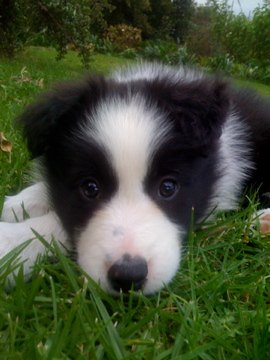
The dog-human connection in evolution

ResearchBlogging.orgEvolutionary theorists have long recognized that the domestication of animals represented a major change in human life, providing not just a close-at-hand food source, but also non-human muscle power and a host of other advantages. Penn State anthropologist Prof. Pat Shipman argues that animal domestication is one manifestation of a larger distinctive trait of our species, the ‘animal connection,’ which unites and underwrites a number of the most important evolutionary advances of our hominin ancestors.

Louis
Shipman’s proposal is discussed in a recent forum paper in Current Anthropology and is the subject of her forthcoming book, The Animal Connection. The paper is interesting to us here at Neuroanthropology.net because Shipman indirectly poses fascinating questions about the evolutionary significance of human-animal relationships, including the cognitive abilities of both and how they interact.

As Shipman puts it in the Penn State press release about the research, if we only think about what domesticated animals do for us as a species, we miss the truly curious thing about our relationship to them:

No other mammal routinely adopts other species in the wild — no gazelles take in baby cheetahs, no mountain lions raise baby deer…. Every mouthful you feed to another species is one that your own children do not eat. On the face of it, caring for another species is maladaptive, so why do we humans do this?

Although researchers working on symbiotic inter-species relationships might highlight that the support of other species hardly requires adopting their young and feeding them canned kitten food (a critique Travis Pickering levels in his comments), Shipman’s statement highlights nicely that human-animal inter-species relationships seem to extend beyond merely treating them as tameable prey or means to a human end. But then again, this super-instrumentality could be ascribed to a large number of human traits.

The domestication of animals wasn’t merely about capturing a buffet-on-the-hoof, from Shipman’s perspective, but the continuation of a long-term evolutionary project by our species to study animals, first when we were prey for them, and later as predators ourselves.

Continue reading “The dog-human connection in evolution”