The Morning News, “Black and White and Read All Over,” has an on-going art gallery series, demonstrating the work of a particular artist along one theme, complete with an accompanying interview. Most of the series consists of photography, but there are paintings and drawings as well. Really striking work.
The latest is Topologies by the photographer Edgar Martins, interview by Rosencrans Baldwin.
But the one that really struck me was on Phone Sex Operators by Phillip Toledano. Toledano captures these individuals so well, revealing the lives behind the fantasy. There is also an accompanying quote from the person which adds that much more depth. Here is the one from that series. I’m 60 years old, have a B.A. in Cultural Anthropology from Columbia University, and married for 25 years. I have a son in his last years of college who lives at home. He’s a 4.0 with a double major in English Literature and Religion. Men call me for an infinity of reasons. Of course, they call to masturbate. I call it “Executive Stress Relief.” It’s not sex; it’s a cocktail of testosterone, fueled by addiction to pornography, loneliness, and the need to hear a woman’s voice. I make twice the money I made in the corporate world. I work from home, the money transfers into my bank account daily. I’m Scheherezade: If I don’t tell stories that fascinate the Pasha, he will kill me in the morning.
I just slept in a bit, recovering from a long weekend at a conference, Affect at the Interface, at the University of New South Wales. Although I sometimes felt out of my element (pretty typical for conferences), it was a great discussion, even if over-stimulating at times. Thanks to Prof. Anna Gibbs and Dr. Jennifer Biddle for all the hard work organizing it — and also to the staff and other folks who put together a great, stimulating weekend (including the brilliant caterer!).
A host of folks presented diverse papers. I’m reluctant to list any because I’ll inevitably end up slighting someone I don’t intend to, but in addition to Prof. Gibbs and Dr. Biddle, a number of folks were very active guests over the two days: Robyn Ferrell, Anand Pandian, Melissa Hardie, Jim Wilce, and Adam Frank (sorry — couldn’t find a good link quickly to info about him) stand out, not just because of their presentations, but because of their comments on other people’s work. However, I have to admit, pretty much every reference to Gilles Deleuze went over my head (alright, I suffered so much with trying to get into Anti-Oedipus that I never attempted A Thousand Plateaus).
I presented second-to-last and made the mistake of entirely rewriting my paper the night before because in an ill-advised attempt to engage with what had happened on the first day. I’m going to post something like the presentation I aspired to give but failed to because of overly-quick turn-around, lack of sleep, and generally not being clever enough on my feet.
The discussion of affect revived my long dormant interest in the work ofSilvan Tomkins, the psychologist and cybernetic theorist. Although I had consulted his work briefly when I was writing my dissertation and first book, especially because of his discussion of shame and my interest in the bodily-nervous effects of inhibition in dance, I hadn’t really taken him seriously enough. Although there weren’t a lot of biologically-inclined individuals at the conference (probably Jennifer Biddle and I were among the most enthusiastic about this line of thinking), it was great to reconsider his work with Prof. Adam Frank there, as he, together with Eve Kosofsky Sedgwick, were instrumental in encouraging a revival of interest in Tomkins’ work, outside the narrower group familiar with Tomkins in psychology (like the Silvan S. Tomkins Institute).
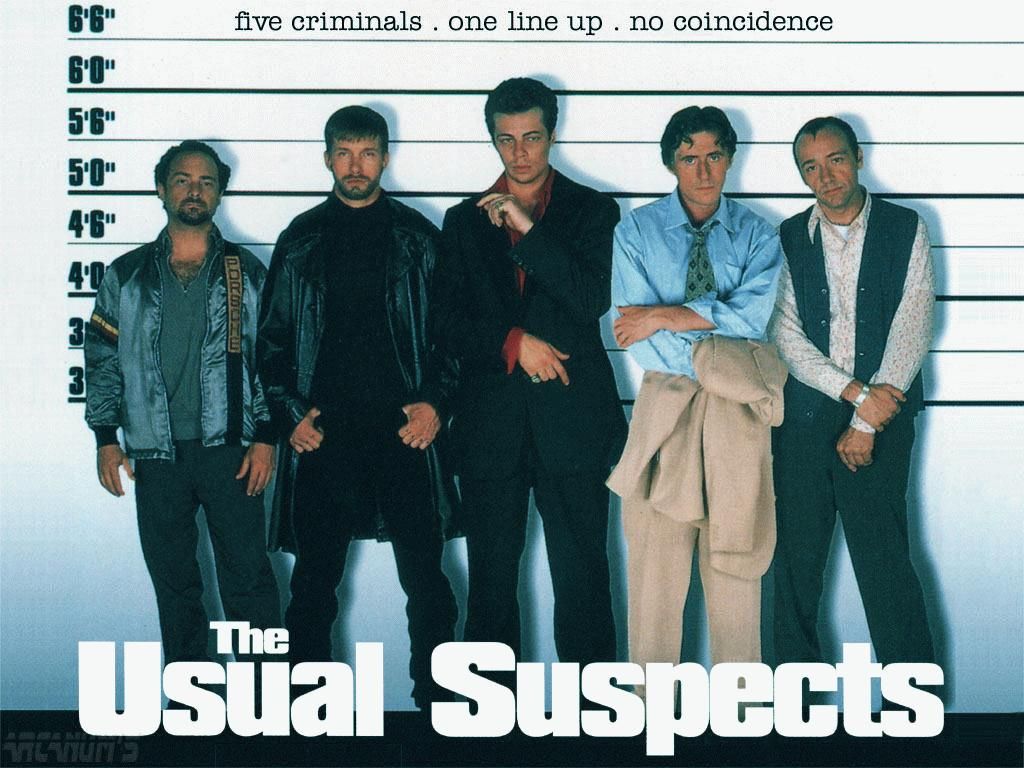
At first the 48th edition looked like a round up of the Usual Suspects, a cop gone bad (the philosopher), a hit man (the critic), his hard-talking partner (the challenger), a hijacker (the pedant), and a con man (the hacker). But that line-up turned out to be fiction. More suspects got brought in; plot lines got complicated.
We anthropologists make lousy cops anyway. “To a cop the explanation’s always simple. There’s no mystery to the street, no arch criminal behind it all. If you find a body and you think his brother did it, you’re gonna find out you’re right.”
We’re going for the mystery.
Evolution
“We find the concept brilliant, but New York is difficult for new restaurants. How can we be certain that our money will be returned in the long run?” Keaton looks at Edie and smiles confidently. “It’s simple gentlemen, design versatility.”
Out of flesh and blood, evolution cobbles things together like our conjoined nervous and sensory systems. Courtesy of our imperfect eyes, the new blog Illusion Sciences gives us the peripheral escalator illusion. Felt like I was going to fall out of a tree, which is not a good thing for a primate. Language is a better thing, and Babel’s Dawn covers how to build that sort of new brain from old parts.
“A truck load of guns gets snagged, Customs comes down on N.Y.P.D. for some answers – they come up with us.”
Bloggers do cover the answers. Want to know how to get into problems? First, cut out the tryptophan, it will put you in a bad mood, a punishing mood; low serotonin and decision making just don’t mix!
Still, vision can be fallible, apt to get caught up in illusion, context making us see movement when things are really black and white. For, as Deric Bownds shows us, we want to see into the future to be able to grasp the present, sometimes seeing things that aren’t really there.
The Critique
“Alright, you all know the drill. When your number is called, step forward and repeat the phrase you’ve been given. Understand?”
As much as we like the revolution in neuroscience, brain scientists sometimes act like cops—they’re laying down the law. More than a little crooked criticism is needed.
What better than one of the real highlights of this line-up: Neurocritic’s Mirror Neurons Control Hard-Ons? The Mr. Bean photo comes directly from him, and captures everything that goes wrong with mirror-neurons-explain-the-world enthusiasm.
Mixing Memory wants in too, so he adds Sex = Mirror Neurons. Now I know why sleazy hotels have mirrors on the ceiling—it looks like mirror neurons need extra help getting aroused.
Not so with expressions of fear and disgust and the latest evolutionary psychology declaration of magnificent adaptive benefits. You mean, just mimicking facial expressions with no actual indication of a fitness benefit doesn’t convince you, Dr. X?
Paraskevidekatriaphilia. Say that five times fast before you ask what it is. No, you won’t figure it out that way, but it will make you laugh. And you need to laugh about the fear of Friday the 13th. Or in Romania, Tuesday the 13th. PodBlack continues with her good work placing research on superstition in the proper cultural, educational, and peer-reviewed context.
At the World Science Festival it’s guilt by assocation from being too Geek Friendly. The Science of Morality links to perps with long records of their own: Daniel Dennett, Patricia Churchland, Antonio Damasio and Marc Hauser.
“We know you can get to us, and now you know we can get to you.”
In Culture Shock, Mind Hacks describes how culture affects trauma (helped by one of our posts) and then takes us through the history and recent evidence on post-traumatic stress disorder. Conveniently, our own Erin Finley has just provided part two on her work on trauma among Iraq veterans, Cultural Aspects of PTSD, Part II: Narrative and Healing.
Sharp Brains enlightens us with an interview with Ori Brafman, author of Sway: The Irresistible Pull of Irrational Behavior. The hidden forces shaping our actions are as much cultural as they are individual. As Brafman says, “We take on the roles others ascribe to us.”
And sometimes we just remember things wrong, as described in The Anatomy of a False Memory. Patients with frontal lobe damage help identify some of the functional pathways involved in how we reconstruct memories. This type of research then brings us a thorny legal question: If we make memory up, can we ever swear to tell the truth?
Culture In Action: Technology
“I’ve got immunity now. What can you possibly offer me?”
At the very least, emerging technologies offer new ways to diagnose and deal with brain-related disorders. Brain Stimulant covers how ultrasound, coupled with a magnetic field, can now be used to shape neuronal firing, which will surely interest neurosurgeons looking for non-invasive techniques.
Isn’t that what activities like capoeira and ballroom dancing already do? Put differently, our technologies often take our brain’s capabilities along for the ride, as each step in the computer revolution shows us. Restless Minds argues that Google and Web 2.0 is about the “flow,” about a service that “enables an effortless flow of your data—and experience—[to] hold your attention.”
But technology has gone one step further in experience, attention, and identity—on-line virtual reality. Savage Minds provides a review of Tom Boellstorff’s recent ethnography of Second Life. We handle gaps in our roles and identities in everyday life with apparent ease; online “we lack many of the cues and strategies we rely upon in the real world.” Based on experience, people are developing new techniques and interpretations, from brb (be right back) to more leeway in letting people play their online identity.
So our brains live in a Material World, surrounded by technology everyday, everywhere. In Brazil mobile phones are used to build new relations and identities, to demonstrate one’s modernity, and thus raise questions about the importance of our bodies, the role of emotions, even addiction. As Sandra Rubia Silva writes, “Owning a mobile phone has become a way of being in the world.”
So, there you have it. Encephalon #48. Anthropology coming up with its usual suspects. Evolution, biology, critique, everyday synthesis, and culture.
Narrative and memory are interwoven in our consciousness, and thus explorations into trauma from both humanities and social science perspectives almost invariably discuss narrative in one form or another.An ongoing debate within psychological research, for example, ponders whether the coherence of trauma stories is correlated to the amount of emotional distress associated with a given traumatic memory.It is hypothesized that the greater the distress, the less organized the narrative.If this were the case, we might expect that the coherence with which an individual is able to talk about the trauma would increase as the memory is processed and resolved, a finding for which we have some evidence.
We do know – when it comes to Post-Traumatic Stress Disorder (PTSD) – that narrative matters.As I wrote in an earlier post, the most effective therapies yet proven for reducing PTSD symptoms are the exposure therapies, particularly Prolonged Exposure (PE) therapy.These therapies are more effective for reducing the full range of PTSD symptoms than any pharmaceutical yet identified.And the crux of these therapies rests on telling the story of the trauma, sometimes over and over again.This simple practice, this process of speaking, has been reliably demonstrated to result in an improvement of PTSD symptoms for many patients.
But for all its clinical benefit, this extraordinary observation tells us very little about the mechanisms of psychic healing after trauma.Instead, it points to a growing body of evidence that suggests it is not just narrative that matters in PTSD, but, more intriguingly, that it is the type of narrative that matters.Unstructured psychodynamic therapies, for example, have not been demonstrated to lessen the severity of PTSD, even among patients who continue in therapy for years.And yet certain ways of narrating memory do make a difference, and this phenomenon once again points to a role for anthropologists and other culturally-minded researchers in exploring the cultural-emotional-physiological-environmental interactions at play in post-traumatic processing.
We will be hosting the next edition of Encephalon, the blog carnival bringing the best and brightest (and latest) of mind/brain related materials together. The carnival goes up Monday, so please send your submissions to encephalon{dot}host{at}gmail{dot}com before then. Thanks!
And if you want more info on Encephalon as well as a list of previous editions, see the overall host site at Sharp Brains.










 Neuroanthropology