Wednesday Round Up #6

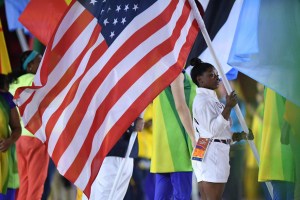
USA’s flag-bearer Simone Biles holds her country’s national flag during the closing ceremony of the Rio 2016 Olympic Games at the Maracana stadium in Rio de Janeiro on August 21, 2016. / AFP PHOTO / Leon NEALLEON NEAL/AFP/Getty Images

Simone Biles on Overcoming Abuse, the Postponed Olympics, and Training During a Pandemic
A powerful profile/interview of an athlete coming into her own as a person and a force for change.

Mounting evidence suggests coronavirus is airborne — but health advice has not caught up
Nature piece covering the debate over aerosols as forming part of how coronavirus gets transmitted. Much of the debate might hinge on an arbitrary standard, that droplets are 5 micrometers or larger and aerosols less than that – when droplets/aerosols that are 4 micrometers in diameter are emitted during normal speech. Still, end of the day, droplets that get onto surfaces and onto hands and into airways still seem to be the primary route of transmission, and aerosols are more of a concern in enclosed, poorly ventilated spaces without direct sunlight or UV light.

The Boogaloo Tipping Point
Excellent consideration of the sociocultural and technological dynamics around this right libertarian group

The birthplace of the boogaloo movement, 4chan’s /k/ section, is ostensibly devoted to the ownership and purchase of weapons. But in practice, it is a space where weapons discussions combine with 4chan’s politicized male anger. The name “boogaloo boys” is a reference to the critically maligned 1984 sequel Breakin’ 2: Electric Boogaloo—around 2012, users on /k/ began referring to the possibility of “Civil War 2: Electric Boogaloo.” Half-serious posts about how certain weapons might be employed in “the boogaloo” evolved over time and grew more elaborate. Like many memes on 4chan, each new version was more cryptic than the last, a means to express insider knowledge and in-group status.

Book Review: Why Science Denialism Persists

Nearly 400 years later, the legacy of denial remains intact in some respects. Scientists who publish research about climate change or the safety of genetically modified crops still encounter the same kind of pushback from deniers that Galileo did. Yet denialism has also sprouted some distinctly modern features: As Alan Levinovitz points out in “Natural: How Faith in Nature’s Goodness Leads to Harmful Fads, Unjust Laws, and Flawed Science,” sometimes we ourselves can become unwitting purveyors of denial, falling prey to flawed or false beliefs we may not realize we’re holding.

Levinovitz passionately protests the common assumption that natural things are inherently better than unnatural ones. Not only do people automatically tend to conclude organic foods are healthier, many choose “natural” or “alternative” methods of cancer treatment over proven chemotherapy regimens. Medication-free childbirth, meanwhile, is now considered the gold standard in many societies, despite mixed evidence of its health benefits for mothers and babies.

Letter to the Stanford President and Provost: The inadequacy of “The Impacts of Race in America”

We are also deeply frustrated by administrators’ conceptualization of Black Studies as a limited field of inquiry. These comments are not only disrespectful to Black community members, but they fail to acknowledge the immense intellectual project of African and African-American Studies. The discipline of Black Studies has historically valued and fostered global thinking. Beyond Africa and the United States, Black Studies has theorized and addressed issues of culture and identity in the African diaspora in Latin America, the Caribbean, Europe, and Asia. Furthermore, ideas and insights from Black Studies have been adapted and applied by scholars outside of the tradition.

Moreover, the “too narrow” response is being employed by the University to abdicate its responsibility to broaden its curriculum with marginalized fields of study. Although the number of students who choose to major and minor in African and African American Studies increases each year, Stanford refuses to approve hires to focus on the teaching of Black Studies exclusively. To date, the University has no core faculty dedicated specifically to African and African American Studies.

While administrators worry about Black Studies’ supposedly limited focus, they have little to say about the Eurocentric curriculum and faculty specializations in the University’s traditional departments. If the administrators would critically reflect on the discipline’s legacy at Stanford and beyond, they would see that a Black Studies department would enrich Stanford’s curriculum by strengthening the humanities and social sciences.
Why the Flow of Time Is an Illusion

Continue reading “Wednesday Round Up #6”

Wednesday Round Up #5


An Interview with the Editor of American Anthropologist about the March 2020 Cover Controversy

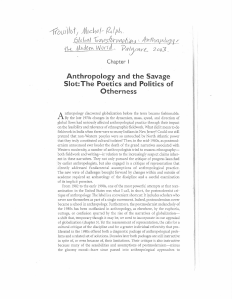
We know the role that anthropology has played in the erasure of Indigenous peoples in the Americas through its salvage/savage ethnography project and its continued use of human remains for “research” purposes. Anthropology has consistently erased Indigenous peoples, just as it has consistently dehumanized Black people. Anthropology is founded on the savage slot, and this is a systemic and structural condition that spans beyond our intentions.

Evolution: That Famous ‘March of Progress’ Image Is Just Wrong

Many successful branches of the tree of life have stayed simple, such as bacteria, or have reduced their complexity, such as parasites. And they are doing very well.

In a recent study published in Nature Ecology and Evolution, we compared the complete genomes of over 100 organisms (mostly animals), to study how the animal kingdom has evolved at the genetic level. Our results show that the origins of major groups of animals, such as the one comprising humans, are linked not to the addition of new genes but to massive gene losses.

Do we suffer ‘behavioural fatigue’ for pandemic prevention measures?

The reaction to epidemics has actually been quite well studied although it’s not clear that ‘fatigue’ is the right way of understanding any potential decline in people’s compliance. This phrase doesn’t seem to be used in the medical literature in this context and it may well have been simply a convenient, albeit confusing, metaphor for ‘decline’ used in interviews.

In fact, most studies of changes in compliance focus on the effect of changing risk perception, and it turns out that this often poorly tracks the actual risk.

Dear White Anthropologists, Let Not Symbolism Overshadow Substance

As I, a Black female anthropologist from the Caribbean, sit with and within what certainly feels like a precipice in time, I am reminded of our disciplinary declaration in the nation’s capital only three years ago that, “Anthropology Matters!” But can anthropology matter if Black lives do not matter to anthropology? Interrogating this urgent and existential question will mean a willingness to rethink not only our public relevance in the world but also our very raison d’être within the academy.

If anthropologists have been historically trained to study what makes us human, then the time has come, as Irma McClaurin recently suggested, for anthropology to rethink the very terms of what it means to be human. Anthropology, in this sense, must now preoccupy itself not just with the human, but with the question of humanity. If white anthropologists are truly invested in substance over symbolism, then they will realize that the discipline is far better positioned than most to addressing the crisis of humanity at home.

‘To fail but still mostly be safe’: Lynn Steger Strong wrestles with precarity and privilege

A lot of the novels I grew up reading – the books that I was told were important when I was younger, books written largely by white men, by people whose relationship to agency and power is often very different than the rest of us – teach us that you will hit a point, an achievement, maybe a “dream”, where things shift in some irrevocable way, and then you will be something other, maybe better, on the other side. But I think almost none of life is like that. For the most part, something happens, and then you are mostly still yourself. You have to figure out how to pay your bills and love your kids; you have to decide what to have for dinner, and to clean the house.

Space: The Final Illusion

If we are to have a complete physics, we must unify the geometrical picture of spacetime given by general relativity with quantum physics. There is some theoretical evidence that this project of making a quantum theory of gravity will require space and spacetime to become discrete and built out of finite atoms of geometry.

In the same sense that a liquid is just a description of the collective motions of myriads of atoms, space and spacetime will turn out to be just a way of talking about the collective properties of the large number of atomic events. Their constant coming in and out of being, causing the next ones as they recede into the past, make up the continual construction of the world—also known to us as the flow of time.

Memories Can Be Injected and Survive Amputation and Metamorphosis

Glanzman’s team went back to their aplysia and trained them over two days to prolong their siphon-withdrawal reflex. They then dissected their nervous systems, extracting RNA involved in forming the memory of their training, and injected it into untrained aplysia, which were tested for learning a day later. Glanzman’s team found that the RNA from trained donors induced learning, while the RNA from untrained donors had no effect. They had transferred a memory, vaguely but surely, from one animal to another, and they had strong evidence that RNA was the memory-transferring agent.

Glanzman now believes that synapses are necessary for the activation of a memory, but that the memory is encoded in the nucleus of the neuron through epigenetic changes. “It’s like a pianist without hands,” Glanzman says. “He may know how to play Chopin, but he’d need hands to exercise the memory.”

Wednesday Round Up #4

Wednesday Round Up #4

Ten Years of the Sun in One Hour – a beautiful and eerie watch of the centerpiece of our solar system

Why Birds Can Fly Over Mount Everest

Wonderful story about the evolution of life and gravity and wood and oxygen and lungs…
Once the secret of how to oxidize lignin was understood, fungal spores and bacteria began to break down all the dead wood that was not already fossilized, using up oxygen in the process, and so the level of oxygen in the atmosphere began to decline rapidly. It went from a high of above 30 percent during the Carboniferous Period (300 million years ago) to around 12 percent at the end of the Permian Period (250 million years ago). This was bad news for most of the life on Earth, because it had gotten addicted to this abnormally high oxygen level. Ninety-five percent of all life on Earth died—strangled by an atmosphere so low in oxygen. It was the largest extinction event in the history of life on Earth.

Some of the 5 percent of life forms that did manage to survive went to Mr. R&D and, using what breath they had left, said, “We need help to survive on this small amount of oxygen.”

My Family Saw a Police Car Hit a Kid on Halloween. Then I Learned How NYPD Impunity Works.

ProPublica Deputy Managing Editor Eric Umansky’s family saw an unmarked NYPD cruiser hit a Black teenager. He tried to find out how it happened, and instead found all of the ways the NYPD is shielded from accountability.

“Bayesian Statistics and Hierarchical Bayesian Modeling for Psychological Science”
An entire class on Bayesian approaches now on YouTube – “This semester’s teaching on Bayesian stats and cognitive modeling is over! Thanks to COVID (ironically!), I recorded all my teaching sessions.”

“Reality” is constructed by your brain. Here’s what that means, and why it matters.

“It’s really important to understand we’re not seeing reality,” says neuroscientist Patrick Cavanagh, a research professor at Dartmouth College and a senior fellow at Glendon College in Canada. “We’re seeing a story that’s being created for us.”

Most of the time, the story our brains generate matches the real, physical world — but not always. Our brains also unconsciously bend our perception of reality to meet our desires or expectations. And they fill in gaps using our past experiences.

All of this can bias us. Visual illusions present clear and interesting challenges for how we live: How do we know what’s real? And once we know the extent of our brain’s limits, how do we live with more humility — and think with greater care about our perceptions?

Rather than showing us how our brains are broken, illusions give us the chance to reveal how they work. And how do they work? Well, as the owner of a human brain, I have to say it’s making me a little uneasy.

Wednesday Round Up #3

Wednesday Round Up #3
“Decolonize Maiz” is art work by Ernesto Yerena. You can purchase it from the Saguaro Gallery.

Black Lives Matter: How the movement that’s changing America was built and where it goes next

And according to Muhammad, we can make these big asks now in large part not merely because of Garza, Cullors, and Tometi, but because of the framework they established. Black Lives Matter was born as an organization with a queer, feminist framework that grasped the importance of intersectionality. “Both Patrisse and I have this experience being queer black women in a movement for black freedom that really isn’t shaped in our image. One of the things that actually connected Patrisse and I very early on is what it meant to try to navigate that space,” Garza says.

That was especially important at a time when the media focused on black death centered on straight black men and boys. Since people are oppressed because of race, gender, and all of the various ways they are identified, if black lives are to truly matter, they all had to matter. It is to the movement’s credit that the deaths of trans people like Tony McDade and Nina Pop haven’t been lost in the shuffle of recent tragedies. But visibility hasn’t been the sole accomplishment.

“This moment crystallizes how important organizing is to movement work and movement building,” Muhammad says. “It’s clear that what they did helped to prepare, city by city, what is emerging as a national network of organizers who have been ready, willing, and able to step into a crisis. We have to see what’s happening here in terms of the nucleus of these massive protests being the outcome of all of that work.”

Explainer: what is decolonisation?

Decolonisation is now used to talk about restorative justice through cultural, psychological and economic freedom.

In most countries where colonisers remain, Indigenous people still don’t hold significant positions of power or self-determination. These nations are termed “settler-colonial” countries – a term made popular in the 1990s by academic Patrick Wolfe, who said “invasion is a structure not an event”.

We Can Protect the Economy From Pandemics. Why Didn’t We?

Now 49, Wolfe had traded the Cameroonian jungle for the conference rooms of Silicon Valley. When I saw him on Zoom, his shoulder-length locks were gone, and his quarantine beard was shot through with gray. But he had the same glow of enthusiasm I remembered. His new preoccupation, he told me, was pandemic insurance.

I’ll confess this didn’t immediately pique my interest. The word insurance evokes in me feelings of tedium and loathing. Like many Americans, my personal interface with the industry has, let’s just say, been less than positive. But then Wolfe began to explain the unexpected direction his career had taken. After years of thinking about epidemics in terms of the symptomatic and the dead, he’d begun considering their economic ramifications. A global pandemic, and the steps we would take to stop it, would mean business closings, layoffs, and mass unemployment. Preparing to face an outbreak, he’d come to believe, required anticipating those impacts.

Tanya Luhrman reflects on writing, books, and the difference between anthropology and ethnography. All built around her own trajectory as a scholar.

Continue reading “Wednesday Round Up #3”

Wednesday Roundup #2

Tyrone B. Hayes on how racism works in the academy. Hayes also was featured in the New Yorker for his groundbreaking work on how manufactured chemicals negatively impact our environment, in particular the herbicide atrazine’s impact on sexual development among amphibians

“Why are you always here?” She asked as we walked up the hill from LSA to Morgan Hall where Immunology was taught. I had walked alongside the professor from LSA to class all semester.

Concerned, I answered, “I’m taking the class, is that ok? I’ve never had a course in immunology.” I assumed the Professor was confused because I was an IB graduate student taking an undergraduate course in MCB.

“I didn’t know they let you guys take classes” she responded.

“What do you mean?” I asked.

“Aren’t you the custodian who takes care of the crickets?” she queried.

“No… I’m a graduate student in IB” I answered.

“Oh.” She said unapologetically. “I always see you on the elevator…I just assumed you were the custodian who takes care of the crickets.”

And that was my introduction to Berkeley as a new graduate student (fall of 1989). It was one thing for campus police to block my car twice during my first week of graduate school and interrogate me because someone called and reported me in the building…but it was a completely different one for one of my professors to treat me this way. I dropped the class.

I thought Berkeley would be better. It reminded me of my first day at Harvard…

The Biggest Psychological Experiment in History Is Running Now

Individual resilience is further complicated by the fact that this pandemic has not affected each person in the same way. For all that is shared–the coronavirus has struck every level of society and left few lives unchanged–there has been tremendous variation in the disruption and devastation experienced. Consider Brooklyn, just one borough in hard-hit New York City. Residents who started the year living or working within a few miles of one another have very different stories of illness, loss and navigating the challenges of social distancing. How quickly and how well individuals, businesses and organizations recover will depend on the jobs, insurance and health they had when this started, on whether they have endured hassle or heartbreak, and on whether they can tap financial resources and social support.

The pandemic has laid bare the inequities in the American health care system and economic safety net. Black and Latino Americans are dying at much higher rates than white Americans. “When we talk about preexisting conditions, it isn’t just if I’m obese, it’s our society’s preexisting condition,” says medical anthropologist Carol Worthman of Emory University, an expert in global mental health.

Fortunately, the unprecedented pandemic is leading to unprecedented science not just in virology but on mental health and resilience. Behavioral scientists are measuring the psychological toll in real time and striving to identify what helps people cope.

This Is What I Want To Tell My White Professors When They Ask, ‘How Are You Today?’

Continue reading “Wednesday Roundup #2”

Wednesday Round Up #1

I’m starting the Wednesday round up back up. I didn’t post yesterday because of #shutdownstem. For more information on that, see shutdownstem.com.

In the wake of the most recent murders of Black people in the US, it is clear that white and other non-Black people have to step up and do the work to eradicate anti-Black racism. As members of the global academic and STEM communities, we have an enormous ethical obligation to stop doing “business as usual.” No matter where we physically live, we impact and are impacted by this moment in history.

Our responsibility starts with our role in society. In academia, our thoughts and words turn into new ways of knowing. Our research papers turn into media releases, books and legislation that reinforce anti-Black narratives. In STEM, we create technologies that affect every part of our society and are routinely weaponized against Black people.

Black academic and Black STEM professionals are hurting because they exist in and are attacked by institutional and systemic racism. Black people have been tirelessly working for change, alongside their Indigenous and People of Color allies. For Black academics and STEM professionals, #ShutDownAcademia and #ShutDownSTEM is a time to prioritize their needs— whether that is to rest, reflect, or to act— without incurring additional cumulative disadvantage.

I encourage people to watch this short video with Ibram X. Kendi. “I’m not racist” is not good enough. We have to strive to actively become anti-racist.

Kendi’s longer talk here is well worth it. He provides more context and depth to his basic framing, and explains the history with keen insight.

I was also struck by this piece from footballer Liam Rosenior: This is just the beginning, I promise you: an open letter to Donald Trump.

Thank you for shining a spotlight to people around the world who have been sadly unaware of your country and the state it has been in for hundreds of years, and for outing the racist, hateful, bigoted and violent people who not only voted for you but have held the cultural key to an unjust, corrupt and fundamentally prejudiced society and system from the conception of the USA, built on the genocide of Native Americans and the slavery and incarceration of millions of black people.

Thank you for giving us a tangible, symbolic enemy (yourself and your Make America Great Again minions) against which people now have fuel to organise, strategise and mobilise a long-lasting movement and process to change our planet for good.

Ezra Klein interviewed Ta-Nehisi Coates.

“I can’t believe I’m gonna say this,” he replied, “but I see hope. I see progress right now” …
Continue reading “Wednesday Round Up #1”