Magic and Mind Tricks

Benedict Carey has a NY Times article today, While a Magician Works, the Mind Does the Tricks. Cognitive neuroscience and magic has been receiving a lot of attention lately. Mind Hacks has written extensively on magic and Neurophilosophy has a more general post.

Carey covers much the same ground, beginning with the recent paper “Attention and Awareness in Stage Magic: Turning Tricks into Research” (full paper) by Stephen Macknik and colleages in Nature Neuroscience Reviews. Carey writes about the visual and tactile tricks of magic, of a red flash that lingers in vision to hide the stripping away of a white dress or gripping the wrist to leave a “somatosensory afterimage” before neatly stealing a man’s watch.

Carey also links to an extensive collection of videos that accompanied the Nature article. That’s one of the things I definitely want to highlight. These are videos of magicians doing their tricks, as well as some talks at a recent conference.

Magic would make a great neuroanthropology research project, similar to the placebo effect or video games. Anthropologists have long studied “magic, witchcraft and religion” (a typical course title), and are well placed to understand the techniques and training of magicians, the cultural knowledge and biases that magic seems to subvert or surprise, and how audiences read intentions into actions by the magician.

Today in the NY Times: Interactions or Causes?

One can take the New York Times today to illustrate a basic dichotomy we frequently discuss on this site. To understand ourselves and the world, is it better to examine complex interactions and the mixing of human action and natural cause, or to draw on simpler explanations and the old cause-effect scientific model?

Given that this site is neuro-anthropology (which the Times has nicely illustrated), we obviously favor interdisciplinary over one-field approaches. Given today’s world, that matters.

Handle with Care by Cordelia Dean takes on technology, science and ethics. She specifically examines planet-level environmental engineering or “geoengineering”, but also mentions robotics and nanotechnology. We could add gene therapy and increasingly sophisticated pharmaceuticals to that list. Her basic point?

This technology might be useful, even life-saving. But it would inevitably produce environmental effects impossible to predict and impossible to undo. So a growing number of experts say it is time for broad discussion of how and by whom it should be used, or if it should be tried at all.

As Dean notes, it is an extremely difficult proposal, contravening the way many scientists approach their work, highlighting necessity of global systems to manage our increasing technical power, and raising the specter of “knowledge-enabled mass destruction.”

Just one example of this appears in today’s Times with Surpassing Nature, Scientists Bend Light Backwards which points both to the potential impact on microscopes and on invisibility cloaks.

In Handle with Care, Dean highlights that science for science’s sake is not the answer. Rather, Prof. Sheila Jasanoff argues that the “first step was for scientists and engineers to realize that in complex issues, ‘uncertainty, ignorance and indeterminacy are always present.’ In what she described as ‘a call for humility’ [in her Nature essay], she urged researchers to cultivate and teach ‘modes of knowing that are often pushed aside in expanding scientific understanding and technological capacity’ including history, moral philosophy, political theory and social studies of science — what people value and why they value it.”

David Brooks in Harmony and the Dream brings us directly into that debate of what people value. He argues that “The world can be divided in many ways — rich and poor, democratic and authoritarian — but one of the most striking is the divide between the societies with an individualist mentality and the ones with a collectivist mentality.”

Continue reading “Today in the NY Times: Interactions or Causes?”

Mental Health Tips

10 steps to better brain health:


1. A healthy diet. Glucose is the brain’s major source of energy, but a balanced diet is essential to body and brain function. Food with a low glycemic index (GI) like oats and bran as well as dark green leafy vegetables that are rich in magnesium are both believed to help brain function. Choline rich foods such as eggs and red meat are also thought to assist healthy communication between brain cells. Also, avoid substances that stress the brain and limit drugs like caffeine, nicotine and alcohol.


2. Stimulate your brain. No, put the super-charged magnetic coil down! I’m not talking about Transcranial Magnetic Stimulation. I’m talking about involving yourself in new activities, playing an instrument, learning to speak a foreign language, solving brain teasers. Exercise the brain as you would the body. The Brain operates on a use-it or lose-it policy. So use it! Play sudoku, solve a crossword puzzle and test your skills at scrabble!


3. Keep a diary. A great way to deal with stress, emotional worries and to relax at the end of a hectic day or a busy week is to sit down and write. It’s a fantastic way to see what you have achieved, frame new goals and keep your emotions in balance. Also, writing notes for yourself helps convert information stored in your short-term memory to long-term memory. So get that creative energy flowing and put pen to pad!


4. Sleep well! Getting a good night sleep is essential for concentration. It has been shown that regular sleep-wake cycles are important in daily cognitive performance. Dreams may be important in the consolidation of memory. As we all know, it feels great to rise and shine after we have slept like a baby!


5. Regular exercise! It is important for your entire body. Exercise is believed to be important in maintaining neural plasticity in old age and aerobic fitness may in fact reduce the loss of brain tissue common in ageing. Exercise also releases natural hormones that lead to those ‘feel good’ sensations. Feeling good about your body is vital to brain health.


6. Regulate your couch-time. Too much TV weakens brain power. But a little TV is great mental stimulation. Balance is the key!


7. Socialise! Familiar smiles, friendly conversations and meaningful interactions are all part of a healthy lifestyle. The brain is the organ of society and socialisation is an integral part of brain health. Join a book-club, learn to dance, smile at a colleague!


8. Organisation. We all know the anxiety that misplacing the house-keys or forgetting an appointment creates. Avoid the stress and make a special place for items such as reading glasses, wallets/purses or the TV remote.


9. Relax. Spend time on a hobby, take your dog for a walk or just sit back in a comfortable armchair with a great book. Technique to relax are not only useful to reduce stress and enhance brain performance, relaxation methods have also been shown to play a positive role in emotional health. For example, mindfulness meditation has been shown to decrease the recurrence of depression. Find a stress-reducing practice that suits your lifestyle and personal taste and then devote a balanced amount of time each week to it.


10. Positive thinking. Always look on the bright side of life (someone should turn that into a song)!


Transcultural Psychiatrists would certainly have a few dilemmas with the above list. The serious Neuroanthropologist probably does too! But what the heck, I put them here just for fun! Mind you, the list might lead to some interesting questions about what could be considered the definitive TOP 10 FOR BRAIN HEALTH applicable across cultures!


And now for some links:


How Culture May effect depression diagnosis

Mental Health Resources

Mental Health

Mental Health news

Mental Health America

Neurological Examinations

Interactive Health Tutorials:

Brain, The world inside your head

Brain Fitness

Cognitive and Emotional Health

Mental Health Council of Australia

The Human Brain

Brain Food

Meditation and Depression

Brain Activity influences immune function

Food for the brain

Brain Health

The Healthy Brain Program

Feed Your Brain


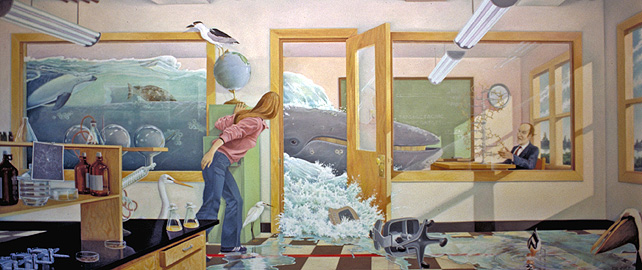
ARC and BIOS

ARC\'s Splash Mural
ARC's Splash Mural
ARC is the Anthropology of Contemporary Research Consortium, focusing on the “human sciences” with the aim “to develop techniques of collaboration, modes of communication, and tools of inquiry appropriate to an anthropology of the contemporary.”

ARC has three main projects, one on vital systems security, another on biopolitics, and the final one covering synthetic biology and nanotechnology. This synthetic anthropos (“artful design and composition of the human thing”) is the most relevant to this site, and is run by Paul Rabinow.

ARC also has a collection of on-line “concept” papers, alongside working papers and web documents within each project. Chris Kelty, one of the directors of ARC, also posts on Savage Minds and wrote recently that “ARC Seeks Passengers and Drivers.” So check that out.

BIOS is the “international centre for research and policy on social aspects of the life sciences and biomedicine.” As another consortium, they have a wide-ranging set of research themes including biopolitics, neuroscience and society, and biomedicine and identity.

There is also a podcast available, “Beyond the Genome: the Challenge of Synthetic Biology“, based on a distinguished panel discussion on “Synthetic biology is heralded as the next frontier. But what is synthetic biology and how do we imagine its future directions?”

BIOS also gave me this link to the affiliated European Neuroscience and Society Network, “a multidisciplinary forum for timely engagement with the social, political and economic implications of developments in the neurosciences.” Check out the publications list by ENSN members, with quite a few articles that you can download. One interesting one that jumped out at me is Folk Neurology and the Remaking of Identity.

Top 100 at Online University Reviews

Online University Reviews, a site that tries to sort out which online universities are right for a candidate, has posted a list of its ‘Top 100 Mental Health and Psychology Blogs.’ If it’s a device to get people to visit their site, it worked for me.

There’s lots of old friends and frequent destinations in the list, as well as a few I had never heard of, but Neuroanthropology got picked. We’re glad to be included with some fine company and willing to put up a link (for whatever it’s worth to Open University Reviews).

Thanks to Kelly for passing along the notice.

Cultural Evolution Round Up

I have not been the biggest fan of cultural evolution research—treating culture in too biological a fashion, a lot of theory without a lot of mechanism, not enough consideration of the brain, difficulties with ideas about progress and direction. But the field has slowly advanced, and there has been some interesting blogging and research lately.

I also think cultural evolution, done right, has direct implications for how to think about neuroanthropology. If brain and culture interact (with camping caveats), then how they came to interact plays a central role in understanding neuroanthropological dynamics. So, with that brief introduction, here’s the latest topical round up.

Canoe Design

Deborah Rogers and Paul Ehrlich, Natural Selection and Cultural Rates of Change
Open access article from PNAS on how the functional and aesthetic design of Polynesian canoes change at different rates. Basically Rogers & Ehrlich arguing that the functional parts (i.e., that interact more significantly with the environment) go through stabilizing selection and thus are more conserved, while aesthetic aspects tend to get elaborated locally and exhibit faster rates of change.

For those of you looking for something briefer, here’s the overview in the press release, which also includes praise from Jared Diamond and Nina Jablonksi.

John Skoyles had his critical response published in PNAS, but without open access, so here’s Anthropology.Net discussing Skoyles’ reaction to the Rogers & Ehrlich article.

For additional commentary, see Gene Expression and Anthropology.Net’s initial reaction to proposals about canoe design and natural selection.

And don’t forget Malinowski’s original chapter on Polynesian canoes!

Projectile Points

R. Lee Lyman and colleagues have a Journal of Archaeological Science article entitled “Variation in North American dart points and arrow points when one or both are present.”
The paper argues that projectile points are subjected to experimentation and selection, and thus an optimizing design. For the press release, click here.

Continue reading “Cultural Evolution Round Up”