Personalized Medicine

There is a large amount of variation in the manifestation of brain disease. There is also a large amount of variation in the response to treatment. Often patients are prescribed drugs on a trial-and-error basis until the right drug is found. This situation, multiplied across many cases, can lead to over-servicing, inefficiency and high expenses in the healthcare industry—not to mention the stress this places on individuals, their families and friends. Integrated Neuroscience could be heading towards an answer in dealing with the large amount of variation in the symptoms, diagnosis and treatment of brain disorders. This answer is called ‘Personalized Medicine’. A Brain-related Personalized Medicine approach matches genetic markers (gene-related information) with neuromarkers (brain-related information).

The brain is arguably the most complex organ of the body. It is subject to biological and environmental influences as well as the personal life history and experiences of individuals. A Personalized Medicine approach hopes to match treatment programs with the biological and psychological profile of each individual. With recent advances in biomedical science, this treatment ethic may be more realistic than ever before. Neurogenomics has gone some way in elucidating a vast number of genes that play a role in various brain disorders. However, a genetic approach alone is insufficient to diagnose and treat the development of brain disease. The combination of both genetic-markers and neuro- markers is crucial in the ultimate success of any one particular treatment.

Neuromarkers include observations of brain structure (using MRI), imaging of brain function (EEG, ERP, MEG, fMRI and PET) and psychological tests measuring social, emotional and cognitive performance. Further research is needed towards the orientation of Brain-related Personalized Medicine. Research will need to establish the links between genetic-markers and neuromarkers (genomic-neuromarkers) for use in diagnostics, drug development, treatment prediction and treatment efficacy monitoring. From here, clinicians will be able to better match the appropriate treatment for each patient according to the developmental stage of their disorder. The outcomes may even extend further to a preventative medicine that contributes to disability management, harm minimization, psychosocial and quality of life recovery.

Links:

The Biomarkers Consortium

The Personalized Medicine Coalition

Personalized Medicine Coalition

The Food and Drug Administration

The Royal Society

Dan Segal Report

The Brain Resource Company


The Brain Resource International Database is one methodology used to acquire genomic-neuromarker profiles. The Database pools data about genetic make-up, brain structure and function, cognition and psychology as well as the life history of participants.

These ‘genomic-neuromarkers’ will be incorporated in the next version of the DSM (DSM V) expected to be released in 2011.

Habits to Help

Val Curtis
Val Curtis

Warning: Habits May Be Good For You highlights the anthropologist Val Curtis’ work to synthesize anthropology, public health, and consumer behavior. She has a simple problem, how to teach children in sub-Saharan Africa to habitually wash their hands, thus lowering significantly the risk of many diseases. As Charles Duhigg writes, Curtis turned to consumer-goods companies for insight into her work.

She knew that over the past decade, many companies had perfected the art of creating automatic behaviors — habits — among consumers. These habits have helped companies earn billions of dollars when customers eat snacks, apply lotions and wipe counters almost without thinking, often in response to a carefully designed set of daily cues.

“There are fundamental public health problems, like hand washing with soap, that remain killers only because we can’t figure out how to change people’s habits,” Dr. Curtis said. “We wanted to learn from private industry how to create new behaviors that happen automatically.”

The companies that Dr. Curtis turned to — Procter & Gamble, Colgate-Palmolive and Unilever — had invested hundreds of millions of dollars finding the subtle cues in consumers’ lives that corporations could use to introduce new routines.

If you look hard enough, you’ll find that many of the products we use every day — chewing gums, skin moisturizers, disinfecting wipes, air fresheners, water purifiers, health snacks, antiperspirants, colognes, teeth whiteners, fabric softeners, vitamins — are results of manufactured habits. A century ago, few people regularly brushed their teeth multiple times a day. Today, because of canny advertising and public health campaigns, many Americans habitually give their pearly whites a cavity-preventing scrub twice a day, often with Colgate, Crest or one of the other brands advertising that no morning is complete without a minty-fresh mouth…

“Our products succeed when they become part of daily or weekly patterns,” said Carol Berning, a consumer psychologist who recently retired from Procter & Gamble, the company that sold $76 billion of Tide, Crest and other products last year. “Creating positive habits is a huge part of improving our consumers’ lives, and it’s essential to making new products commercially viable.”

Habits

Habitual behavior is one topic that concerns brain science, psychology, economics and anthropology, each with disciplinary specific ways of trying to explain these everyday patterns. However, most of those explanations have two flaws: some variety of rationality as the way to understand habits, and some causal force (e.g., genetics, reward, subjective utility, culture) as forming the pattern. But things are not quite so simple, as “Habits May Be Good For You” shows:

Continue reading “Habits to Help”

Psychiatry affects human psychology: e.g., ‘bipolar’ children

Prof. Joseph Biederman, MD
Although I really enjoy psychology, like many anthropologists, I feel a deep ambivalence about some contemporary psychological theory and research.

Some of these problems are trivial and tendentious, to be honest, more the effects of pushing our own disciplinary preferences in the way research is presented or semiotic hair-splitting in theoretical terms than substantive concerns. But there are some more profound issues, touched on in recent posts like Daniel’s Neurotosh, Neurodosh and Neurodash and my post, Bench and couch: genetics and psychiatry. Ironically, I was reminded of one of the more serious issues while reading a piece a few weeks ago by psychologist and psychologist-sceptic Bruce Levine on Alternet, The Science of Happiness: Is It All Bullshit?

In a meandering way, this post is a reflection on one of anthropology’s consistent criticisms of psychology; the often unacknowledged role of psychiatry in shaping psyches. That is, the difficulty of studying a phenomenon when one is helping to create it and one’s theories influence your subjects’ accounts. When psychology is successful in breaking through into popular awareness, it becomes entangled with its subject, a kind of folk theory operating in the same space that psychologists seek to study. So this post is a kind of neuroanthropological reflection on clinical psychology as both research enterprise and world-making project, and the way the two come into conflict.

Specifically, Daniel’s post on Neurotosh and Levine’s story of John Stewart confronting Harvard happiness researcher, Prof. Tal Ben-Shahar, reminded me of the recent scandal surrounding psychiatrist Prof. Joseph Biederman. Biederman took large unreported consulting fees from pharmaceutical companies who manufactured anti-psychotic medicines while he was simultaneously encouraging psychiatrists to diagnose children with bipolar disorder, and then to prescribe their young patients anti-psychotic medicines. Senator Charles E. Grassley (R-Iowa) held hearings on the financial conflicts of interest as reported in The New York Times in Researchers Fail to Reveal Full Drug Pay, by Gardiner Harris and Benedict Carey. (For an earlier critical article, see the Boston Globe piece, Backlash on bipolar diagnoses in children.)

Continue reading “Psychiatry affects human psychology: e.g., ‘bipolar’ children”

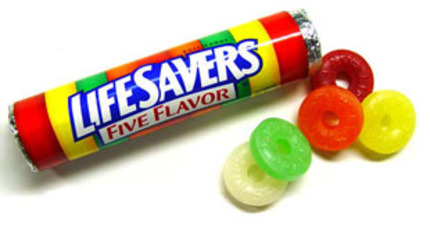
The Cultural Brain in Five Flavors

By Daniel Lende

Next week is the Critical Neurosciences workshop, where I will help lead a discussion of the cultural brain. So I better figure out what I want to say!

Thinking about it yesterday, I came up with this. Rather than one “cultural brain” and lots of arguing about what that means, I will argue that we have five distinct varieties of the cultural brain to consider.

Each flavor deals with a different sort of problem at the intersection of human culture and neuroscience. I will outline these different intersections below, and provide links to our posts to give further depth.

Here are our five flavors:

-The Symbolic Brain: Culture, meaning and the brain combined
-The Inequality Brain: Bad outcomes through society, power, and the brain
-The Theory Brain: Neuroscience impacts social science theory
-The Brain Transformed: Social science impacts brain theory
-The Critical Brain: Taking down bad brain justifications and examining the cultural uses of the brain

The Symbolic Brain

The symbolic brain represents the increasing convergence of work in anthropology and in neuroscience on questions of meaning, symbolism, subjective experience, and behavior. To take an example from my own work, understanding compulsive drug use has required that I examine how processes of attention and behavioral involvement are altered by consistent drug use and how people interpret their own use, from the reasons they had to use to what the experience of use represents to them.

In many ways, this work focuses on a central problem raised but not resolved by Clifford Geertz when he wrote that we should treat human behavior as “symbolic action—action, which, like phonation in speech, pigment in painting, line in writing, or sonance in music, signifies (1973: 9).” Today, rather than reducing that significance to either a cultural pattern or a brain function (both determinist approaches), people interested in the cultural brain are looking for synergies between different domains of research.

Continue reading “The Cultural Brain in Five Flavors”

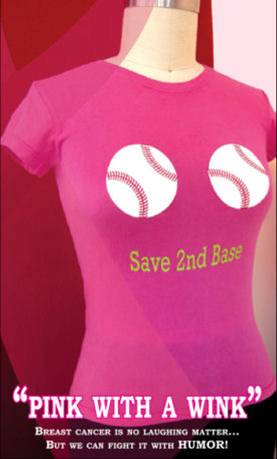
When Pink Ribbons Are No Comfort: On Humor and Breast Cancer

By Casey Bouskill and Daniel Lende

In June, Jan Hoffman of the New York Times wrote “When Thumbs Up Is No Comfort,” reflecting on Ted Kennedy’s diagnosis with cancer and the ways in which the public obliges cancer patients to remain hopeful and strong while they ‘battle’ the ubiquitous and relentless disease.

Senator Kennedy presented an unfailingly upbeat attitude throughout his bout with a brain tumor, aided by such media images of him flashing a ‘thumbs-up’ to a crowd after a recent sailing race.

“Whether you’re a celebrity or an ordinary person, it’s obligatory, no matter how badly you’re feeling about it, to display optimism publicly,” said Dr. Barron H. Lerner, the author of “When Illness Goes Public.”

That optimism reassures anxious relatives, the public and doctors, regardless of whether it accurately reflects the patient’s emotional state. “If Ted Kennedy wanted to stick up his middle finger,” Dr. Lerner added, “that would be the more appropriate finger, but he’s doing what he is supposed to.”

Our ethnographic research with breast cancer patients here in South Bend, Indiana suggests that women are also fighting back against this so-called tyranny of optimism. Not by flashing the middle finger but by laughing!

Ostensibly, this humor seems to reflect that patients are cheerful and hopeful, just as the public obliges for women ‘battling’ breast cancer. But after thirty interviews and multiple participant observation sessions, we discovered that the use of humor among breast cancer patients extends far deeper. Essentially it is a covert rejection of these cheerful expectations ascribed to breast cancer patients.

In fact, these ‘bad gals’ of breast cancer described how personalized and often crude humor, relating to everything from hair loss to hot flashes to breast reconstruction, is a proud way of asserting one’s individuality and personality. It also forces others to acknowledge that cancer is a painful reality, and one that deserves recognition.

Breast cancer patients arguably have to deal with the expectation of cheeriness more than any other group. For the last fifteen years, it has been virtually impossible not to drive a car, enter a supermarket, or live through the month of October without feeling entangled in a web of pink ribbons. The arsenal of the pink ribbon acts as the unanimous symbol of support, as unwavering as the marches and speeches that go along with it. And this pink ribbon campaign consistently portrays the image of a middle-aged, white, beautiful woman whose life has been tragically put on hiatus while she valiantly fights the disease.

Somewhere between the ribbons on yogurt lids and rear bumpers of cars, society has lost touch with the reality of breast cancer and who suffers from it. In the United States breast cancer is affecting women (and men!) of all races, ages, socioeconomic statuses, and sexual orientations, leaving the many who do not fit the pink ribbon mold to have to reassert their personal identities and disavow themselves from society’s false pretenses.

How does humor act to reverse this growing trend?

Continue reading “When Pink Ribbons Are No Comfort: On Humor and Breast Cancer”

Get into trance: Felicitas Goodman

Dr. Felicitas Goodman

Some readers may have thought I was doing my little anthropologist’s quibble with the research on gene expression in meditation in Relax your genes, when I wrote, ‘I’d be surprised if variations in these techniques (such as those that use chanting or movement, for example) had no effect at all on the resulting neural, cellular, and perhaps even genetic processes.’ Some of you might have thought to yourselves, ‘Sure, Greg, you always say stuff like that — you’re paid to say stuff like that as an anthropologist.’ But one of the things I was thinking about was the work of the late anthropologist, Felicitas Goodman, which I hadn’t really discussed at all on Neuroanthorpology.

I stumbled across the webpages for the Felicitas Goodman Institut (the page is in German), and the English discussion of her work, Ritual Body Postures and Ecstatic Trance, by Nana Nauwald, and the webpage for The Cuyamungue Institute, which Goodman founded, this morning. A bit of searching turned up an interview with Prof. Goodman at Conversations for Exploration.

Goodman’s own biography is pretty fascinating; she didn’t do her PhD in anthropology until she was in her 50s, already a veteran German professor at Ohio State where she emigrated after leaving Germany with an American husband (Glenn). She went on to teach anthropology at Denison University (Ohio), and is best known for her contributions to the study of ecstatic states, including trance and glossalalia (speaking in tongues). She wrote a number of works, including Where the Spirits Ride the Wind: Trance Journeys and Other Ecstatic Experiences and Speaking in Tongues: A Cross-Cultural Study of Glossolalia (now out in a new edition, according to Amazon). After falling in love with the area around Santa Fe, Goodman helped to found The Cuyamungue Institute in New Mexico, which, according to the institute’s website, ‘continues her research into altered states of consciousness and holds workshops about the postures which she admits are but one door to alternate reality.’

Continue reading “Get into trance: Felicitas Goodman”