Demons on the Web

vaughan-bell-by-paul-smith
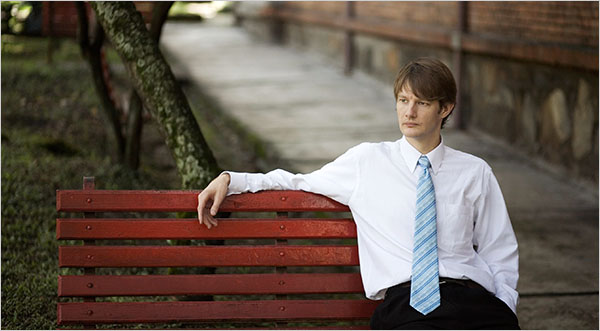
Vaughan Bell of Mind Hacks makes the New York Times today! So finally a picture of the man! He is seated in the garden outside the Department of Psychiatry at the Universidad de Antioquia, where he now works in Medellin, Colombia.

The NYT piece Sharing Their Demons on the Web begins:

For years they lived in solitary terror of the light beams that caused searing headaches, the technology that took control of their minds and bodies. They feared the stalkers, people whose voices shouted from the walls or screamed in their heads, “We found you” and “We want you dead.”

When people who believe such things reported them to the police, doctors or family, they said they were often told they were crazy. Sometimes they were medicated or locked in hospital wards, or fired from jobs and isolated from the outside world.

But when they found one another on the Internet, everything changed. So many others were having the same experiences.

The article goes on to discuss this “extreme” online community that gives peer support a whole new meaning! Mind control, stalking and paranoia become the delusions of the net. “The views of these belief systems are like a shark that has to be constantly fed,” Dr. Hoffman said. “If you don’t feed the delusion, sooner or later it will die out or diminish on its own accord. The key thing is that it needs to be repetitively reinforced.”

On the other hand, Derrick Robinson, a janitor in Cincinnati, says “It was a big relief to find the community. I felt that maybe there were others, but I wasn’t real sure until I did find this community.” Mr Robinson has gone on to become the president of Freedom from Covert Harassment and Surveillance.

Vaughan estimates that there are a small number of these intense sites that are frequented around the Internet. I ran across a similar phenemenon exploring pro Ana websites that support anorexia a couple years back. But Vaughan has published everything! The article ‘Mind Control’ Experiences on the Internet: Implications for the Psychiatric Diagnosis of Delusions (pdf) appeared in Psychopathology (also available here through Scribd).

As expected, Vaughan documents the NY Times article over at Mind Hacks. He described the outcomes of this research in an earlier post on Internet mind control and the diagnosis of delusions. As Vaughan concludes about this research:

This is interesting because the diagnostic criteria for a delusion excludes any belief that is “not one ordinarily accepted by other members of the person’s culture or subculture”, whereas these individuals have formed an online community based around their delusional belief, creating a paradox.

Bad Boys or Bad Science

So here’s a recent New Scientist title: “Bad Boys Can Blame Their Behaviour on Hormones.”

All I can think is: New Scientist, Old School. Old, as in nature-nurture old and biological determinism old. Old as in moldy, rusted, failing ideas old.

But it’s not just New Scientist. Discover matches New Scientist with, “Teenage Hoodlums Can Blame Bad Behavior on Hormones.” And The Daily Mail delivers “Now Teenage Thugs Can Blame Their Hormones for Bad Behaviour.”

So what’s the problem? Well, it’s two-fold. First are journalists playing out a cultural script just like they subscribe to old-school cultural determinism. And second is some bad research that, not coincidentally, helps the journalists act like cultural automatons.

The cultural model goes like this: stereotypes, then blame, then biology. Take a stereotype we fear (“we” meaning journalists and readers alike). Bring in the politics and ideology of blame – hey, there’s a reason they are not like us, and why they threaten us. Invoke a cause, generally biological (though cultural causes come up too), outside of our particular realm of control. Hormones, nothing we can do about that, it means they were bad from the get-go. So we’re right to fear them and better make sure they don’t hurt us, whatever it takes.

Don’t believe me? Just look at the photos that accompany the articles. At the Daily Mail, a hooded guy point his hand like a gun at us the reader. Over at Discover, a crazed man with a clenched fist yells in our faces.

We all know journalists will play to stereotypes and will get research wrong and so forth. But in this case, like in most of the biologically-oriented research about complex human phenomena, the research only feeds into journalists typing out the normal crap.

The article in question is “Cortisol Diurnal Rhythm and Stress Reactivity in Male Adolescents with Early-Onset or Adolescence-Onset Conduct Disorder” (full access) by Graeme Fairchild, Stephanie van Goozen et al. and appears in the October 2008 issue of Biological Psychiatry. Neurocritic gives us the overview of the article if you don’t want to read the whole thing. (While I liked the Bad Boys music, I could have done with some more criticism in this particular Neurocritic post – but that’s okay, I’m going to play the bad boy this time.) Here’s the popular take from New Scientist on the article:

Out-of-control boys facing spells in detention or anti-social behaviour orders can now blame it all on their hormones. The “stress hormone” cortisol – or low levels of it – may be responsible for male aggressive antisocial behaviour, according to new research. The work suggests that the hormone may restrain aggression in stressful situations. Researchers found that levels of cortisol fell when delinquent boys played a stressful video game, the opposite of what was seen in control volunteers playing the same game.

Continue reading “Bad Boys or Bad Science”

Ethos: Cultural Politics of Mental Health in Native North America

I thought this would interest some of you.  Here’s the link to the online version. And for more info on Ethos, including the links to an entire issue on Jerome Bruner, just click here. Or check out the editorial office.

To view an online version of this email, click here.
Journal of the Society for Psychological Anthropology

Ethos presents a special collection:

Cultural Politics of Mental Health in
Native North America

Guest Editor: Joseph P. Gone

The September issue of Ethos includes a remarkable collection of articles on the contradictions and conflicts that arise in mental health counseling involving majority culture counselors and Native Americans. Articles featured in this collection include:

Introduction: Mental Health Discourse as Western Cultural Proselytization
Joseph P. Gone

Discourses of Stress, Social Inequities, and the Everyday Worlds of First Nations Women in a Remote Northern Canadian Community
Naomi Adelson

Clinical Paradigm Clashes: Ethnocentric and Political Barriers to Native American Efforts at Self-Healing
Joseph D. Calabrese

Sobriety and Its Cultural Politics: An Ethnographer’s Perspective on Culturally Appropriate Addiction Services in Native North America
Erica Prussing

Commentary: The Problem of Mental Health in Native North America: Liberalism, Multiculturalism, and the (Non)Efficacy of Tears
Audra Simpson

Commentary: No Itinerant Researchers Tolerated: Principled and Ethical Perspectives and Research with North American Indian Communities
Joseph E. Trimble  


About Ethos

http://www.wiley.com
 
Ethos is an interdisciplinary and international journal devoted to publishing scholarly articles exploring interrelationships between the individual and the sociocultural milieu, between the psychological disciplines and the social disciplines.

Printing four times a year, Ethos is the journal of the Society for Psychological Anthropology and is published in partnership with the American Anthropological Association. The journal is one of more than 20 publications featured in AnthroSource, a service of the American Anthropological Association.


This message was sent to [#EmailAddr#]. If you would rather not receive future messages from us, unsubscribe at any time by clicking here. You may also review our Privacy Policy at www.wiley.com/privacy.

Visit our Help page to find information on ordering, shipping/returns, your account, journal subscriptions, mailing lists and RSS feeds. You may also visit our Contact Us page to find a contact for additional assistance with a related product or service.

John Wiley & Sons, Ltd. | The Atrium, Southern Gate, Chichester, West Sussex, PO19 8SQ, UK
Tel: +44 (0)1243 779777 | Fax: +44 (0)1243 775878 | Registered Number: 641132 England

John Wiley & Sons, Inc. | 111 River Street, Hoboken, NJ, 07030, USA
Tel: 201.748.6000 | Fax: 201.748.6088

Copyright © All rights reserved.
EB720

Wiley-Blackwell

Psychiatry affects human psychology: e.g., ‘bipolar’ children

Prof. Joseph Biederman, MD
Although I really enjoy psychology, like many anthropologists, I feel a deep ambivalence about some contemporary psychological theory and research.

Some of these problems are trivial and tendentious, to be honest, more the effects of pushing our own disciplinary preferences in the way research is presented or semiotic hair-splitting in theoretical terms than substantive concerns. But there are some more profound issues, touched on in recent posts like Daniel’s Neurotosh, Neurodosh and Neurodash and my post, Bench and couch: genetics and psychiatry. Ironically, I was reminded of one of the more serious issues while reading a piece a few weeks ago by psychologist and psychologist-sceptic Bruce Levine on Alternet, The Science of Happiness: Is It All Bullshit?

In a meandering way, this post is a reflection on one of anthropology’s consistent criticisms of psychology; the often unacknowledged role of psychiatry in shaping psyches. That is, the difficulty of studying a phenomenon when one is helping to create it and one’s theories influence your subjects’ accounts. When psychology is successful in breaking through into popular awareness, it becomes entangled with its subject, a kind of folk theory operating in the same space that psychologists seek to study. So this post is a kind of neuroanthropological reflection on clinical psychology as both research enterprise and world-making project, and the way the two come into conflict.

Specifically, Daniel’s post on Neurotosh and Levine’s story of John Stewart confronting Harvard happiness researcher, Prof. Tal Ben-Shahar, reminded me of the recent scandal surrounding psychiatrist Prof. Joseph Biederman. Biederman took large unreported consulting fees from pharmaceutical companies who manufactured anti-psychotic medicines while he was simultaneously encouraging psychiatrists to diagnose children with bipolar disorder, and then to prescribe their young patients anti-psychotic medicines. Senator Charles E. Grassley (R-Iowa) held hearings on the financial conflicts of interest as reported in The New York Times in Researchers Fail to Reveal Full Drug Pay, by Gardiner Harris and Benedict Carey. (For an earlier critical article, see the Boston Globe piece, Backlash on bipolar diagnoses in children.)

Continue reading “Psychiatry affects human psychology: e.g., ‘bipolar’ children”

Neurotosh, Neurodosh and Neurodash

Neurotosh. The best word from the entire Montreal Critical Neurosciences conference! There was Cordelia Fine, capturing perfectly her frustration at the manipulation of data and science in the service of stereotypes. Just pure neuro-nonsense.

The neurotosh in question was Louann Brizendine’s The Female Brain, an excellent representative of the neurosexism sold in recent popular books. It is popular, a bestseller translated into many languages, and it is simply bad science. In Nature Rebecca Young and Evan Balaban describe the book as “dressing the [gender] myth up in new clothes” and selling a “melodrama,” noting that “The Female Brain disappointingly fails to meet even the most basic standards of scientific accuracy and balance.”

Cordelia Fine took us step-by-step through several passages, examining the supposed citations and supporting evidence. Gender differences were confirmed by (a) studies with only women, (b) studies on a different topic entirely, and (c) personal communication. Ouch.

Plenty of other people have gotten on the bash-Brizendine-bandwagon, helping to undermine the moral authority that Dr. Brizendine wields through her academic credentials and “scientific” claims. Language Log has several critical analyses of the gender difference claims about language (see here, here and here). Mother Jones takes Brizendine to task on her approach to medicine. The most popular Amazon reviews of the book lead with titles calling The Female Brain disappointing” and “nonsensical.” Vaughan Bell at Mind Hacks gets in on the pile-on-party as well.

Still Simon Cohn, a British anthropologist at the meeting, was rather nonplussed at Cordelia’s agonizing over the data and methods and claims made by Brizendine. As Simon said to me, “It’s called ‘The Female Brain.’ Doesn’t that tell you everything right from the start?” His point was that knowledge gets turned in the service of ideology and profit and power all the time.

Continue reading “Neurotosh, Neurodosh and Neurodash”

Bench and couch: genetics and psychiatry

Vaughn at Mind Hacks has a nice piece on recent research, reported in Nature, on psychiatric genetics: Mental illness: in with the intron crowd. The original article, Psychiatric genetics: The brains of the family, appeared in Nature on 10 July (but it’s behind a subscription wall if you want to see the original — sorry). Daniel linked to Vaughn’s article in the last Wednesday Round Up (#20), but I wanted to make a further brief comment. Vaughn does a really nice job of laying out the key issues, so I’d recommend jumping over there if this brief discussion whets your appetite.

The problem for neuropsychiatry is that genetic links to psychiatric disorders are proving difficult to clearly define. Abbott explains the situation really well:

Finding genes involved in psychiatric conditions is proving to be particularly intractable because it is still unclear whether the various diagnoses are actually separate diseases with distinct underlying genetics or whether… they will dissolve under the genetic spotlight into one biological continuum. Indeed, some researchers suggest that it would be better to abandon conventional clinical definitions and focus instead on ‘intermediate phenotypes’, quantifiable characteristics such as brain structure, wiring and function that are midway between the risk genes involved and the psychopathology displayed.

Continue reading “Bench and couch: genetics and psychiatry”