Wednesday Round Up #27

This week I bring a diverse set of anthropology readings, a bunch of policy pieces I’ve found interesting of late, and a long list of psychiatry posts and articles at the end. Enjoy!

Anthropology

Robert Bellah, The Renouncers
The esteemed US sociologist on notions of progress and disaster, or negotiating between Habermas and the ancient Greeks

Mind Hacks, Through a Lab Darkly?
“Cognitive ethology”—getting the psychologists out of the lab and into the field. And I was just lecturing to my qualitative methods students about how ethnographic research can increase the validity of our measures…

Michiko Kakutani, When Fear and Chaos Are Normal, Peace and Safety Become Unimaginable
Review of the new book, Waiting for an Ordinary Day: The Unraveling of Life in Iraq, by the Wall Street journalist with anthropological sensibilities Farnaz Fassihi

LL Wynn, HTS and Military Targeting?
Reaction over at Culture Matters to the recent Harpers essay, “Human quicksand for the U.S. Army, a crash course in cultural studies” (subscription needed for full access) by Steve Featherstone

Abby Aguirre, Roaming Freely in a Land of Restraints
Review of the new book by Raja Shehadeh, Palestinian Walks: Forays Into a Vanishing Landscape, covering six walks the author took in the West Bank and the encounters and reflections that brought

Hannah Seligson, Girl Power at School, but Not at the Office
The gender gap in the transition from university to work, building off a new book by the journalist author

Benedict Carey, Spot on Popularity Scale Speaks to the Future; Middle Has Its Rewards
Longitudinal study of high school students – mean queens and lording jocks fade, while socially skilled individuals find happiness… Or popularity as seen through social networks.

Natalie Angier, About Death, Just Like Us or Pretty Much Unaware?
Animals coping with the death of a loved one. More like us than we had imagined

Carl Zimmer, Gaming Evolution
The new video game Spore finds a happy home, with some reservations, among hard-core academic biologists

Policy

Alan Blinder, Is History Siding With Obama’s Economic Plan?
Looks like yes. Democrats rule over better economic times, with less inequality, than Republicans since the post WWII era. “Data for the whole period from 1948 to 2007, during which Republicans occupied the White House for 34 years and Democrats for 26, show average annual growth of real gross national product of 1.64 percent per capita under Republican presidents versus 2.78 percent under Democrats.”
Based on the book Unequal Democracy by Larry Bartels. And see here for a long NY Times essay on Obama’s economics.
Continue reading “Wednesday Round Up #27”

Edelman, Evolution and Encephalisation

The brain exhibits all of the properties of an evolutionary system. In the developing brain, there is an initial oversupply of neurons. The combinatorial possibilities that exist within and between neuronal groups is a source of variation that is selected from. The brain, which is only approx. 25% formed at birth, matures through processes of degeneracy and associativity. The dynamic interplay between the variation and selection of neuronal groups is a source of self-organisation. The brain has the capacity to store patterns of activation and to recreate acts separated in time from the original events. Memory biases the processes of organisation towards increased complexity. (For a more extensive explanation of the brain as an evolutionary system see Edelman 1987; 1993; 2004).

To be honest, I have not met many people who truly understand every aspect of Edelman’s theory of neuronal group selection (TNGS). In fact, if I have gone some way to understanding some part of his theory, then it has been largely through my reading of secondary literature material, returning frequently to his new books and then discussing his work with some of my friends Continue reading “Edelman, Evolution and Encephalisation”

Calvin the theologian and Calvin the theoretical neurobiologist

John Calvin, a Theologian from Strasbourg died the day before I was born. He taught an austere form of personal ethics supporting good hospitals, a proper sewage system, protective rails on upper stories to keep children from falling from tall buildings, special care for the poor and infirm, and the introduction of new industries. Continue reading “Calvin the theologian and Calvin the theoretical neurobiologist”

Carnivals!

Encephalon from Africa is out! Ioian Enchantment is hosting this week from South Africa. Plenty of good stuff this time around, including Neurotic Physiology on how culture shapes the way we look at faces, the new Neuronism on athletes predicting the future, and Effortless Incitement on how chimpanzees use self-distraction to deal with impulsivity. Plus more stuff I want to mention, but you’ll just have to go check out the enchantment!

Tangled Bank #112 came out last week with the latest on evolution, natural history and the like over at Science Notes. Interested in why chili peppers are so damn hot? Blame evolution. Plus Ioian Enchantment, our Encephalon Host, covers the recent research on chimpanzees hunting with spears.

Science After Sunclipse is hosting Carnival of the Elitist Bastards this time around, standing up for all things intellectual. It’s worth it just for the effort put into creating a verse poem for a carnival! Having just done some birding while camping, this post – complete with some great photos of sandpipers – was just enjoyable.

Finally there is a new Carnival of Evolution. Yes, #1. Among featured pieces there’s this impressive consideration of evolution’s most important cellular/molecular inventions, going from gene expression to body plans.

Links to Consciousness: Consciousness Links

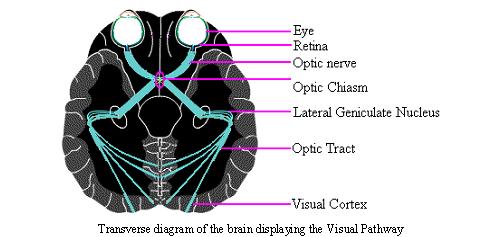
It takes around eight minutes and twenty seconds for light from the sun to reach the earth. It then takes another half a second for that light to be reflected off an object, detected by the retina, trigger signals that travel along the optic nerve, pass the optic chiasm, continue down the optic tract, go through the Lateral Geniculate Nucleus, arrive at the primary visual cortex and spread to wider areas of the cortex and to finally then somehow become part of consciousness. If we decide to move in response to that light, there is a similar time lapse. Specific neurons in the brain must activate continuously for at least half a second before we make the decision to move. To some, consciousness is divine; to others consciousness is the result of the contemporaneous firing of distributed populations of neurons feeding through a dynamical core of deep brain activity.


  Continue reading “Links to Consciousness: Consciousness Links”