Wednesday Round Up #26


Anthropology

Brandon Keim, Culture Shapes How People See Faces
New research on East Asian/Western contrast in facial perception using eye tracking. Has this great graphic! And includes this important quote: “We tested some Chinese who had been in Glasgow for three or four years, and you see a clear difference between them and those who just arrived,” he said. “That really demonstrates that it’s not genetic. It’s experience.”
For more detail on the study, see Ed Yong’s piece “Westerners Focus on the Eyes, East Asians on the Nose

LL Wynn & Nikki Kuper, Annotated Bibliography on HTS, Minerva and PRISP
A comprehensive listing of resources on the US Army’s Human Terrain Systems and other efforts to engage social science (and in many minds, subvert and corrupt it). Erkan Saka offers some more links, as well as other interesting anthro stuff, in one of his round-ups.

Somatosphere, Web Gleanings 2
Another round up from the new med anthro blog – quite a collection!

Disparate, Enthused Tech
Slideshow and blog post on enthusiasm in learning, especially through technology. Another Anthro Blog provides some enthusiastic reaction.

Antropologi, Open Access: New Alliances Threaten the American Anthropological Association
Did the AAA make the wrong choice in hiding its online publications away?

Madeleine Coorey, Prehistoric Giant Animals Killed by Man, Not Climate: Study
In Tasmania, the climate was stable so recently arrived humans become the main suspects in the disappearance of giant kangaroos

Roger Cohen, News Good Enough to Be Buried
Nice op-ed: “In my lifetime, conditions have grown immeasurably better, freer and more prosperous for a majority of humanity, yet hand-wringing about the miserable remains the reflex mode for most coverage of planet earth.”

Randolph Schmid, Monkeys Reward Friends and Relatives
Better to give and receive rather than just give—the importance of building relationships and reciprocity

Brain

Arthur Shapiro, 100th Anniversary of “A New Visual Illusion of Direction”
Another great one from Illusion Sciences—clicking on the red lines really made the difference! And we get plenty of added intellectual background too!

Continue reading “Wednesday Round Up #26”

Links to Consciousness: Consciousness Links

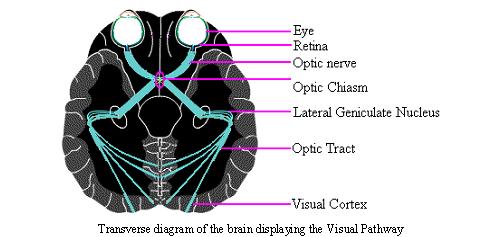
It takes around eight minutes and twenty seconds for light from the sun to reach the earth. It then takes another half a second for that light to be reflected off an object, detected by the retina, trigger signals that travel along the optic nerve, pass the optic chiasm, continue down the optic tract, go through the Lateral Geniculate Nucleus, arrive at the primary visual cortex and spread to wider areas of the cortex and to finally then somehow become part of consciousness. If we decide to move in response to that light, there is a similar time lapse. Specific neurons in the brain must activate continuously for at least half a second before we make the decision to move. To some, consciousness is divine; to others consciousness is the result of the contemporaneous firing of distributed populations of neurons feeding through a dynamical core of deep brain activity.


  Continue reading “Links to Consciousness: Consciousness Links”

Role of Emotions in Brain Function

Emotions can be overpowering, but they are also the driving force of life. It was long thought that emotion and thought were separate processes. Brain science has begun to realise that the brain is not an organ of thought, but that it is a feeling organ that thinks. A tiny almond shaped structure deep in the brain, the Amygdala, is the first to respond to an emotional event. It triggers a series of reactions within the brain’s emotional core and sends signals throughout the body that change body posture, facial expression, heart-rate, breathing and awareness. The emotions are important in social interaction and in forming social connections. The awareness of emotion is crucial to motivation, decision-making, memory and forethought. Learning how to manage our emotions is an important skill that we continually develop throughout our lives.

Continue reading “Role of Emotions in Brain Function”

Giving your right arm to be ambidextrous

Apologies for yet another excessively long post, but I would like to ask, Would you give your right arm to be ambidextrous?

It is often thought that the left hemisphere of the brain is the logical/analytical side of the brain and that the right hemisphere is the creative/intuitive side of the brain. However, to what extent is this true? Most people are right handed, which in most cases means that the left hemisphere of their brain controls speech. Sometimes, however, the brain is symmetrical and both hemispheres contribute equally to functions like speech. Cerebral symmetry is thought to contribute to disorders like stuttering. Cerebral asymmetry, on the other hand, seems to be an important part of brain function. Laterality is also key to understanding the effects of a stroke in the brain, or a brain lesion due to an accident, or knowing which parts of the brain can be safely removed in a patient with epilepsy.

While having an asymmetrical brain does actually have some advantages, some psychologists suggest mixing it up. It may improve brain function. If you brush your teeth with your right hand, try brushing with your left; If you open doors with your left hand, try opening them with your right; If you… okay, okay, I think you get the point. I’m not sure how much this actually improves brain function, but I could possibly see how this behaviour might help you should you ever have an accident affecting one side of your body or one side of your brain. It may even help reduce neuro-degeneration in old age, but who knows…

FIELDWORK OBSERVATIONS

An interesting thing about my fieldwork in Indonesia is the extent to which the right hand is favoured in society. It is rude to offer objects with the left hand, it is also rude to accept them in the left. Pointing, waving and gesturing with the left hand can all be considered extremely rude. Even if you are forced to use your left hand because you are eating with your right, working with it or holding onto something, you still have to indicate that you understand the rudeness of using your left. By acknowledging that you would prefer to use your right hand while forced to use your left, you are considered quite polite.

Continue reading “Giving your right arm to be ambidextrous”

The first PhD in Neuroanthropology!

Congratulations goes to Juan Dominguez from Colombia who has spent the last seven years in Australia completing a Post-graduate diploma in Arts (Anthropology), Honours in Anthropology and the first ever PhD promoting neuroanthropology! I am sure that Juan would also like me to mention the role of his principal supervisor, Dr Douglas Lewis, who has also played a role in the formation and development of Neuroanthropology. (In fact, we only registered neuroanthropology.com three days before Dr Douglas Lewis attempted to do the same thing). Dr Lewis has been teaching a subject called “The Evolution of Consciousness” at Melbourne University for some years (he lectured me in the subject in 2005). His principal field-site is in Flores and will be publishing two books based on his fourteen years of research there (that may be an under-estimation because Dr Lewis has been working there since 1977). Those books will definately be worth keeping an eye out for!

On Saturday, 23rd August, Juan (from the department of Social and Environmental Enquiry) was presented his PhD by Associate Dean of the School, Associate Professor Mary Wlodek. Continue reading “The first PhD in Neuroanthropology!”