Girls closing math gap?: Troubles with intelligence #1

In a January 2005 speech, Harvard President Lawrence Summers provoked the proverbial firestorm by suggesting that women lacked the ‘intrinsic aptitude’ of women for math, science and engineering (story in the Boston Globe on the incident). Summers was merely stating out loud what many people believe: that inherent differences between men and women cause significant inequalities in aptitude for math (and presumably also for art history, Coptic studies, or cultural anthropology, but they usually get a lot less attention…).

A recent report in Science by Janet S. Hyde and colleagues, ‘Gender Similarities Characterize Math Performance,’ used a mass of standardized testing data generated under the No Child Left Behind program to compare male and female performance and found that the scores were more similar than different. The gap in average performance on math tests has shrunk significantly since the 1970s, disappearing in most states and grades for which the research team could get good data. According to Marcia C. Linn of the University of California, Berkeley, one of the co-authors of the study: ‘Now that enrollment in advanced math courses is equalized, we don’t see gender differences in test performance. But people are surprised by these findings, which suggests to me that the stereotypes are still there.’

From the way that this report has been discussed, it seems clear that the data has not settled this question in many people’s minds. Tamar Lewin of The New York Time covered the story in (‘Math Scores Show No Gap for Girls, Study Finds‘) provoking comments on a wide range of websites, including some who insisted that the team led by Hyde missed entirely the point being made by Summers or that Lewin had misread the study (some accusing her of feminist bias). In contrast, Keith J. Winstein of The Wall Street Journal focused not on the average scores, but on the results at the top end of the bell curve, writing, Boys’ Math Scores Hit Highs and Lows, which highlights the discussion of variance in boys’ scores.

Although I briefly want to go over the study and the way its being interpreted, I’m more interested in the shift in test scores over time because I think that the movements in these numbers, including gaps that disappear over time (or don’t), point to a basic problem in the tests themselves. Well, not a problem in the tests—they’re very sophisticated instruments for assessing certain kinds of performance on selected tasks—but rather with the common assumption about what these tests actually reveal and the nature of ‘math ability.’ For me, this larger point is more important for neuroanthropology because it applies to far more than just the ‘math gap.’

Continue reading “Girls closing math gap?: Troubles with intelligence #1”

Girls gone guilty: Evolutionary psych on sex #2

A while back, I posted a piece on recent evolutionary psychology research on human sexuality, specifically Chicks dig jerks?: Evolutionary psych on sex #1. The previous post discussed a couple of research projects that have found a correlation between the ‘dark triad’ of narcissism, psychopathology, and manipulative Machiavelianism at low levels and the number of sexual partners that college-aged men reported having. The conclusion, baldly stated: chicks dig jerks, according to the researchers.

Today, I’m going to discuss a different set of articles, this time on ‘female guilt,’ sparked by research done by Prof. Anne Campbell, a psychologist at Durham University. Prof. Campbell surveyed people online and found that women regretted ‘one-night-stands’ more than men. This has led her to argue that women are ‘ill adapted’ for promiscuity, that the ‘sexual and feminist revolutions’ didn’t work because women couldn’t shake their inherent nature, which is to long for committed relationships and loathe themselves if they act like cheap floozies.

I delayed posting on this because I cannot get to the original article (my university library has a six-month delay on the journal Human Nature; Springer press release here). I hate posting on second-hand versions, but I feel like I don’t want to wait six months to write #2 in my series on ev psych stereotypes…. I mean, ‘perspectives’ on human sexuality or to put in my own two cents worth of opinionation. So I have to base most of my discussion on the press release from Durham University about Prof. Campbell’s recent article.

I can’t imagine that I’m EVER going to persuade the hardened core of evolutionary psychologists that there is not a thing called ‘human nature’; I’m not opposed to the concept for political, feminist reasons but because I don’t think living organisms have ‘essences,’ especially when it comes to behaviour. Nothing I can say, no theoretical point or comparative data from around the world of human variation, will convince the evolutionary psychologists because they know, they just know, that human nature — especially sex — has been shaped by evolution, hardened and set in our genes (or brains or hormones…), to rear it’s head when we do something against our nature (like a woman having sex and not trying to find a mate).

Continue reading “Girls gone guilty: Evolutionary psych on sex #2”

When Pink Ribbons Are No Comfort: On Humor and Breast Cancer

By Casey Bouskill and Daniel Lende

In June, Jan Hoffman of the New York Times wrote “When Thumbs Up Is No Comfort,” reflecting on Ted Kennedy’s diagnosis with cancer and the ways in which the public obliges cancer patients to remain hopeful and strong while they ‘battle’ the ubiquitous and relentless disease.

Senator Kennedy presented an unfailingly upbeat attitude throughout his bout with a brain tumor, aided by such media images of him flashing a ‘thumbs-up’ to a crowd after a recent sailing race.

“Whether you’re a celebrity or an ordinary person, it’s obligatory, no matter how badly you’re feeling about it, to display optimism publicly,” said Dr. Barron H. Lerner, the author of “When Illness Goes Public.”

That optimism reassures anxious relatives, the public and doctors, regardless of whether it accurately reflects the patient’s emotional state. “If Ted Kennedy wanted to stick up his middle finger,” Dr. Lerner added, “that would be the more appropriate finger, but he’s doing what he is supposed to.”

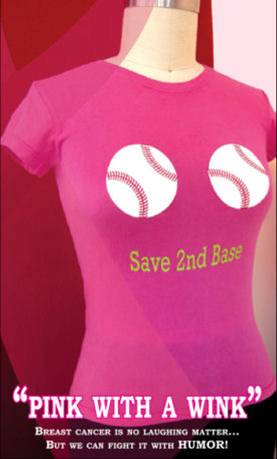
Our ethnographic research with breast cancer patients here in South Bend, Indiana suggests that women are also fighting back against this so-called tyranny of optimism. Not by flashing the middle finger but by laughing!

Ostensibly, this humor seems to reflect that patients are cheerful and hopeful, just as the public obliges for women ‘battling’ breast cancer. But after thirty interviews and multiple participant observation sessions, we discovered that the use of humor among breast cancer patients extends far deeper. Essentially it is a covert rejection of these cheerful expectations ascribed to breast cancer patients.

In fact, these ‘bad gals’ of breast cancer described how personalized and often crude humor, relating to everything from hair loss to hot flashes to breast reconstruction, is a proud way of asserting one’s individuality and personality. It also forces others to acknowledge that cancer is a painful reality, and one that deserves recognition.

Breast cancer patients arguably have to deal with the expectation of cheeriness more than any other group. For the last fifteen years, it has been virtually impossible not to drive a car, enter a supermarket, or live through the month of October without feeling entangled in a web of pink ribbons. The arsenal of the pink ribbon acts as the unanimous symbol of support, as unwavering as the marches and speeches that go along with it. And this pink ribbon campaign consistently portrays the image of a middle-aged, white, beautiful woman whose life has been tragically put on hiatus while she valiantly fights the disease.

Somewhere between the ribbons on yogurt lids and rear bumpers of cars, society has lost touch with the reality of breast cancer and who suffers from it. In the United States breast cancer is affecting women (and men!) of all races, ages, socioeconomic statuses, and sexual orientations, leaving the many who do not fit the pink ribbon mold to have to reassert their personal identities and disavow themselves from society’s false pretenses.

How does humor act to reverse this growing trend?

Continue reading “When Pink Ribbons Are No Comfort: On Humor and Breast Cancer”

Sex differences in the brain

Graphic from Slate
Graphic from Slate
I fear that I don’t link enough to Mind Hacks because I kind of assume that anyone who regularly reads us also checks out Vaughn’s excellent work over there. But he’s clued me into a series of articles on Slate that are excellent in his piece, Selling the ‘battle of the sexes.’ I won’t write something derivative here: you should really go read the piece by Vaughn and then link through to the series on Slate, starting with The Sex Difference Evangelists on several recent books that push the ‘sex differences are in the brain’ argument despite conflicting data. Vaughn nicely sums up the series by Amanda Schaffer:

Of course, there are cognitive differences between men and women, but the punchline of almost all sex difference research is that the extent of the difference between any two individuals, be they male or female, tends to vastly outweigh the average difference between the sexes.

Furthermore, while some of these books suggest the differences are innate many studies have found the differences change markedly over time and are influenced by cultural or social factors.

The series is well-researched, easy to digest and looks at the areas of communication, empathy, maths ability and development during childhood. It’s also accompanied by a three-part video discussion, which tackles similar issues.

And, as a bonus, when you link through to the material on Slate, there’s heaps of other links, including related book reviews, video segments, and other items (although some of it is not as solid as Schaffer’s work).
Graphic from Slate: http://www.slate.com/id/2194486/entry/2194488/.

Chicks dig jerks?: Evolutionary psych on sex #1

In our continuing exploration of facile examples of ‘evolutionary’ explanations for human behavior (usually described instead as ‘human nature’), I have another couple of exhibits: Do Jerks Get Laid More?, a great attack on recent research by Jill Filopovic at Feministe (h/t: Alternet); and Science Daily‘s story, Women Have Not Adapted To Casual Sex, Research Shows (which I’ll discuss in the next posts). Daniel already discussed some of the recent research on homosexuality in The Gay Brain: On Love and Science, but this piece, the first of two, is dedicated to recent ‘evolutionary’ work on male-female relations, especially arguments about what is ‘natural’ in sexuality including that all-important question, ‘What do women want?’

Some of the problems that beset these articles are pretty general objections a person could have to evolutionary psychology, so I feel like I want to go over them a little bit (but I’ll try to keep it short).

Why women like bad boys: ev psych explains

Jill Filopovic discusses a story, Do Jerks Get Laid More? Good news for psycho-narcissists, by Jessica Wakeman, which is commentary on a story in New Scientist, Bad guys really do get the most girls (a similar piece also appeared on ABC News). In other words, this story has been ricocheting around the Internets for a while, getting reposted and commented upon all over the place (such as here, here, here and, my favourite, here, where democracy confirms ev psych stereotypes). With all sorts of people having things to say, some share a bit too much about their own personal lives and some involve cueing up familiar cliches (‘nice guys finish last,’ for example, is a favourite).

Continue reading “Chicks dig jerks?: Evolutionary psych on sex #1”

The Gay Brain: On Love and Science

A lot of controversy and blogging about the gay brain of late. Here’s the Savic and Lindstrom paper that got the fray started, with Mind Hacks’ accompanying coverage on the Return of the Gay Brain.

Shortly afterwards, Vaughan proposed “hard wired” as one of the worst psychobabble terms. For me, the fixation on biological determinism is the larger, and worse, cultural concept behind that. So I propose leaving behind biological claims for identity. It just gives us claptrap like the opening lines from the New Scientist news report, “Brain scans have provided the most compelling evidence yet that being gay or straight is a biologically fixed trait.”

Compelling evidence? While there is interesting work on biology and sexuality (the LA Times covers some of it), there is plenty to doubt about the present work, as the Neurocritic points out quite well here and here. This sort of work represents bad brain science: reported claims overreaching the evidence, an often notable lack of comparative work and appropriate controls, little longitudinal analysis, and on and on.

The worst thing about it? The science, whatever it turns out to be, cannot take us from is to ought.

To add my two anthropological cents, human sexuality is varied. Trying to shoehorn sexuality into one socially and politically charged box just does not work well from an anthropological point of view. As one example, men in some cultures go through different life stages, and in some of those stages homosexuality is the normal way of being, whereas at other times heterosexual relations are the norm. To speak personally, I’ve known people who have had an array of partners in their lives, individually recreating what cultures like the Etoro have shown us ethnographically.

On the neuroplasticity and experience/behavior side, this type of approach generally leaves out something every consenting adult knows. Sex matters! The experience of a sexual encounter helps shape our desires, our pleasures, our associations.

But there is something that matters more to me, and most of the people I know, than sex. LOVE. All this debate about cerebral asymmetries and biological determinism misses the human point. Love matters.

Who cares whether sex between whatever combination of men and women is or is not natural? Love makes a much bigger difference in people’s lives. Love between two committed partners, love of a parent for a child, love of family and friend and groups finding common bond.

Love holds us together, whereas the debates over how gay our brains may or may not be aims to divide us, to heighten identity politics at the expense of those experiences and behaviors whose impact lasts longer. We sacrifice the strength of intimacy to proclaim the supposed facts of science.

There are those who will say that knowing the nature of the problem (how easy to slide from one sense of the problem to another) will help us make better determinations about what to do, that more information will lead to better decisions. Or that being able to claim the mantle of biologically innate will help in the fight against the other side.

I would counter that these sorts of assertions cut entirely against the grain of the society we have built, whether that is a liberal vision of equality before the law or a conservative vision that government should not dictate people’s private choices. But that vision gets sacrificed at the altar of proclamations of moral superiority and the exercise of vindictive power.

Science, with its claims of facts and evidence, steps so easily into that arena, declaring this and that truth. In doing that, the scientists are forgetting what matters, both about science and about human experience.