Culture on the Teen Brain

Harvard Magazine has a short piece this month on the work of neurologists Frances Jensen and David Urion to popularize information about the “teen brain” to audiences. As Jensen says, “This is the first generation of teenagers that has access to this information, and they need to understand some of their vulnerabilities.”

That information? That, given the way their brain is maturing (both fast-growing synapses and other sections relatively unconnected), adolescents are more “easily influenced by their environment and more prone to impulsive behavior.” As expected, there follows a typical line of parental angst: the sexes are different, drugs harm brains, kids need to sleep and get exercise, they are suffering from sensory overload from all the new technology. By implication, it is all due to being in “this paradoxical period in brain development.”

Certainly there are some intriguing results about brain development in adolescent related to differential brain maturation, developmental plasticity, and the like. Some early research based on longitudinal research is summarized here in an NIMH press release, which concludes in better fashion: “the teenage brain is a very complicated and dynamic arena, one that is not easily understood,” whether for parents or for researchers. But as I covered earlier in a post on emotion and decision making, teenagers can actually be seen as rather good decision makers, just focused on differential goals and contexts than most adults.

And come on, teenagers are overwhelmed by information and multitasking in today’s “brave new world”? I wish I had half the skills that my incoming freshmen display in this arena-I’m the one who doesn’t quite know how to handle the sensory overload…

Another graphic accompanies the Harvard article (only in the pdf though), an illustration by Leslie Cober-Gentry. For me, it shows the enormous gap between the brain imaging graphic and this more cultural graphic. As with all imaging research, there can only be correlations between level of activity and a particular task at hand. But that equation leaves out all the other important correlations that exists between, say, being impulsive and a particular environmental context. The juxtaposition of the two images capture perfectly what Urion and Jensen do, project our everyday life and concerns onto our newest explanatory cause-the brain.
Links to Consciousness: Consciousness Links

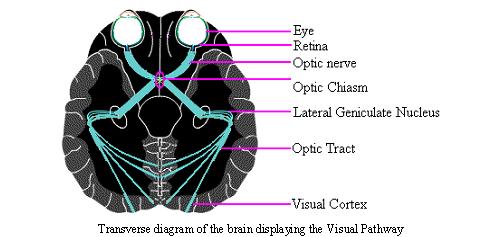
It takes around eight minutes and twenty seconds for light from the sun to reach the earth. It then takes another half a second for that light to be reflected off an object, detected by the retina, trigger signals that travel along the optic nerve, pass the optic chiasm, continue down the optic tract, go through the Lateral Geniculate Nucleus, arrive at the primary visual cortex and spread to wider areas of the cortex and to finally then somehow become part of consciousness. If we decide to move in response to that light, there is a similar time lapse. Specific neurons in the brain must activate continuously for at least half a second before we make the decision to move. To some, consciousness is divine; to others consciousness is the result of the contemporaneous firing of distributed populations of neurons feeding through a dynamical core of deep brain activity.


  Continue reading “Links to Consciousness: Consciousness Links”

Role of Emotions in Brain Function

Emotions can be overpowering, but they are also the driving force of life. It was long thought that emotion and thought were separate processes. Brain science has begun to realise that the brain is not an organ of thought, but that it is a feeling organ that thinks. A tiny almond shaped structure deep in the brain, the Amygdala, is the first to respond to an emotional event. It triggers a series of reactions within the brain’s emotional core and sends signals throughout the body that change body posture, facial expression, heart-rate, breathing and awareness. The emotions are important in social interaction and in forming social connections. The awareness of emotion is crucial to motivation, decision-making, memory and forethought. Learning how to manage our emotions is an important skill that we continually develop throughout our lives.

Continue reading “Role of Emotions in Brain Function”

Video Games, Brain and Psychology Round Up

After earlier round-ups on video games (#1 on gaming in itself, as a social form; #2 on social science and game design), I am adding this third round up covering gaming and mind/brain research.

Together all three round ups provide the background for approaching video games through neuroanthropology. Ideally this background would then serve to inform specific research on gaming, which I have addressed previously in discussing avatars, MMORPGs, and Grand Theft Auto, probably my most synthetic piece.

To place that work in context, you can also check out the popular post One Day at Kotaku: Understanding Video Games and Other Modern Obsessions. See also: video games and the neuroanthropology of interaction and gaming and cultural perception.

This round-up draws more on published research than the previous two. At times the best I could provide is a link to an abstract; where possible, I have tracked down pdfs. And if there are other good papers out there that I don’t mention, please leave a comment!

Games and Neuroscience

Shawn Green and Daphne Bavelier, The Cognitive Neuroscience of Video Games
Pdf of a comprehensive chapter that appeared in the book Digital Media: Transformations in Human Communication

Klaus Mathiak & Rene Weber, Toward Brain Correlates of Natural Behavior: fMRI during Violent Video Games
“We propose that virtual environments can be used to study neuronal processes involved in semi-naturalistic behavior as determined by content analysis. Importantly, the activation pattern reflects brain-environment interactions rather than stimulus responses as observed in classical experimental designs.”

Niklas Ravaja et al., Spatial Presence and Emotions during Video Game Playing: Does It Matter with Whom You Play?
Yes it does—playing against another person is different than playing against a computer

CS Green & D. Bavelier, Action-Video-Game Experience Alters the Spatial Resolution of Vision
“Compared with nonplayers, action-video-game players could tolerate smaller target-distractor distances. Thus, the spatial resolution of visual processing is enhanced in this population. Critically, similar effects were observed in non-video-game players who were trained on an action video game; this result verifies a causative relationship between video-game play and augmented spatial resolution.” Gaming can also reduce gender differences in spatial cognition.

Fumiko Hoeft et al., Gender Differences in the Mesocorticolimbic System during Computer Game-play
“males showed greater activation and functional connectivity compared to females in the mesocorticolimbic system. These findings may be attributable to higher motivational states in males, as well as gender differences in reward prediction, learning reward values and cognitive state during computer video games”

MJ Koepp et al., Evidence for Striatal Dopamine Release during a Video Game
Pdf of well-received 1998 Nature paper on reward, dopamine and gaming. Slightly dated now with its view of reward and dopamine, but definitely a foundational piece.

Niklas Ravaja, The Psychophysiology of Video Gaming: Phasic Emotional Responses to Game Events
Ever wonder why it’s fun? Both positive and negative game events when players actively involved in playing elicited “positive emotional responses in terms of facial EMG activity” (pdf)

Games and Embodiment

James Paul Gee, Video Games and Embodiment
Recent article in Games and Culture laying out Gee’s view on gaming and human thinking as both “situated and embodied”.

Continue reading “Video Games, Brain and Psychology Round Up”

Cultural Neuroscience

Shihui Han and Georg Northoff have just published Culture-Sensitive Neural Substrates of Human Cognition: A Transcultural Neuroimaging Approach. This article will prove foundational for “cultural neuroscience,” a term Han & Northoff use near the end of the article. I highly recommend that everyone read the full version (pdf), but will outline and comment on it here.

In this Perspectives piece in Nature Neuroscience Reviews, Han and Northoff review the evidence on how culture influences neural mechanisms, highlight the need to integrate social neuroscience and cultural cognition research, argue for transcultural neuroimaging as an effective method for cultural neuroscience, and lay out implications for the future of this emerging field.

But if you don’t take my word for it, here’s their abstract:

Our brains and minds are shaped by our experiences, which mainly occur in the context of the culture in which we develop and live. Although psychologists have provided abundant evidence for diversity of human cognition and behaviour across cultures, the question of whether the neural correlates of human cognition are also culture-dependent is often not considered by neuroscientists. However, recent transcultural neuroimaging studies have demonstrated that one’s cultural background can influence the neural activity that underlies both high- and low-level cognitive functions. The findings provide a novel approach by which to distinguish culture-sensitive from culture-invariant neural mechanisms of human cognition.

Cultural Effects on Cognition

Han and Northoff systematically cover research on “cultural effects on cognition,” including perceptual processing, attentional modulation, language and music, and number representation and mental calculation. Their Figure 1, presented below, summarizes research on culture and attention, highlighting context-dependent differences in attention between Americans and East Asians.

Continue reading “Cultural Neuroscience”