If Lists Are Your Thing

All right, here are some different rankings out there in the blogosphere.

First up, Online University Reviews gives us the Top 100 Liberal Arts Professor Blogs. They’ve split it up by topic, going from Art to Theology. (Yes, starting with art means that anthropology didn’t make it… grrr.) And it’s rather English heavy. But it’s a list!

Wikio: News in Your Way provides lots of ways to rank things, so to complement the liberal arts side, here is their ranking of the Top Science Blogs. Some familiar friends there, some blogs I didn’t know. Just one note, it looks like you have to submit your blog to even make it onto the list.

Technorati just gives us the Top 100 Blogs, and since they spend their time trying to track all blogs, it’s a powerhouse list. So these are the big players, covering the full gamut of topics out there—politics, technology, gossip. Didn’t I just say that we need to cultivate cultural and emotional ways of being? Here’s the ethnographic data on our present interests. It’s so depressing maybe I’ll go have a behavioral health problem to give me something to do. Wait, I already do. Excessive surfing and blogging. Damn, technology already got me.

And one more. The Nature Blog Network covers the “very best nature blogs on the net.”
Laura’s Weight Loss

Laura over at her psychology blog discusses her own successful weight loss (plus a big on-going study). She also linked back to an April post on successful weight loss I had when my med anthro class and I were examining obesity (for more posts, check our food and eating category). She highlights one of my main points with that essay, the American fixation on self-control and will-power as both pragmatically and philosophically problematic for going about weight loss.

As I put it, “So ‘willpower’ is not the answer, at least as conceived as an intrinsic and internal property of the individual.”

But obviously behavior does matter, linking internal and external dynamics together: “our behavior takes place within specific contexts, relationships, and symbolic meanings. It is also linked to subjective experience, available opportunities, bodily function, and the ongoing interpretation of our memories.”

Laura gives a great example of this (and congratulations too, on what you’ve accomplished): “What I have found useful is to take the decision-making out of my hands. I follow the Jenny Craig maintenance program, and that’s it. No variations, except for special occasions, like Mr. F’s chocolate cheesecake, and that happens no more than once a week.”

We humans are cultural creatures, much more than we are free will creatures. We are also emotional creatures, so major life events can provoke major change (a major health problem is frequently a main factor in successful weight loss, in reframing everyday life so doing “what it takes” suddenly makes sense). And of course we are decision making creatures, with conscious awareness and all that.

But I wonder, if our society put as much effort into developing our cultural and emotional ways of being, and not just our conscious and technological ways of being, would we have so many behavioral health problems in the first place?

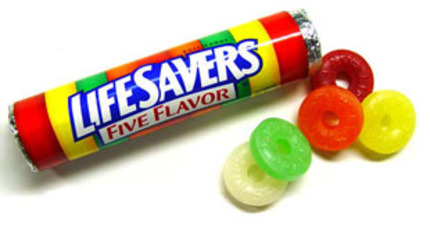
The Cultural Brain in Five Flavors

By Daniel Lende

Next week is the Critical Neurosciences workshop, where I will help lead a discussion of the cultural brain. So I better figure out what I want to say!

Thinking about it yesterday, I came up with this. Rather than one “cultural brain” and lots of arguing about what that means, I will argue that we have five distinct varieties of the cultural brain to consider.

Each flavor deals with a different sort of problem at the intersection of human culture and neuroscience. I will outline these different intersections below, and provide links to our posts to give further depth.

Here are our five flavors:

-The Symbolic Brain: Culture, meaning and the brain combined
-The Inequality Brain: Bad outcomes through society, power, and the brain
-The Theory Brain: Neuroscience impacts social science theory
-The Brain Transformed: Social science impacts brain theory
-The Critical Brain: Taking down bad brain justifications and examining the cultural uses of the brain

The Symbolic Brain

The symbolic brain represents the increasing convergence of work in anthropology and in neuroscience on questions of meaning, symbolism, subjective experience, and behavior. To take an example from my own work, understanding compulsive drug use has required that I examine how processes of attention and behavioral involvement are altered by consistent drug use and how people interpret their own use, from the reasons they had to use to what the experience of use represents to them.

In many ways, this work focuses on a central problem raised but not resolved by Clifford Geertz when he wrote that we should treat human behavior as “symbolic action—action, which, like phonation in speech, pigment in painting, line in writing, or sonance in music, signifies (1973: 9).” Today, rather than reducing that significance to either a cultural pattern or a brain function (both determinist approaches), people interested in the cultural brain are looking for synergies between different domains of research.

Continue reading “The Cultural Brain in Five Flavors”

More Videos and Podcasts for Your Neuroanth Pleasure

Shrink Rap offers My Three Shrinks podcasts, where three psychiatrists with differing views sit down to discuss present issues in mental health, society and more. On a recent entry, the three discussed PTSD, the possibilities of memory erasure, and more.

The American Journal of Psychiatry offers “audio downloads” (can’t they just say podcasts?) dating back to April 2006, where discussion centers on highlights from that month’s journal issue. For June, they covered a clinical case of deep brain stimulation, the economic impact of mental disorders, a large study linking memory impairment to previous depression, and more.

Harvard Medical Labcast is just getting started, and has three podcasts now: the art of perception, the secrets of aging, and the science of social networks.

NeuroScene provides monthly podcasts going back to November 2007. A couple recent ones cover mirror neurons and the psychology of overspending.

ScienceHack provides online videos covering the range of science topics, from physics to green energy. For this blog, the most relevant are the biology and psychology categories. Sorry, anthropology didn’t make it as a ScienceHack… But you can get “Schizophrenia explored through virtual reality.”

The Nobel Laureate Meetings at Lindau lets us watch the superstars give their lectures online. Here’s one by Erwin Neher on “Neurotransmitter and Hormone Release by Calcium and Camp

Wednesday Round Up #19

Education

Howard Gardner, Multiple Lenses on the Mind
The famed psychologist and educator presents his own intellectual history in a long conference presentation in Bogotá

Howard Gardner, How Education Changes: Considerations of History, Science and Values
Formal schools as a social institution, and how that shapes human sociality, intelligence and the cultural transmission of knowledge and skills

Nicholas Kristof, The Luckiest Girl
The heroine from Beatrice’s Goat makes it from Uganda to graduating from college in the US

Patricia Cohen, On Campus, the ‘60s Begin to Fade as Liberal Professors Retire
Demographic shifts and ideological shifts on college campuses nationwide

Jake Young, Get ‘Em While They’re Young: The Benefits of Preschooling
Preschool pays off, particularly for kids in disadvantaged circumstances

Mark Oehlert, Visual Thinking, Imagery and the Brain
Individual learning differences, brain imaging, and the activation of motor and perceptual representations. Short but interesting reflection.

Health

Darshak Sanghavi, Old Drugs, New Tricks: Why Big Health Advances Rarely Involve New Medicines
Small, incremental improvements—using what we already know and the importance of trail-and-error

Abigail Zuger, Achieving Wellness, Whatever That Is
Two books tell us two completely different things about how to manage our health, or the obsessive and the relaxed model

Donald McNeil, Noninfectious Illnesses Are Expected to Become Top Killers
Smoking, obesity, driving and violence as the new killers—the diseases of civilization shaping cancer, heart disease and other health problems

Joint National Academies Statement on Global Health
Life-style linked diseases, social capital, and community health systems—the new way forward to better health

Continue reading “Wednesday Round Up #19”