Wednesday Round Up #31

This week we have more from John Hawks’ students, food, psychology, evolution, the brain, and anthropology.

Biology of Mind

I love encouraging students, and find that blogging raises the bar for them. Suddenly it’s not just the professor who’s reading a paper, but their fellow classmates and in the case of this new blog, Biology of Mind, the whole world! So here are students’ reflections and critiques on papers they have found fascinating:

Effects of Meditation Seen through Long-Term Buddhist Practitioners
Brain Damage from Stress
Looking Further into Semiotics…
The Anatomy of Humor
Is There Something about How We Live Today That Is Bad for Our Mental Health?
Behavioral Evidence for Theory of Mind in Monkeys
Culture Codes
Which Came First : Large Brains or Complex Social Groups?

Food

Eric Nagourney, Nutrition: Soda Ban in Schools Has Little Impact
Banning soda? “Only about 4 percent fewer children from the no-soda schools said they did not drink it.”

Elisabeth Rosenthal, Fast Food Hits Mediterranean; a Diet Succumbs
Fast food invades Greece, and childhood obesity and diabetes become problems. Plus this tidbit, “Greece, Italy, Spain and Morocco have even asked Unesco to designate the diet as an ‘intangible piece of cultural heritage’.”

Tara Parker-Pope, Instead of Eating to Diet, They’re Eating to Enjoy
Is this the better way to be healthy and to avoid the yo-yo effect?

Associated Press, Mexico Pushes National Campaign to Lose Weight
Increasing disease burden due to obesity leads to a new government initiative

Psychology

Eric Schwitzgebel, Six Ways to Know Your Mind
Getting to know yourself – a good guide to how to think about subjectivity and research focused on our experience (or phenomenology). A good follow up is Eric’s End of (Philosophical) Innocence, about how to effectively deal with the intuitions and assumptions at the core of our ideas and our research
Continue reading “Wednesday Round Up #31”

Emerald Encephalon

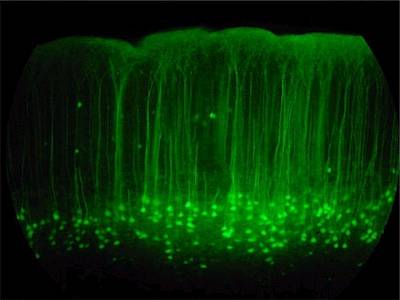
The latest edition of Encephalon is out over at Neuroscientifically Challenged. Fifty five times the mind/brain carnival has done its fortnightly thing. Oh rapture. So I found some cool emerald-colored neurons to celebrate the occasion!

Marc leads off with a video game post, and that’s got me hooked! It’s about the gaming professors Cheryl Olson and Lawrence Kutner, who have written the book Grand Theft Childhood: The Surprising Truth About Violent Video Games and What Parents Can Do. Using research, not accusations, the couple present a balanced view of the good and the bad of video games, and come down mostly on the good. So go to Sharp Brains for a great overview of their work.

Cognitive Daily has a post on condoms and teenage sexual behavior. As it happens, what matters here is not good intentions but having the damn thing at hand. Ah, the old anthropological dictum, what people say and what people do are often very different things…

Ever wondered what computational neuroscience is? Neuronism gives us the overview of this modeling approach.

And Mouse Trap gives us eight basic adaptive problems that animals face. They are: predators, eating the right food, forming relationships, helping children, helping kin, reading other people’s minds, and communication.

These eight come from two evolutionary psychologists, and are not the only way to parse evolutionary problems. Life history theory might focus on growth and the timing of reproduction and the importance of disease and immune function, all of which involve lots of brain/body interactions. An evolutionary-inclined neuroscientist might take a page from computational neuroscience above, and say that just getting accurate brain function (say, useful perceptions of the world) is a much more significant adaptive problem. Just more food for thought… Uh oh, that’s non-adaptive, shouldn’t food go into reproducing? And what about those condoms?

Anyway, head over to Neuroscientifically Challenged for these and more!

Conference: Policy-Relevant Research on Adolescence & Psychological Anthropology

The Schubert Center for Child Studies and the Department of Anthropology at Case Western Reserve University will be hosting a great conference November 7-8, 2008 in Cleveland, Ohio.

Entitled “New Directions in Policy-Relevant Research on Adolescence: Perspectives From Psychological Anthropology,” the conference will “facilitate engaged discussion and connections that highlight the policy-relevant implications of contemporary work on adolescence, particularly through the work of psychological anthropology and related fields… As the core discipline for this conference, psychological anthropology, with its long-standing interests in human development and cultural context, offers a wealth of knowledge to contribute to policy discussions about contemporary issues facing adolescents in the United States and globally. Nevertheless, psychological anthropology is infrequently involved in policy-relevant discussions about both “healthy” development and problematic issues challenging our youth and society.”

Here’s the link to the conference program. It’s a top-notch group! The hosts are Eileen Anderson-Fye and Jill Korbin, two outstanding researchers in this area.

For more information, you can contact Jessica McRitchie, Schubert Center administrator and conference coordinator, at (216) 368-0540 or jessica.mcritchie@case.edu.

Christof Koch and the Neural Correlates of Consciousness


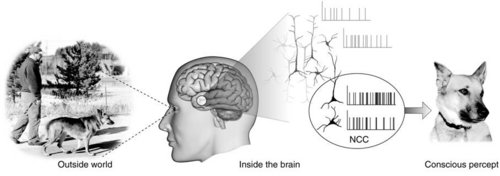
Scholarpedia has an entire entry on the neural correlates of consciousness, which argues for including the neural correlates for conscious precepts (that’s a dog!) as any part of understanding how we are consciously aware. In this case, the neural correlates of both basal arousal (see image below) and activity in the inferior temporal cortex are necessary for us to be consciously aware.

This Scholarpedia page is maintained by Christof Koch and Florian Mormann, both at Caltech. Mormann is a post-doc; his latest article on “Latency and selectivity of single neurons indicate hierarchical processing in the human medial temporal lobe” (pdf) appeared in the Journal of Neuroscience.

Koch wrote the popular book The Quest for Consciousness: A Neurobiological Approach based on his collaborative work with Francis Crick. Here is Michael Shermer reviewing the book at Scientific American:
Continue reading “Christof Koch and the Neural Correlates of Consciousness”

Nicholas Kristof on You Tube

Nicholas Kristof, the most anthropological of the New York Times op-ed writers, now has a You Tube channel. The featured video right now is Kristof applying to stage a protest in China during the Olympics, and then a reflection on China, its politics, and its culture. I’ve put it just below.

The Kristof channel also includes previous videos that Kristof has made as part of his worldwide reporting, including one on Cambodian brothels and another on the Colombian flower industry, which I showed some months back (reminded me of home…). Another is on Mukhtar’s Haven, the story of the woman sentenced to be gang raped in rural Pakistan, who then prosecuted her rapists and used the compensation money to establish a haven for other rape victims.

Kristof, in his push to provide innovative reporting, also runs a blog where he reflects on what he is writing, readers can comment on his editorials, and some good guest bloggers also take on complex social phenomena. You can see all Kristof’s NY Times columns here. He even has a Facebook site!

John Hawks and Biology of Mind

John Hawks, associate professor of anthropology at the University of Madison – Wisconsin who brings us his paleoanthropological, genetic, and evolution expertise over at his own blog, has set up a new blog Biology of Mind run by his students.

The blog is part of John’s same-titled class which covers “the evolution of human cognition and behavior in a comparative context.” For the most part, the students in their posts provide description and critical commentary on relevant articles. So here’s one on Social Intelligence and Self Awareness, building on the 1998 Gordon Gallup article on that topic.

Besides the students covering and commenting on a wide range of literature, John also puts up weekly readings in pdf format. So this week we have Northcutt on Understanding Vertebrate Brain Evolution and Streidter on Progress in the Study of Brain Evolution.

Last semester I also worked with students blogging. For my medical anthropology class, we ran a student-only blog here at WordPress, where students posted materials, worked up introductions to main readings before discussing them in class, and generally commented on life. It was very easy to set up, and was a closed entity (just for the class and me). So that is one option.

Another option is to have more formal posts done by students, who develop original posts for a public blog (namely this one!). In my class on addiction, groups of students worked on creating some very successful posts on topics ranging from brain imaging to post-conventional outlaws (see them all described here).

So there are lots of ways to get students involved! If you have any more ideas, please let me know with a comment.