Conference: Mind and Its Potential

Mind and Its Potential
A great conference coming up on the 2nd and 3rd of December 2009 in Sydney, Australia: Mind and Its Potential. The Dalai Lama, Paul Ekman and Martin Seligman are the really big names, and then people like Susan Greenfield, Marc Hauser, Natasha Mitchell and many more fill a long list of “extraordinary speakers.”

The conference is premised on this theme:

Science is only just beginning to understand the extraordinary capacity of the brain to change and develop. The implications for how we learn, work and care for one another are profound. Here is your opportunity to hear the world’s top scientists, psychologists and philosophers explain how to apply the new science of the brain in education, medicine, business and your life.

The conference really emphasizes the following: “Practical applications of the new science of the brain: How do we learn? How do we teach? How do we overcome adversity and disability? How should we live our lives? Find out the implications for education, health care, business and your life!”

The first day of the conference really emphasizes plasticity and learning as fundamental to both understanding neural function and how we deal with issues like education, parenting, and exercise. The second day features the Dalai Lama and Martin Seligman discussing human flourishing and spirituality, ethics and morality in the morning, and then emotions and more in the afternoon. You can access the overall prorgam here.

There are also pre- and post-conference workshops with leaders in the field, as well as a Mindfest Festival that will be hosted outside the main auditorium during the conference.

For more information and to register, you can visit the Mind and Its Potential conference website.

Wednesday Round Up #87

The good stuff for this week, then anthropology and the mind, finished off by a great set of readings that consider changes in education and academia.

Top of the List

Michael Jernigan, The Minefield at Home
A US soldier from Iraq writes on injury, trauma, PTSD and coming home. A powerful first-person account that is part of the NY Times series, Home Fires: American Veterans on the Post-War Life.

Dave Munger, In Which I Resist Writing The Obvious Headline
Finding a genetic basis for anger using fMRI research with genetic analysis. Oh the juicy, misleading titles that could have been.

Nate Beeler, American Television Takes A Toll On The Brain
Ah, the cartoon that captures reality television. Except So You Think You Can Dance of course.

Joe Brewer and George Lakoff, Why Voters Aren’t Motivated By A Laundry List Of Positions On Issues
An overture to cognitive policy – the principles, frames, and point of views that make sense of political development.
For more, here’s Cognitive Policy Works: Politics For Real People basic statement on Cognitive Policy: “Cognitive policy is about the values and ideas that both motivate the policy goals and that have to be uppermost in the minds of the public and the media in order for the policy to seem so much a matter of common sense that it will be readily accepted.”

Alex Hutchinson, Global Impositioning Systems
The evils of GPS, or why not figuring how to get places reduces our sense of direction (it’s a skill after all)

Marco Roth, The Rise of the Neuronovel
An in-depth and critical essay on writers’ turn to writing not about the mind but about the brain. Most recommended.

Anthropology

Ed Yong, Culture Shapes The Tools That Chimps Use To Get Honey
Discusses the skills and strengths of chimps that give them an advantage in obtaining food and surviving.

Continue reading “Wednesday Round Up #87”

Conferences: Biocultural Psychiatry and Social Determinants of Mental Health

FPR LogoTwo great conferences coming next year.
The first is the Foundation for Psychocultural Research‘s 4th major interdisciplinary conference, Cultural and Biological Contexts of Psychiatric Disorder: Implications for Diagnosis and Treatment.

The conference will run January 22-24th at the Neuroscience Research Building Auditorium at UCLA. There is an all-star list of speakers, including Tom Insel, director of the National Institute of Mental Health; Kay Redfield Jamison, the clinical psychologist and author of books that have spoken eloquently of bipolar disorder; and two leading anthropologists of psychiatry, Byron Good and Lawrence Kirmayer. Other big names include Simon Baron-Cohen and Eric Kandel, the Nobel Prize Winner.

You can download the entire preliminary program here for the Cultural and Biological Contexts of Psychiatric Disorder conference.

Early registration runs until November 13th, with a lower cost. You can still register after November 14th, but it looks like that will cost about $50 more across all categories. Here is the link to registration.

The second conference is The Social Determinants of Mental Health: From Awareness to Action. This conference runs June 3rd and 4th, 2010, and will be hosted at the Drake Hotel in Chicago. The Institute on Social Exclusion at the Adler School of Professional Psychology is organizing the event.

The keynote speaker is David Satcher, the 16th Surgeon General of the United States and former director of the CDC. The plenary speaker is Sandro Galea, the director of the Center for Global Health at the University of Michigan.

The Adler Institue on Social Exclusion has issued a call for papers. Three hundred word abstracts are due December 31st and should be emailed to ise@adler.edu. Check the call for papers for more details, but broadly they want submissions that:

Build new knowledge and/or practice innovations by doing at least one of the following:

* applies the social determinants frame to mental health;

* bridges disciplinary, professional, and sectoral perspectives on the social determinants of mental health;

* illustrates the mechanisms and the pathways by which social context impacts mental health and well-being;

* illustrates the relationships between “macro” (e.g., national and international economic, climatic, political, demographic, and social forces), “meso” (e.g., family, neighborhood, and community characteristics) and “micro” (e.g., individual attributes) variables and mental health; and/or

* proposes new or describes existing policy and programmatic mental health interventions that are based the on social determinants frame.

One Hundred Years of Brain Images

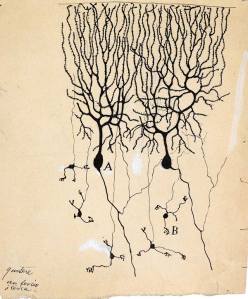
Cajal Purkinje Drawing
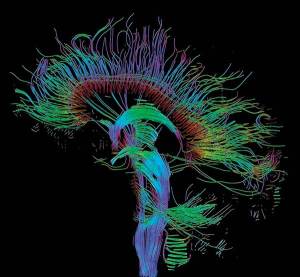
Mo Costandi, who runs the excellent Neurophilosophy blog, has a wonderful piece over at MIT’s Technology Review, Time Travel through the Brain. The article gives us ten images that represent how our ability to see and visualize what our brains do, with accompanying commentary on each image. There is also a minute-long video on the right hand side which is also worthy viewing – so please look for that too.

I’ve included the first and tenth images here, but for more, go over to Time Travel through the Brain.

Schultz Thalamus Diffusion Tensor

Wednesday Round Up #86

Lots of small categories this week – sport, placebo, digital anthropology, and Elinor Ostrom – before the mind and anthropology finish it off.

Top of the List

PsyBlog, How Rewards Can Backfire And Reduce Motivation
Intrinsic rewards matter, unexpected rewards too. Getting something you expect? Not so much.

Maximilian Forte, Welcome To ZERO ANTHROPOLOGY: The End Of The Beginning Of The End
Open Anthropology reflects back and looks forward – what does it mean to do open anthropology?

Margarita Alegria et al., Prevalence of Mental Illness in Immigrant and Non-Immigrant U.S. Latino Groups
2008 full-access American Journal of Psychiatry article that both shows lower overall rates for Latinos of mental illness, and tries to examine more closely what that means for specific lives and specific groups

Pamthropologist, Making Anthropology “Relevant”: Do We Really Want To Go There?
Relevance only so students can understand themselves? An argument for a different sort of relevance, with good discussion in the comments

Larval Subjects, Deluze On Assemblages
Assemblages of ideas, rather than singular fields, as the important basis for understanding, whether individual, academic, or social. Some good implications for this project here.

Sport

Mo Costandi, Kicking Performance Affects Perception Of Goal Size
So, is it skill or is success that makes the goal seem larger? Really fascinating research

Continue reading “Wednesday Round Up #86”

The Anthropology Song

Cristina Crespo, a former student of mine, just sent me the link to that song. It’s also popping up among my friends over at Facebook. So enjoy.

Here’s the specific YouTube link to The Anthropology Song: A Little Bit Anthropologist.

And the YouTube channel is Daionisio, budding singer/anthropologist. After graduating from UBC, Dai Cooper is now doing a masters in anthro at the University of Toronto.

Gotta love the chorus:

The World seems to increasingly need, Anthropology
Now we’re exploring, asking Who Why and How we be People
The difference between us, is not so much
Tell me your story, your piece of what is Humanity.