Wednesday Round Up #107

This week it’s the tops, mind, compulsions, fMRI, and anthropology. Enjoy.

Top of the List

Nicolas Baumard, Cognition and Culture Reader
Great collection of articles that cover the field of Cognition and Culture.

John Rich, Doctor Works to get Young Man out of ‘Wrong Place’
NPR show featuring the author of Wrong Place, Wrong Time: Trauma and Violence in the Lives of Young Black Men. Rich explores the reasons why so many young African American men are ending up in hospitals with various injuries. He seeks to find a better life for these men.

Dan Hope, iPhone Addictive, Survey Reveals
The anthropologist Tanya Luhrman surveys Stanford students. Looks like the iPhone can be addictive. Like seriously. And the story even makes it to the always funny radio show Wait Wait Don’t Tell Me – check out the Limericks!

Elizabeth Green, Building a Better Teacher
I liked this thought-provoking piece on how to improve schools through improving teaching skills.

John Pavlus, The Science (Fiction) of Embodied Cognition
Embodied cognition demonstrated through Avatar!

Rob Nixon, Literature for Real
The draw of the real – can anthropologists learn something from creative nonfiction? For more on the fiction/nonfiction debate, head over to Blue to Blue’s Sometimes a Fantasy

Mind

Marcus Raichle, The Brain’s Dark Energy
At Scientific American, one of the main researchers on the brain’s default network explains its importance

Continue reading “Wednesday Round Up #107”

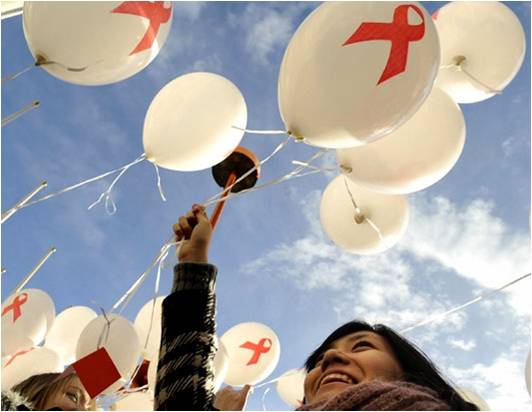
Finding a Voice: Establishing a Support Network for HIV+ Women

By Katie, Laura, Matt, and Claire

Diane was diagnosed with HIV at eight months old. She was infected through her mother, who was not aware that Diane’s father, her husband at the time, had HIV. He left before Diane’s mother found out that she had HIV and that she had passed it on to her newborn daughter.

Infected with HIV for her entire life, Diane “acts like she doesn’t have it” and “tries to go on with her life” even though she thinks about it everyday.

HIV has had a huge impact throughout Diane’s (a pseudonym) twenty-one years of life. One summer she was given just months to live, and her family, doubtful she would live until December, celebrated Christmas in July. She has survived several health scares, and although her health is currently not great, it is improving as her new medication begins to bring her viral load under control.

The Challenges of Being HIV-Positive… and a Woman

HIV-positive women cope with their disease in ways that are strikingly different from HIV-positive men. Women’s roles as caregivers, mothers, wives, and daughters make their experiences with HIV unique. These roles shape how much they are willing to deal with the disease on a daily basis as many women put the needs of their children and families before their own. Furthermore, their identities as caregivers may conflict with their identities as recipients of care that their HIV status necessitates. Consequently, these women, many of whom are in difficult socioeconomic situations, may not seek the support they need.

To help these women, last year a group of students helped to establish a much-needed HIV/AIDS women’s support group in our Midwestern city (see their post, Just A Place to Talk: Women & HIV/AIDS). It was a success initially. However, the student who helped facilitate the support group moved away this summer, and the support group lost its impetus.

This year our community-based research project explored why women stopped attending the support group, women’s interest in participating in a new support group, and how to develop a support network that addresses the many needs of HIV-positive women. The two most important lessons we learned this semester include the importance of emotional support and the value of resources, such as transportation and childcare, that enable these women to care for themselves and their families while living with HIV.

Seeking Solidarity and Support

Several women expressed a desire to learn from others who are willing to share their experiences with HIV. They think that sharing their stories with other HIV-positive women will lessen feelings of isolation and better equip these women to handle the burdens of the illness. As Joyce, who has been HIV-positive for twelve years, reported, she is interested in the group because she “wants to feel supported.”

Continue reading “Finding a Voice: Establishing a Support Network for HIV+ Women”

“We Pregame Harder Than You Party!”

By Annette Esquibel, Thomas Mumford, and Jocelyn Rausch

“Why do I pregame?” The third year American History student repeated our question with a bit of sarcasm in his voice. He put down his textbook and then delivered his jovial response:

“Why wouldn’t I pregame?! It makes everything better- bars, parties, dances, football, class, work…”

This is the pregaming mentality expressed by a current undergrad at our mid-Western university. This mentality can be summarized: if you have to go to something, why not be buzzed when you do it?

Across the country, on any given weekend night, college students are often consuming four or five, sometimes even 10 drinks, before they even make it out of their dorm room for a night of partying, the dorm dance, or even the latest sports event.

They consume what many medical professionals construe as dangerous, sometimes lethal, amounts of alcohol in a short period of time. Then students often find themselves passing out, throwing up and even being taken to the hospital. And that’s before they even make it to the party.

From an outsider’s point of view, this may not sound like a lot of fun. For college students, pregaming is often the best part of the night. Our question as student researchers was, Why?

Our Research

Due to the recent emergence of pregaming, little is known about the mentality behind it. Working with the university group in charge of helping to prevent and treat alcohol abuse, we aimed to understand the social and cultural bases for high-risk drinking and pregaming. Previous student research on pregaming focused on gender differences, and can be found in the post “College Drinking: Battle of the Sexes?”

The statistics were already clear for the university office in charge of alcohol education and prevention – almost 80% of students who have gotten in trouble for alcohol-related events were pregaming on the night of the incident. Counselors there feared that the high-risk drinking habit of pregaming has become synonymous with students social lives.

Our project aimed at both understanding students’ general attitude towards pregaming as well as why students stop drinking on a given night. These questions could offer insight and clues to effective handling of the problem of pregaming by students and the university alike.

Continue reading ““We Pregame Harder Than You Party!””

Obesity Meets Family Medicine

By Kelsey Hitchcock, Anna Pavlov, Ryan Shay, John Villecco and Sara Yusko

For several hours we talked about obesity with the resident doctors at the local family clinic. After covering the typical recommendations for losing weight, such as eating healthy and increasing exercise, Dr. B informed us of the most practical treatment method they use. “I usually ask the patient to complete a food journal.”

According to Dr. B and the other residents, a journal can provide concrete evidence of successes and areas in which adolescents could improve their diets. So we asked about the success of such an assignment. Dr. B chuckled and said, “I’ve never had a patient complete a food journal.”

As soon as he said this, two other doctors in the room added their own experiences. One echoed Dr. B’s statements, and the other told his one and only success story:

“The patient was fourteen years old. He didn’t like how big he was becoming and decided to play sports. After he started playing sports he lost thirty pounds.”

As we explored the issue of adolescent obesity within our community, we found that while the recommendations for losing weight may appear simple, successful results were not easily obtained. Our goal was to better understand the prevalence and treatment of adolescent obesity through patient observation and interviews with resident doctors in this mid-Western city.

Continue reading “Obesity Meets Family Medicine”

Wednesday Round Up #106

Basic plus one – top of the list, mind, anthropology, and addiction.

Top of the List

James Fowler and Nicholas Christakis, Cooperative Behavior Cascades in Human Networks
New full-access PNAS paper on social networks and cascades of behavior. For good commentary, see The Frontal Cortex and Not Exactly Rocket Science

Maximilian Forte, Multiplying Human Terrain Dreams of Victory and Fortune
Zero Anthropology examines the non-zero-sum game approach to expanding the use of social science for military ends

Ed Yong, An 60,000-year Old Artistic Movement Recorded in Ostrich Egg Shells
Very cool. Decorative ostrich shells many, many generations ago. Art is old.

John Hawks, Fat Rats
Lab rats come with starting conditions – they are not the representatives of “nature” that scientists have often assumed. In this case, studies on caloric restriction might be flawed because rats started from an unhealthy baseline, and thus any improvement extends their life

Nicholas Wade, Human Culture, An Evolutionary Force
Nice summary of recent research on how culture, broadly conceived, shapes natural selection.

Michael Smith, Blogs Don’t Get No Respect
Good rant about how American Anthropologist’s short piece on cultural anthropology blogs isn’t really all that

Mind

The Neurocritic, Depression’s Cognitive Downside
A critical look at Jonah Lehrer’s recent piece that covered evolutionary proposals about the adaptive benefits of depression; here the impairments come to the fore

Continue reading “Wednesday Round Up #106”

Post-Traumatic Stress Disorder: Getting Help Early to Feeling Welcomed

By Jenny Heil, Brendan Durr, Jon Lopez, Mac Kenzie Nunez, Mark Flanagan

It’s 3:00 AM and you finally decide that it is safe to venture out to the 24-hour Wal-mart. Not totally safe, mind you, but at least almost no one will be there—less potential threats to worry about…

You get home, and sleep in your chair. Sleeping in the bed is too vulnerable…

You wake up, and hear a loud bang. Automatically, you know it’s a bomb, and grab the enemy by the throat…

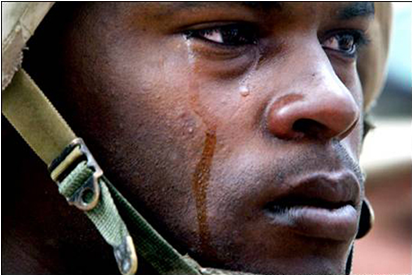
Veterans may leave the war zone, but they can never escape the war. For those who return from war with post traumatic stress disorder (PTSD), they constantly live as though their minds and bodies are still at war.

Fear of crowds and intense anxiousness around others. An inability to feel safe while sleeping. Flashbacks and nightmares, often triggered by sudden or loud noises. Always feeling like even the people closest to you are the enemy, poised for attack.

Veterans are living in this reality. As many as one in four veterans will experience PTSD, according to Dr. Michael Sheehan, a psychologist specializing in PTSD. PTSD is a disorder that can happen as a result of many kinds of trauma, and is especially prevalent in veterans of war.

People with PTSD may constantly relive the trauma of war (through flashbacks and nightmares), may try to avoid places and events that would cause memories, and may be easily startled and constantly feel on edge.

While PTSD is often not recognized as the same as other battle wounds, the experience of veterans verifies that PTSD is real. We hope that the information that we provide here will help you understand the experience of PTSD.

If you recognize the symptoms of PTSD as ones you experience yourself, please consider seeking help by joining a support group for veterans or talking to a psychologist or physician.

Our Research

We are a group of five Notre Dame undergraduate students who, over the course of a semester, have interacted with a group of veterans with PTSD in an attempt to better understand the experience of PTSD.

Continue reading “Post-Traumatic Stress Disorder: Getting Help Early to Feeling Welcomed”