
More Than A Waiting Room

main-waiting-room1By Jillian Brems, Erin Brennan, Katrina Epperson, Jordan Pearce & Anna Weber

“I just don’t want this to be the visit that changes my life,” said the middle-aged woman waiting for a mammogram at the Regional Breast Care Center. For an estimated 240,510 women diagnosed with breast cancer in 2007, their visit to the waiting room did change their lives. This is the concern that patients and their friends, families, and significant others face every time they visit the center.

This feeling of stress and anxiety isn’t just for first-time visitors either. Even women who have had many mammograms worry before a visit because, as one patient put it, “You just never know.” Women are forced to come to terms with the uncertainty factor when they enter the hospital clinic. “It’s the results I’m absolutely terrified of,” another patient said, “not the procedure.”

During this past fall the five of us—all anthropology students at the University of Notre Dame—evaluated the waiting rooms at the Regional Breast Care Center (RBCC). It has been nine years since the waiting room at RBCC last changed, and our ethnographic research focused on determining how to better meet the needs of all who use the space. The director and staff had basic questions whether the waiting rooms still fulfilled the diverse needs of their patients and those who accompany them, and what new things could be done to improve patient satisfaction and comfort.
Continue reading “More Than A Waiting Room”

Call for papers for fellowship in Cultural Psychiatry

It’s not exactly neuroanthropology, but if you’re one of those energetic psychology-neurology-anthropology-psychiatry hybrid grad students who contacts us from time to time, you may want to consider applying for the following fellowhip. I got the announcement through the Society for Psychological Anthropology:

Society for the Study of Psychiatry and Culture
Call for Papers: Charles Hughes Fellowship in Cultural Psychiatry

The Society for the Study of Psychiatry and Culture announces its 8th annual call for papers for the Charles Hughes Fellowship in Cultural Psychiatry, an annual award presented to a graduate student who has an interest in and commitment to cultural psychiatry and mental health. Graduate students in the social sciences who are interested in competing for this award should submit an original scholarly paper on a topic in cultural psychiatry, along with a CV and a letter of recommendation from his/her department or committee chair, to:

Joan D. Koss-Chioino, Ph.D.
2753 Bon Haven Lane
Annapolis, MD 21401
or Email all 3 documents to: joan [dot] koss@asu [dot] edu

The deadline is February 28, 2009. The Society will pay partial travel costs for the awardee to present his or her paper at its annual meeting to be held May 15 -17,2009 in San Francisco, California.

For more information, contact Dr. Joan Koss-Chioino at joan [dot] koss@asu [dot] edu.

Just a Place to Talk: Women and HIV/AIDS

By Christine, Dorian, Kristine, Tom & Vanessa
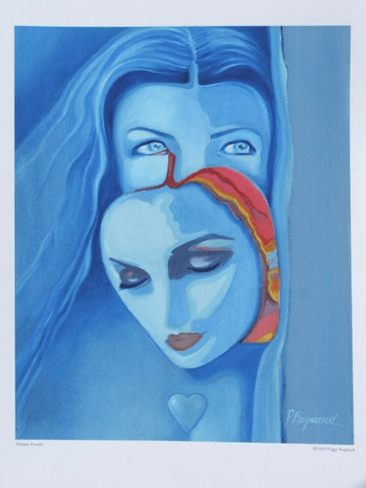
femme-facade-by-peggy-bonnett-begnaud
Nine months ago, Maria birthed a healthy baby girl. Just two days later, the joyous ecstasy of new life quickly led to a striking reality: Maria’s husband was diagnosed with HIV.

“He thought I was going to leave him, but of course I wouldn’t. We’re in this together.” At the time, she didn’t know quite how personal her statement would become. Just three months later Maria and her newborn daughter were also diagnosed with HIV.

“Initially I was able to handle it in the moment, but then it hits. In time, it’s become much more difficult to deal with.”

Maria certainly feels stigmatized and has refrained from telling her other children. In this Midwestern town, the needs of Maria (a pseudonym) and other women with HIV are ripe with concern and lack of viable opportunity. She told us, “What I, and other women need, is just a place to talk.”

Currently there are HIV/AIDS support groups offered locally through a community center. Our community-based student project, focused on understanding and empowering women suffering from HIV/AIDS locally, brought us to these groups. What we found was a support group for homosexual men that did not offer the support women need.

Through research concerning sexual orientation and HIV/AIDS, we discovered that homosexual men and heterosexual women have different coping mechanisms and symptoms. Women experience more illness as a result to their HIV/AIDS status than homosexual men. They also are more likely to need social support to deal with the pain and fear of being HIV/AIDS positive. (Mosack 2009:137) Although the group that exists can be literally defined as a place to talk, it may not be the best place to be heard and understood as a woman.

Continue reading “Just a Place to Talk: Women and HIV/AIDS”

What do these enigmatic women want?

25desire_6002In this week’s The Times Magazine of The NY Times, Daniel Bergner has a piece on women’s sexuality and research that’s already in preprint causing a bit of controversy as well as a convulsion of 1950s era humor in the online response. The title, ‘What do women want?’, that nugget of Freudian wonder, no doubt will raise the readership, as will the pictures of models simulating states of arousal (Greg Mitchell is in a bit of snit about them in, Coming Attraction: Preview of ‘NYT Magazine’ With Semi-Shocking Sex Images on Sunday. ‘Semi-Shocking’? I can imagine how that goes… ‘Are you SHOCKED by these photos?’ ‘Well, I’m at least SEMI-shocked, yes!’).
In particular, Bergner gives us thumbnail portraits of women engaged in sex research: Meredith Chivers of Queens University (Kingston, Ontario), Lisa Diamond of the University of Utah, and Marta Meana from UNLV, although there’s also commentary from Julia Heiman, the Director of the Kinsey Institute, and others. As with so much of contemporary science writing, we get researchers as characters, with quirky personal descriptions and accounts of meeting the author, each one standing in for a particular perspective in current scientific debates.

Chivers is portrayed as arguing that women are existentially divided ‘between two truly separate, if inscrutably overlapping, systems, the physiological and the subjective,’ Diamond is made to stand in for the ‘female desire may be dictated… by intimacy, by emotional connection,’ and Meana stands in for the argument that women are narcissists desiring to submit. Whether or not these are accurate portrayals—and they might be—the model is prevalent in science writing: get characters to represent lines of thinking, even though many of us are not so clearly signed on with a single theoretical team. Here, we know the score: Diamond arguing women want intimacy, Meana that they want a real man to take them, and Chivers that women want it all, even if they don’t realize it and contradict themselves.

The irony is that, with such a tangle, the conclusion is foreordained: women will seem enigmatic, inconsistent, and irremediably opaque. As I’ll suggest in this, I think that the conclusion is built into the way the question is being asked. If a similar question were asked about nearly any group, in nearly any domain of complex human behaviour, and then a simple single answer were demanded, the questioner would face nearly identical frustration.

Continue reading “What do these enigmatic women want?”

Wednesday Round Up #47

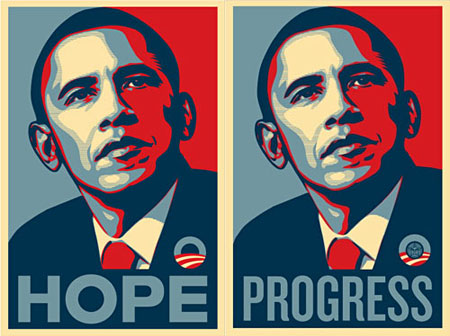
shepard-fairey-barack-obamaThis week, in celebration of Barack Obama’s inauguration yesterday, I have put together a collection on how Obama intersects with the themes of this site. In other words, Obama is a neuroanthropologist!
Let me just start off by saying that Barack Hussein Obama hit it right in his speech yesterday when he said, “The question we ask today is not whether our government is too big or too small, but whether it works.” We are switching from party and field-specific ideologies to seeing what works and what does not. As you’ll see below,a diverse background proves a great help for engaging in that process.

His Parents and Their Legacies

Paula Bender, Legacy of the President’s Mother
A profile of Stanley Ann Dunham, an anthropologist, from her alma mater, University of Hawaii at Manoa

Janny Scott, Obama’s Mother – An Unconventional Life
More on Obama’s mother, with this tagline “Anthropologist disliked ethnic barriers, sought to aid world’s poor”. For more, see her Wikipedia profile.

Ruth Behar, The Anthropologist’s Son
A good portion of the well-known anthropologist’s Chronicle of Higher Education piece on Obama and his anthropologist mother. John Jackson reacts and reflects in his piece, America’s Anthropological President

Sally Jacobs, A Father’s Charm, Absence
An extended profile of the “self-confident, complex dreamer”, Barack Obama Sr.

Continue reading “Wednesday Round Up #47”

Paleofantasies of the perfect diet – Marlene Zuk in NYTimes

Prof. Marlene Zuk (University of California Riverside), author of Riddled with Life: Friendly Worms, Ladybug Sex and the Parasites That Make Us Who We Are (Amazon, Google books), has a very nice short essay in The New York Times on the recent discussion of whether or not our dietary problems stem from our bodies being ‘out of step’ evolutionarily with things like Mars bars and Big Macs: The Evolutionary Search for Our Perfect Past. We’ve seen these sorts of arguments all over the place, that a ‘Paleolithic diet’ can make you healthy and banish bulges from inopportune places, after all, just look at Raquel Welch in 10,000 BC!

Paleolithic dieter?  Not exactly...
Paleolithic dieter? Not exactly...

When I talk about diet and human evolution in my freshman class, I have to point out that there are a tremendous number of complications, including the fact that the vast majority of us do not have the cultural knowledge to get ANY nutritional resources out of the environment around us (see my earlier post with my slides from that lecture, if you like). It’s all well and good to say, ‘Eat meat, roots and berries,’ but that just means spending our time in the grocery store aisles a bit differently for most of us, not actually transforming the ways that we get food, how we relate to our environment, or even the quality of the meat, roots and berries we’re getting (after all, even the meat we get is from the animal world’s equivalent of couch potatoes, not the wild stuff on the hoof– or for that matter, dead on the ground where we can scavenge it).

Zuk draws on Leslie Aiello’s concept of ‘paleofantasies,’ stories about our past spun from thin evidence, to label the nostalgia some people seem to express for prehistoric conditions that they see as somehow healthier. In my research on sports and masculinity, I frequently see paleofantasies come up around fight sports, the idea that, before civilization hemmed us in and blunted our instincts, we would just punch each other if we got angry, and somehow this was healthier, freer and more natural (the problems with this view being so many that I refuse to even begin to enumerate them). It’s an odd inversion on the usual Myth of Progress, the idea that things always get better and better; instead, paleofantasies are a kind of long range projection of Grumpy Old Man Syndrome (‘Things were so much better in MY day…’), spinning fantasies of ‘life before’ everything we have built up around us.

Continue reading “Paleofantasies of the perfect diet – Marlene Zuk in NYTimes”