
Besides the obvious, here are some generic travel tips of a fieldworker. In no particular order:
1. Always Carry a Pen that can write on skin without smudging

Besides the obvious, here are some generic travel tips of a fieldworker. In no particular order:
1. Always Carry a Pen that can write on skin without smudging
While I was on vacation, Carl Feagans at A Hot Cup of Joe hosted the anthropology carnival Four Stone Hearth #72. It fell on his birthday – and what better way to celebrate than with all four fields of anthropology!
From the axes of Neolithic gods to moving beyond war, cranial plasticity to Shoshone language, it lights candles across the breadth of the field. Enjoy.
Link to Four Stone Hearth #72
Back from vacation – so better late than never. Had a great time camping, by the way.
Top of the List
Vaughan Bell, How Long Is a Severed Head Conscious For?
One of those morbid questions we often ask – well, here’s the answer.
Jerry Coyne, Creationism for Liberals
The dismantling of Robert Wright’s new book The Evolution of God over at The New Republic. Wright responds to Coyne here.
Clarence Gravlee, New TAPS Paper in Current Anthropology
Godoy et al. paper on changes in well-being over time in the Bolivian Amazon. Data come from the Tsimane’ Amazonian Panel Study (TAPS), which uses a longitudinal approach not often seen in anthropology. Plus get Lance’s forthcoming paper, Methods for collecting panel data.
Christopher Kuzawa & Elizabeth Sweet, Epigenetics and the Embodiment of Race: Developmental Origins of US Racial Disparities in Cardiovascular Health
Pdf of a 2009 article – “The model outlined here builds upon social constructivist perspectives to highlight an important set of mechanisms by which social influences can become embodied, having durable and even transgenerational influences.”
Ed Yong, Confirming Aesop – Rooks Use Stones to Raise the Level of Water in a Pitcher
And see the video too!
Anthropology
Mark Flinn, Why Words Can Hurt Us: Social Relationships, Stress and Health
Pdf of the very accessible chapter on stress in the recent volume Evolutionary Medicine and Health
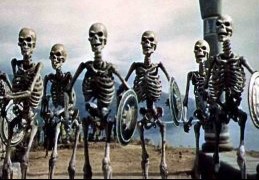
Wizened anthropologists will notice all sorts of crucial elements that are still missing from the entry; our friends on the Australian Anthropological Society mailing list have pointed out that perhaps the most famous recently-deceased anthropologist, Michel Foucault, is missing from the un-entry. I also noted the absence of any discussion of the role of hallucinogens in the production of anthropological theory, from the early crucial inspiration of absinthe to the later influence of Amazonian pharmacology and performance-enhancing peyote, to more recent experimentation with endo-generated narcotics such as extreme reflexivity and disciplinary megalomania/self-castigation bipolarism.
Also mysteriously missing is any mention of thesis-related slavery in the teaching of anthropology, chunky ethnic jewelry or hemp clothing, or any word with the prefix ‘post-‘. In other words, the uncyclopedia entry on anthropology is a work in progress, but definitely not likely to become the least bit more accurate or reflect the field in a favourable light. I’d heartily recommend that you click on the link to visit the site so that someone might fall under the illusion from the page traffic that anthropology has a larger audience than it actually has, or you could maliciously hack the page and suggest that the field is closely related to sociology.
Photo archived at: http://uncyclopedia.wikia.com/wiki/File:Harryhausen_skeletons_2.jpg
So this week it’s the food crisis, then neuroscience and anthropology, and finally language. Enjoy.
I will be on vacation next week, so won’t post the Wed round up until Saturday August 8th. So you’ll just have to wait a couple days while we’re camping.
Top of the List
Vaughan Bell, A War of Algorithms
Mind Hacks provides overview and commentary on the latest in artificial intelligence and the potential to wreak war and the need for limitations
Adam Henne, Whale Relations
Looks like a good new blog by an anthropology, Nature/Culture, with a focus on the environment and anthropology. I had wanted to discuss this recent NY Times magazine piece on whales. Adam did it for me.
Peter Deeley, The Religious Brain: Turning Ideas into Convictions
Scribd article looking at how cultural beliefs actually work their impact on specific people
Kay Redfield Jamison, The Importance of Restlessness and Jagged Edges
The psychologist and author of An Unquiet Mind shares her This I Believe: “I believe that curiosity, wonder, and passion are defining qualities of imaginative minds and great teachers; that restlessness and discontent are vital things; and that intense experience and suffering instruct us in ways less intense emotions can never do.”
Ed Yong, Your Brain on Oprah and Saddam (and what that says about Halle Berry and your grandmother)
Or even the researcher himself – he found a neuron that responded specifically to him during the research, despite having never met the volunteer previously. But really, the change is from the idea of a single neuron encoding singular info to groups of neurons encoding info through patterns of activity
The Food Crisis
-Many thanks to Craig Hadley for highlighting these selections-
Grain, The Other “Pandemic”
It’s not just the financial crisis and swine flu sweeping the world – the food crisis is killing a lot more people
Bapu Vaitla et al., Seasonal Hunger: A Neglected Problem with Proven Solutions
PLoS Medicine article about what we can do about the main cause of acute hunger and undernutrition, seasonal shortages due to dwindling stocks, high prices, or scarce jobs
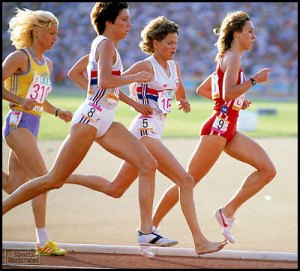
In 1984 at the Los Angeles Olympics, the women’s 3000-meter final was marred by controversy when American Mary Decker fell after making contact with Zola Budd, a runner from South Africa who represented Britain (due to the boycott of South African sport).
Although Budd had been setting the pace, she faded to seventh in the end and was booed by the partisan LA audience (Decker would later say that she was inexperienced at running in a pack and, as the trailing runner, was responsible for their contact). Maricica Puica of Romania won the event, and Britain’s Wendy Sly took the silver in a final that was seared into my memory by the televised replays of a stricken Mary Decker, hip injured from her fall, shattered and crying on the infield.
In all of the drama, one of the things that left the greatest impression on me as a high school student and sometime athlete was the simple fact that Zola Budd ran without shoes, an almost unimaginable idea to me at the time. Budd was one of a handful of famous barefoot runners, including Abebe Bikila, the Ethiopian marathoner who won his first Olympic gold in 1960 without shoes, Tegla Loroupe, the Kenyan women’s running legend and multiple world record holder, and Ken Bob Saxton, aka ‘Barefoot Ken Bob,’ a marathoner and guru to the shoeless.
I’ve been thinking about barefoot running for a while, oddly enough since I started writing about bare-knuckle punching in no-holds-barred fighting (or ‘mixed martial arts’ like the Ultimate Fighting Championship in its early days). Barefoot running, even more than bare-knuckle boxing, reveals the ways that very simple technologies, if used consistently enough, become part of the developmental niche of the human body, shaping the way that our bones, muscles, tissues, and nervous system develop.
Although this post is not strictly neuroanthropology, I thought I might share some of what I’m working on, in part because I’m interested to hear any feedback people have. In particular, this will focus on how hard it is to sort out what’s ‘natural’ when activity patterns, incredibly variable, are necessary ingredients in the development of biological systems. But also, as it will become clearer in the post, the ways that our nervous system adapt to different situations, such as having heavily padded feet or being barefoot when we run, illustrates well how even unconscious training is a form of phenotypic, non-genetic, adaptation.
Before I go any further, though, if you have anything to say in response to this, I would love to read it. This is my first attempt to put down some thoughts that will be in a chapter of an upcoming book…
Continue reading “Lose your shoes: Is barefoot better?”
 Neuroanthropology
