Great Expectations: Plasticity of the Brain Conference


Back in February, the Danish School of Education at Aarhus University in Copenhagen hosted a fantastic looking conference, “Great Expectations: The Plasticity of the Brain and Neurosciences at the Threshold: Nature and Nurture – And Beyond…” The conference was organized by GNOSIS Research Centre – Mind and Thinking Initiative.

It had a great line-up: Steven Rose, Douglas Hofstader, Maxine Sheet-Johnson, Timothy Ingold, and a host of Danish scholars whose work we can now all expore. The three days of the conference each addressed a different theme: Brain Plasticity, Awareness and Intentionality, and Beyond Dualisms.

You can read the Introductory Statement on the conference. Here’s one paragraph from the end:

Neuroscience seems to have learned from its critics. Reductive and neurocentric positions have to give way to the ideas that the plastic brain is capable of learning for life, and that both bodily movement as well as social activity leaves clearly formed traces in the development of the brain. Whenever we pray, learn to ride a bicycle, or read a book, the brain changes. The brain is not destiny. Are there no limits, human and neurobiological, to how much we can learn and to the extent that upbringing might effect changes in the brain?

The best thing is that you can get the videos from all the talks. So here is Steven Rose on The Future of the Brain – Promises and Perils of the Neurosciences (preceed by an intro to the conference), Jesper Morgensen on Any Limits to Neuroplasticity?, and Tim Ingold on The Social Brain.

You can access the entire program and all the videos at the Great Expectations conference website.


St. Patty’s Hearth


Ad Hominin just hosted the anthropology carnival Four Stone Hearth, the Saint Patrick’s edition.

Ad Hominin features a new list of 100 Best Anthropology Blogs for Students from OnlineDegrees.net You can find a lot there if you’re not familiar with anthropology online. [Link severed due to problems with target site.]

Then you get archaeology, biological anthropology, linguistic anthropology, and sociocultural anthropology – something from all the major sub-fields, including abbeys, dispersal of early Homo, Siberian languages on the verge of extinction, and educational malpractice.

So go enjoy Four Stone Hearth #88.

Wednesday Round Up #107

This week it’s the tops, mind, compulsions, fMRI, and anthropology. Enjoy.

Top of the List

Nicolas Baumard, Cognition and Culture Reader
Great collection of articles that cover the field of Cognition and Culture.

John Rich, Doctor Works to get Young Man out of ‘Wrong Place’
NPR show featuring the author of Wrong Place, Wrong Time: Trauma and Violence in the Lives of Young Black Men. Rich explores the reasons why so many young African American men are ending up in hospitals with various injuries. He seeks to find a better life for these men.

Dan Hope, iPhone Addictive, Survey Reveals
The anthropologist Tanya Luhrman surveys Stanford students. Looks like the iPhone can be addictive. Like seriously. And the story even makes it to the always funny radio show Wait Wait Don’t Tell Me – check out the Limericks!

Elizabeth Green, Building a Better Teacher
I liked this thought-provoking piece on how to improve schools through improving teaching skills.

John Pavlus, The Science (Fiction) of Embodied Cognition
Embodied cognition demonstrated through Avatar!

Rob Nixon, Literature for Real
The draw of the real – can anthropologists learn something from creative nonfiction? For more on the fiction/nonfiction debate, head over to Blue to Blue’s Sometimes a Fantasy

Mind

Marcus Raichle, The Brain’s Dark Energy
At Scientific American, one of the main researchers on the brain’s default network explains its importance

Continue reading “Wednesday Round Up #107”

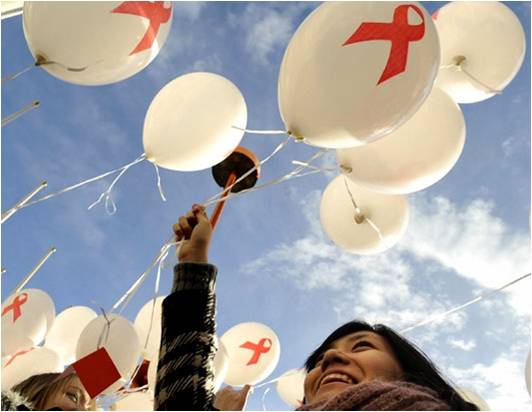
Finding a Voice: Establishing a Support Network for HIV+ Women

By Katie, Laura, Matt, and Claire

Diane was diagnosed with HIV at eight months old. She was infected through her mother, who was not aware that Diane’s father, her husband at the time, had HIV. He left before Diane’s mother found out that she had HIV and that she had passed it on to her newborn daughter.

Infected with HIV for her entire life, Diane “acts like she doesn’t have it” and “tries to go on with her life” even though she thinks about it everyday.

HIV has had a huge impact throughout Diane’s (a pseudonym) twenty-one years of life. One summer she was given just months to live, and her family, doubtful she would live until December, celebrated Christmas in July. She has survived several health scares, and although her health is currently not great, it is improving as her new medication begins to bring her viral load under control.

The Challenges of Being HIV-Positive… and a Woman

HIV-positive women cope with their disease in ways that are strikingly different from HIV-positive men. Women’s roles as caregivers, mothers, wives, and daughters make their experiences with HIV unique. These roles shape how much they are willing to deal with the disease on a daily basis as many women put the needs of their children and families before their own. Furthermore, their identities as caregivers may conflict with their identities as recipients of care that their HIV status necessitates. Consequently, these women, many of whom are in difficult socioeconomic situations, may not seek the support they need.

To help these women, last year a group of students helped to establish a much-needed HIV/AIDS women’s support group in our Midwestern city (see their post, Just A Place to Talk: Women & HIV/AIDS). It was a success initially. However, the student who helped facilitate the support group moved away this summer, and the support group lost its impetus.

This year our community-based research project explored why women stopped attending the support group, women’s interest in participating in a new support group, and how to develop a support network that addresses the many needs of HIV-positive women. The two most important lessons we learned this semester include the importance of emotional support and the value of resources, such as transportation and childcare, that enable these women to care for themselves and their families while living with HIV.

Seeking Solidarity and Support

Several women expressed a desire to learn from others who are willing to share their experiences with HIV. They think that sharing their stories with other HIV-positive women will lessen feelings of isolation and better equip these women to handle the burdens of the illness. As Joyce, who has been HIV-positive for twelve years, reported, she is interested in the group because she “wants to feel supported.”

Continue reading “Finding a Voice: Establishing a Support Network for HIV+ Women”

Complete this quote: “From a systems standpoint, what cities are doing is…”

Do you ever think about urban populations in terms of sustainability, Complex systems analysis or Resilience theory? Do you ever think of human communities in terms of Dunbar’s Number, cognitive health or overpopulation? Okay, before I overwhelm you: Free your mind. Reply below and let us know how you would complete the following quote:

“From a systems standpoint, what cities are doing is…”

Continue reading “Complete this quote: “From a systems standpoint, what cities are doing is…””