Globalisation, Ethics and Wellbeing


Recent tax increase on cigarettes in Australia and some thoughts on the downstream effects:

On April 29, 2010, The Sydney Morning Herald reports 25% tax increase on cigarettes. Smokers rushed to stock cigarettes for ‘future crisis’ period. Hot on the heels of last week’s post about Globalisation, cigarettes and international pop artists, this week Anupom Roy from the Department of Anthropology, Macquarie University, considers the hard facts of transnational tobacco sales.

Continue reading “Globalisation, Ethics and Wellbeing”

Wednesday Round Up #113

This week I do a mini feature in the top of the list on behavioral health, then give some other favs, before giving a quite nice collection of video game links – and believe me, it’s about more than just video games. Then it’s anthropology and the mind. Enjoy!

Top of the List – Behavioral Health

All right, let me start off by saying that behavioral health matters. It really matters. Recent research is showing that “bad habits” add up to have a big impact. And the latest research doesn’t even include things like injury & violence, which are the greatest mortality threat for healthy teenagers and young adults, or depression, which has a large impact on behavioral health as well. Onto the links.

Harvard Press Release, Four Preventable Risk Factors Reduce Life Expectancy in U.S. and Lead to Health Disparities
Smoking, high blood pressure, elevated blood glucose and overweight and obesity currently reduce life expectancy in the U.S. by 4.9 years in men and 4.1 years in women.

For similar research, the Associated Press gets in on the fun with Bad Habits Can Age You by 12 Years, Study Suggests. Those habits are smoking, drinking too much, inactivity, and poor diet.

Over at Brain Blogger, Jennifer Gibson reports on Health Behaviors More Important than Socioeconomic Status, where longitudinal research shows that it’s actually health behaviors that have a greater impact on morbidity and mortality that overall socioeconomic status.

Other Top Pieces

Katie Moisse, Good Teachers Really Do Make a Difference
Science shows that teachers play a leading role in helping kids’ reading skills soar.

Ian Sample, Chimps’ Emotional Response to Death Caught on Film
Chimpanzees grieve too. Features a powerful video.

Tara Parker-Pope, Little-Known Disorder Can Take a Toll on Learning
Auditory processing disorder, and how hearing affects so many things related to learning

Charlie Rose, Charlie Rose Brain Series
The PBS series on the study of the human brain is now online, with great videos freely available. Top scientists and researchers are interviewed.

Vaughan Bell, Cultures of Foreplay
Cultural variation in common or acceptable sexual practices and it touches on how foreplay differs between societies.

Video Games

Associated Press, Justices Take Case on Video Game Law
Supreme Court will consider the issue of violence in video games and the scope of free speech when considering a California law that aimed to limit the sale of violent video games to minors. The video game site Kotaku also covers this in US Supreme Court to Review Game Ratings Law, where lots of readers weigh in with their opinions. And over at NPR’s The Diane Rehm show there was an excellent program today on Violent Video Games.

Continue reading “Wednesday Round Up #113”

Globalisation: the products but not the ethics


One of the ‘Quotes of the day’ in Time Magazine on the 21st of April 2010 was:

“They have made the mistake of letting the Marlboro Man into the country. “

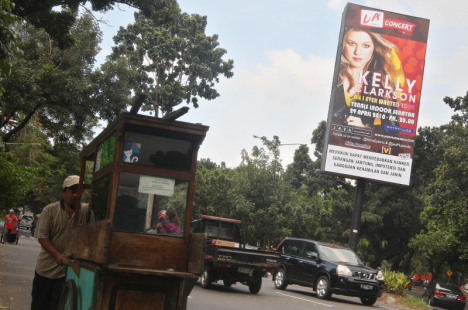
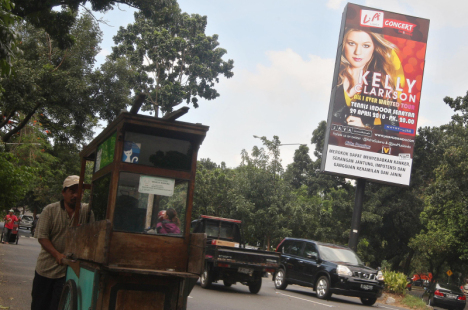
A photo is featured alongside the quote. In the photo, there is a billboard advertising L.A. Lights cigarettes and an upcoming Kelly Clarkson concert in Indonesia. The Tapei Times writes: “Just a few kilometers after passing a towering Marlboro Man ad, a second billboard off the highway promotes cigarettes with a new American face: Kelly Clarkson.” Radiosophie report: “The marketing ploy comes two years after Alicia Keys objected to a similar tobacco-fuelled sponsorship deal in Indonesia.” The Los Angeles Times and Jakarta Globe also covered the story.

Since the scandal, Kelly Clarkson has allegedly cancelled her tour and her Tobacco-company sponsorship, but the same cannot be said for the Tobacco-company sponsored tours of Incubus (Jakarta, 5 March 2008), James Blunt (Jakarta21 May 2008), or Jamiroquai (Bogor, 8 April, 2009). Tickets to these concerts cost little more than Four US dollars ($US4), so it is clear that without huge sponsorship deals from Tobacco companies, the big artists simply would not perform in Indonesia. It makes me wonder, how many other Pop artists escape the Paparazzi radar and perform with Tobacco-company sponsorship in Indonesia?

For me, these billboards exemplify what globalisation brings and what it doesn’t bring to the developing world. It brings the products but not the ethics. 

Continue reading “Globalisation: the products but not the ethics”

Stealing Pears: We All Want To, But Why?

By JP Sullivan & Joe Ahmad

First, refresh your knowledge of Saint Augustine’s Confessions with this helpful rap video:

In the second book of Confessions, St. Augustine relates to us how he and his friends stole pears from a neighbor’s grove. What bothered Augustine was not the act of stealing, but the pleasure he derived from the act. In fact he and his companions had no practical use for the pears, for they were not hungry, and they threw most of them away. Frustrated, he writes,

But it was not the pears that my unhappy soul desired. I had plenty of my own, better than those, and I picked them so that I might steal. For no sooner had I picked them than I threw them away, and tasted nothing in them but my own sin, which I relished and enjoyed. (II.6)

For the rest of the second book, Augustine wrestles with the question of why he and his companions felt pleasure in stealing the pears. He makes two conjectures. The first is that he felt pride from the thrill of breaking the rules. He writes,

Since I had no real power to break [God’s] law, was it that I enjoyed at least the pretence of doing so, like a prisoner who creates for himself the illusion of liberty by doing something wrong, when he has no fear of punishment, under a feeble hallucination of power? (II.6)

By attempting to break God’s law, or more generally, the natural law, Augustine remarks that he was trying to imitate God, by showing that he was God’s equal and free from the jurisdiction of his law.

Continue reading “Stealing Pears: We All Want To, But Why?”

Be Afraid, America. Be Very Afraid: The Effect of Negative Media

By Mallory Meter and Jacob Minnaugh

“The most used phrase in my administration if I were to be president would be ‘What the hell do you mean we’re out of missiles?” -Glenn Beck

Comforting? We think not. Luckily, Glenn Beck is not the president of the United States. Still, millions of people every night flip on their T.V. to watch Beck dish out the day’s events. And you can imagine that if his dream presidency would be filled with explosions and bombs, his newscast is too.

But if you can’t tune into Glenn Beck’s riveting hour of negative news, not to worry. CNN, MSNBC, ABC and pretty much every other outlet will have similar newscasters and similar news. All of these news outlets have one thing in common: negativity.

Whether it’s about the various diseases children can contract at preschool, the possibility of a nuclear missile attack, or how poorly our nation’s leaders are doing their jobs, the news never fails to make the situation as dismal as possible. Every day, millions of people tune in to the media outlet of their choice and get pummeled with these stories.

This is where the real problem comes in: this negativity is affecting us. The way we see ourselves, others, and the world are a result of what we take in everyday. It follows that if we are taking in an overwhelming amount of negativity, that negativity will come to be our output as well.

This post explores how negativity in the media permeates the way we think. We will address how human culture lends itself towards a negative bias as well as how our place in this world affects what we do with the negativity. Finally, we will show how the media does, in fact, result in negative ideals and actions that are so much a part of our culture today.

Media as a Mirror

The negativity in the news penetrates the way we think and act without us being fully aware. Nightly news tells us how dangerous it is to fly in planes nowadays, and we rethink our travel plans. Girls see negative body images splashed across the magazines they read, and they starve themselves until they match those images. The news is a mirror in which millions look every night and what they end up seeing in the reflection is a life in imminent danger.

Continue reading “Be Afraid, America. Be Very Afraid: The Effect of Negative Media”

Wednesday Round Up #112

This week it goes top, sports, mind, war, anthropology, and health.

Top of the List

Ed Yong, Williams Syndrome Children Show No Racial Stereotypes or Social Fear
People with Williams Syndrome are incredibly social and lack racial bias. The loss of about 26 genes make this possible.

Todd Meyers, Special Issue of Ethos on Autism
The latest Ethos is a special issue on “Rethinking Autism, Rethinking Anthropology”, guest edited by Nancy Bagatell and Olga Solomon, and includes articles by scholars like Elinor Ochs and Sharon Kaufman.

John Horgan, Can Brain Scans Help Us Understand Homer?
A critical reaction over at Scientific American to the recent New York Times piece that approvingly examined how some literary scholars are turning to neuroscience and evolutionary psychology for insight.

NPR, Nobel Winner Rethinks Business from Ground Up
Social business! Muhammad Yunus’ ideas about lending to the poor have changed lives in his native Bangladesh and beyond.

Sports

Jonah Lehrer, Don’t Choke
The superstar effect – choking and performance anxiety – is discussed. Can anything be done to prevent choking?

Continue reading “Wednesday Round Up #112”