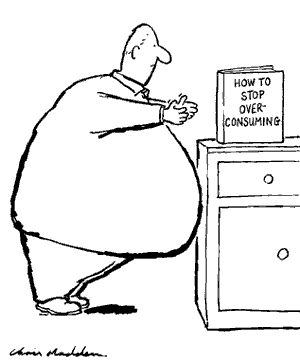
WHY are Americans getting fatter and fatter? The simple explanation is that we eat too much junk food and spend too much time in front of screens — be they television, phone or computer — to burn off all those empty calories.
One handy prescription for healthier lives is behavior modification. If people only ate more fresh produce. (Thank you, Michael Pollan.) If only children exercised more. (Ditto, Michelle Obama.)
Unfortunately, behavior changes won’t work on their own without seismic societal shifts, health experts say, because eating too much and exercising too little are merely symptoms of a much larger malady. The real problem is a landscape littered with inexpensive fast-food meals; saturation advertising for fatty, sugary products; inner cities that lack supermarkets; and unhealthy, high-stress workplaces.
In other words: it’s the environment, stupid.
The main idea, as stated by Dr. Dee Edington, “If you change the culture and the environment first, then you can go back into a healthy environment and, when you get change, it sticks.”
A little anthropology would be nice here, along with the economic prescriptions such as food pricing, advertising and availability. Inequality makes fast food, which is cheap, quite appealing to people without a lot of cash. Rich people also have dedicated spaces for exercise and the like, since our environment does little to make us move. Food also means something – simply declaring it “unhealthy” and labeling the number of calories are appeals directed at an audience assumed to be rational: cost/benefit analysis should win out, right?
For those who want a little anthropology, you can go to the Food, Obesity and Eating page, which rounded up a lot of the writing I did on this early on. For some relevant pieces, go directly to:
Susan Blackmore is up to her usual shenanigans, promoting memes like the red in her hair, following fashion when it’s just not good science.
She has an essay over at the New York Times, The Third Replicator, and will also be engaged in debate with other folks at On the Human, the online project of the National Humanities Center. The entire essay and further discussion are available there at Temes: An Emerging Third Replicator.
Blackmore’s basic argument is that information is multiplying, and the resulting evolutionary process – due to variation, inheritance, and internet success – is best understood through the concepts of “memes” and “temes”:
All around us information seems to be multiplying at an ever increasing pace. New books are published, new designs for toasters and i-gadgets appear, new music is composed or synthesized and, perhaps above all, new content is uploaded into cyberspace…
It is perhaps rather obvious to attribute this to the evolutionary algorithm or Darwinian process, as I will do, but I wish to emphasize one part of this process — copying. The reason information can increase like this is that, if the necessary raw materials are available, copying creates more information. Of course it is not new information, but if the copies vary (which they will if only by virtue of copying errors), and if not all variants survive to be copied again (which is inevitable given limited resources), then we have the complete three-step process of natural selection (Dennett, 1995). From here novel designs and truly new information emerge…
When our ancestors began to imitate they let loose a new evolutionary process based not on genes but on a second replicator, memes. Genes and memes then coevolved, transforming us into better and better meme machines…
[I]n the early 21st century, we are seeing the emergence of a third replicator. I call these temes (short for technological memes, though I have considered other names). They are digital information stored, copied, varied and selected by machines. We humans like to think we are the designers, creators and controllers of this newly emerging world but really we are stepping stones from one replicator to the next.
The basic analysis is two-step: (a) like so many spectacular failures before, slot humans into a reductive evolutionary analysis – eugenics, selfish-gene sociobiology, and now the memes/temes team (and damn, it makes me mad because this really hampers people’s understanding of how to do good evolutionary analysis!); (b) come up with a categorical concept and apply it everywhere – the replicator (genes, memes, and temes) – even after the complexities of actual genetic “copying” reveal a dynamic and incomplete process, not a prime mover and essentialist causal force (and damn, it makes me mad because this really hampers people’s understanding of how to do neural/anthropolological analysis!).
The great advantage of this is that most people can follow a two-step analysis, a one-two punch, a back-and-forth dance move. It’s easy, often appealing, and doesn’t require a lot of practice or skill to ape.
Let me go back to my initial play on words, off McLuhan’s “the medium is the message.” Here’s a part of the Wikipedia entry on just that phrase which reveals the immediate downfall to Blackmore:
McLuhan describes the “content” of a medium as a juicy piece of meat carried by the burglar to distract the watchdog of the mind. This means that people tend to focus on the obvious, which is the content, to provide us valuable information, but in the process, we largely miss the structural changes in our affairs that are introduced subtly, or over long periods of time. As the society’s values, norms and ways of doing things change because of the technology, it is then we realize the social implications of the medium. These range from cultural or religious issues and historical precedents, through interplay with existing conditions, to the secondary or tertiary effects in a cascade of interactions that we are not aware of.
The content of “memes” or “temes,” the simplistic juicy idea, really distracts us from two messages: what the social implications of Ms. Blackmore’s ideas are (and she sure has plenty to say there, and does so often), and how technology actually drives wholesale transformations in ways that makes the the concept of “temes” seem so inadequate, so antiquated. Why are a search engine, a social connector, and a video uploader the three top sites in the world? It’s not because of temes – it’s because people use them.
I could go on and on, but there’s not much point. I’ll let Greg speak for me in his post, We Hate Memes, Pass It On:
So, why do I hate the concept of ‘ideas replicating from brain to brain.’ After all, I work on physical education and imitative learning; shouldn’t I be happy that memetic theory places such a premium on imitative learning? What is my problem!? Ah, let me count the problems… I’ll just give you 10 Problems with Memetics to keep it manageable.
Greg starts with (1) Reifying the activity of brains, (2) Attributing personality to the reification of ideas, (3) Doesn’t ‘self-replicating’ mean replicating by one’s self?, (4) The term ‘meme’ applied to divergent phenomena, and another six gems for you.
In the meantime, here is someone who actually does work on YouTube and other Internet phenomena, anthropologist Michael Wesch.
The Society for Linguistic Anthropology is featuring its round up #12, which has a great collection of posts which fall under the broad domain of language and culture, or more specifically “comparative study of the ways in which language shapes social life.”
Lots of quality posts to check out, but really it’s the collection of videos included in the round up that is the stand out. Worth it for that alone.
Another great Four Stone Hearth, the round up of anthropology on the net, this time over at A Very Remote Period Indeed.
Check out Sidewalk Radio – off course a videoblog in today’s age!
Islamophobia, ethnic differences in testing deconstructed (methodologically, no less), Visayan sorcery, cheek pouches, and much more. A stand out collection!
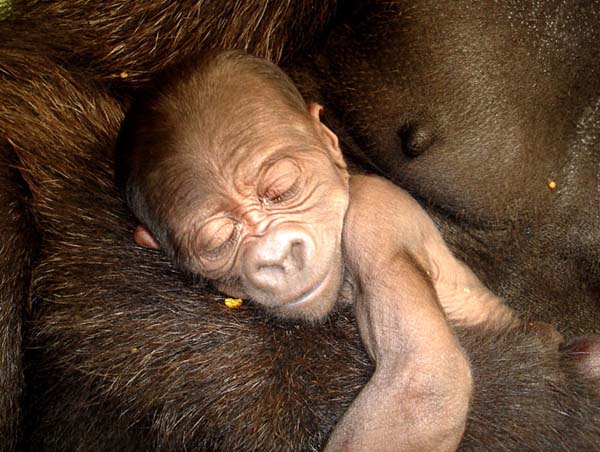
American culture may be deviating increasingly from traditional social practices that emerged in our ancestral “environment of evolutionary adaptedness” (EEA). Empathy, the backbone of compassionate moral behavior, is decreasing…
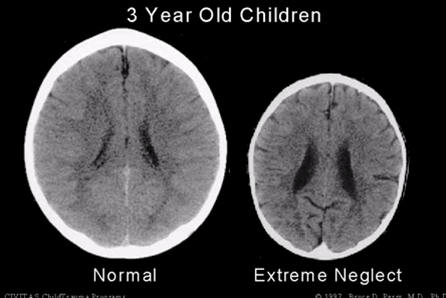
In fact, the way we raise our children it seems that the USA is increasingly depriving them of the practices that lead to well being and a moral sense.
Charles Darwin had high hopes for humanity. He pointed to the unique way that human evolution was driven in part by a “moral sense.” Its key evolutionary features are the social instincts, taking pleasure in the company of others, and feeling sympathy for fellow humans. It was promoted by intellectual abilities, such as memory for the past and the ability to contrast one’s desires with the intentions of others, leading to conscience development, and, after language acquisition, concern for the opinion of others and the community at large…
What Darwin considered the moral-engine of positive human thriving may be under threat. Ill-advised practices and beliefs have become normalized without much fanfare, such as the common use of infant formula, the isolation of infants in their own rooms, the belief that responding too quickly to a fussing baby is spoiling it, the placing of infants in impersonal daycare, and so on. We recommend that scientists and citizens step back from and reexamine these common culturally accepted practices and pay attention to potential life-time effects on people. It is an ethical issue.
It is becoming increasingly clear that the ways we are rearing our children today are not the ways humans are designed to thrive. The ill effects of these missing ancestral practices are becoming evident as children’s well being in the USA is worse than 50 years ago (Heckman, 2008) and is among the worst in the industrialized world (20th in family and peer relationships and 21st in health and safety; UNICEF, 2007). We have epidemics of ADHD, anxiety and depression among the young, indeed all age groups (USDHHS, 1999). Too many children are arriving at school with poor social skills, poor emotion regulation, and habits that do not promote prosocial behaviors…
Now is the time to reexamine the influence of early experience on child outcomes for two main reasons. First, the emergence of the cognitive, affective and social neurosciences (Cacioppo & Bernsten, 2004; Panksepp, 1998) has provided a greater focus on intrinsic aspects of social functioning. These disciplines have helped identify the types of brain functions that are typically found in mammalian brains, but they have not specified how these functions are normally expressed in humans, or how they are developed and expressed in response to cultural practices…
Second, in recent years a host of public, personal and social health problems have been skyrocketing in the USA, and increasingly around the world, for which science does not have consistent or reliable answers… Animal, human psychological, neurobiological and anthropological research provides converging evidence for the importance of early life conditions for optimal brain and body system development. At the same time, epigenomic studies are beginning to better demonstrate the influence of caregiver behavior on offspring.
An impressive group of speakers will present, beginning withJaak Panksepp from Washington State University. Panksepp is responsible for coining the term ‘affective neuroscience,’ and is renowned for his research in neural mechanisms of emotion.
James Prescott will speak on origins of violent behavior; Alan Schore, UCLA, will also speak, with his integrative neuroscience approach to affect regulation and development.
Also presenting: Michael Meaney from the Douglas Institute specializing in maternal care, stress, and gene expression and Wenda Trevathan of NMSU whose concentrations include evolutionary and biocultural factors underlying human reproduction, specifically childbirth and maternal behavior.
The full schedule is available for viewing accompanied by a detailed list of speakersand their biographies.

 The NY Times has an article, Fixing a World That Fosters Fat:

 Neuroanthropology