Relax your genes

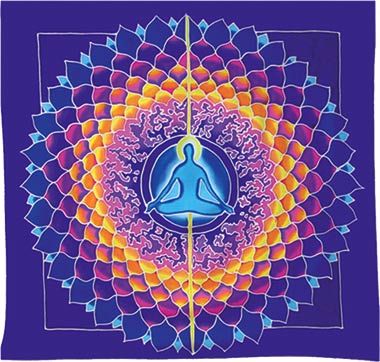
Image from Good Karma Flags
Relax — it can affect your genes.

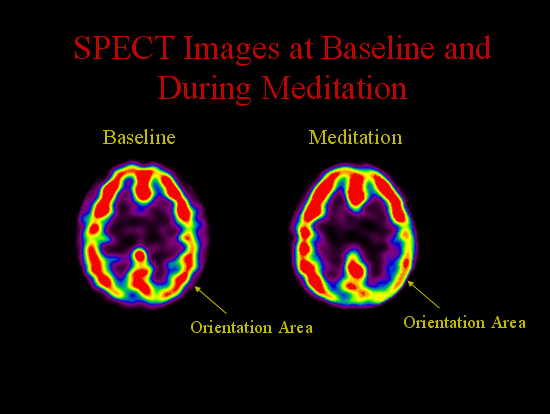
A recent article on PLoS One by a research team from the Benson-Henry Institute for Mind/Body Medicine at Massachusetts General Hospital (MGH) and the Genomics Center at Beth Israel Deaconess Medical Center (BIDMC) discusses the genetic effects of the relaxation response, a widespread bodily state induced by different mind-body techniques (such as meditation).

The original piece, Genomic Counter-Stress Changes Induced by the Relaxation Response, was published at PLoS One, and the findings are also discussed on ScienceDaily, Relaxation Response Can Influence Expression Of Stress-related Genes. It’s starting to be a bit of a refrain from genetics research, but it still bears repeating: the team is exploring a way that ‘changing the activity of the mind can alter the way basic genetic instructions are implemented,’ as Dr. Herbert Benson explained (in ScienceDaily).

The relaxation response is a bodily state, found in a variety of contexts, characterized by ‘decreased oxygen consumption, increased exhaled nitric oxide, and reduced psychological distress.’ Long-term effects of relaxation exercises include decreased oxygen intake and carbon dioxide elimination; reductions in blood pressure, heart and respiration rate; prominent low frequency heart rate oscillations; and some changes in cortical and subcortical brain regions, including increased thickness of the cortex (see NeuroReport and here also on the effect of meditation on aging).

For about three decades, dependable clinical studies have shown that relaxation response-producing exercises have a range of positive health benefits. What makes the current research distinctive (at least in my reading) is that the team traced this metabolic process to its genetic effects. As the authors write:

This study provides the first compelling evidence that the RR elicits specific gene expression changes in short-term and long-term practitioners. Our results suggest consistent and constitutive changes in gene expression resulting from RR may relate to long term physiological effects. Our study may stimulate new investigations into applying transcriptional profiling for accurately measuring RR and stress related responses in multiple disease settings.

Continue reading “Relax your genes”

Cultural Aspects of PTSD, Part II: Narrative and Healing

Bremner et al. 2000.  MRI showing decreased hippocampal volume in Vietnam veterans diagnosed with PTSD.

Narrative and memory are interwoven in our consciousness, and thus explorations into trauma from both humanities and social science perspectives almost invariably discuss narrative in one form or another. An ongoing debate within psychological research, for example, ponders whether the coherence of trauma stories is correlated to the amount of emotional distress associated with a given traumatic memory. It is hypothesized that the greater the distress, the less organized the narrative. If this were the case, we might expect that the coherence with which an individual is able to talk about the trauma would increase as the memory is processed and resolved, a finding for which we have some evidence.

We do know – when it comes to Post-Traumatic Stress Disorder (PTSD) – that narrative matters. As I wrote in an earlier post, the most effective therapies yet proven for reducing PTSD symptoms are the exposure therapies, particularly Prolonged Exposure (PE) therapy. These therapies are more effective for reducing the full range of PTSD symptoms than any pharmaceutical yet identified. And the crux of these therapies rests on telling the story of the trauma, sometimes over and over again. This simple practice, this process of speaking, has been reliably demonstrated to result in an improvement of PTSD symptoms for many patients.

But for all its clinical benefit, this extraordinary observation tells us very little about the mechanisms of psychic healing after trauma. Instead, it points to a growing body of evidence that suggests it is not just narrative that matters in PTSD, but, more intriguingly, that it is the type of narrative that matters. Unstructured psychodynamic therapies, for example, have not been demonstrated to lessen the severity of PTSD, even among patients who continue in therapy for years. And yet certain ways of narrating memory do make a difference, and this phenomenon once again points to a role for anthropologists and other culturally-minded researchers in exploring the cultural-emotional-physiological-environmental interactions at play in post-traumatic processing.

Continue reading “Cultural Aspects of PTSD, Part II: Narrative and Healing”

The Everyday Brain and Our Everyday Life

Earlier this week I wrote about Jean-Pierre Changeux and Gerald Edelman, drawing on the New York Review of Books essay by Israel Rosenfield and Edward Ziff, How The Mind Works: Revelations. As I blogged then, “In the end I was still left with a ‘So what?’ Their hints at subjective psychology, the acting brain, and relational representation remained the side dishes, rather than the main course. I’ll deal with that main course later this week.” It’s Saturday, so I better keep to that promise.

Let me begin by just giving you the essay excerpts.

In general, every recollection refers not only to the remembered event or person or object but to the person who is remembering. The very essence of memory is subjective, not mechanical, reproduction; and essential to that subjective psychology is that every remembered image of a person, place, idea or object invariably contains, whether explicitly or implicitly, a basic reference to the person who is remembering.

The “rigid divide,” [Giacomo] Rizzolatti and Corrado Sinigaglia write in their new book, Mirrors in the Brain, “between perceptive, motor, and cognitive processes, is to a great extent artificial; not only does perception appear to be embedded in the dynamics of action, becoming much more composite than used to be thought in the past, but the acting brain is also and above all a brain that understands.”

For Edelman, then, memory is not a “small scale model of external reality,” but a dynamic process that enables us to repeat a mental or physical act: the key conclusion is that whatever its form, memory itself is a [property of a system]. It cannot be equated exclusively with circuitry, with synaptic changes, with biochemistry, with value constraints, or with behavioral dynamics. Instead, it is the dynamic result of the interactions of all these factors acting together.

Together, subjective psychology, an acting and embedded brain, and representation and action that are dynamic and relational present us with a new starting point when we talk about the intersections of neuroscience and psychology with anthropology. Starting with their conclusions, making it the beginning of something better, that would have been a really exciting essay for me to read.

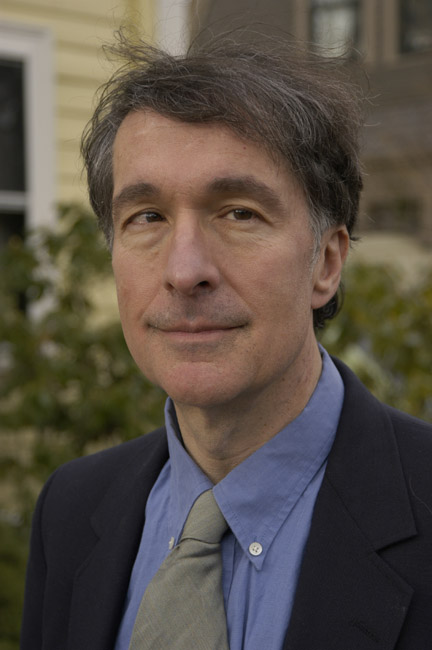
As I wrote a couple days ago, Howard Gardner does get us closer to this new individuality. “Gardner brings a refreshingly unique take, neither the individual of science, bounded and rational, or the individual of philosophy and art, lone thinker and creative genius. Nervous system, individual experience, and subjective interpretation move us into a radically different domain—an individuality that lies firmly in the continua Gardner describes.”

Continue reading “The Everyday Brain and Our Everyday Life”

Brain vs. Philosophy? Howard Gardner Gets Us Across!

Jean-Pierre Changeux and Paul Ricoeur, both French scholars, wrote a book together entitled What Makes Us Think?: A Neuroscientist and a Philosopher Argue about Ethics, Human Nature, and the Brain. It consists of a series of discussions and debates the two held, an oral approach to knowledge given to us as written and translated word.

Together these two ably illustrate the biology/culture and science/humanities divide we have discussed recently. Changeux sees brains as more than just the material substance of knowledge and self; neurons serve as author as well. In contrast, Ricoeur brings phenomenology, interpretation, and reflexivity to the table, as well as a keen appreciation of the limits of human knowledge (and thus materialist claims, like those made by Changeux). Yet the first chapter of their book is entitled A Necessary Encounter, and then covers topics such as Body and Mind, The Neuronal Model and The Test of Experience, and Desire and Norms.

It was a true pleasure to encounter a lengthy and excellent review of this book by Howard Gardner, the psychologist and educator whose best known work is Frames of Mind: The Theory of Multiple Intelligences (Gardner even gives us a 25th year retrospective on the work). Entitled Mind and Brain: Only the Right Connections, Gardner sets up the theoretical debate at stake, provides us background on both scholars, and then perceptively takes us through their entire debate.

Here’s one excerpt to give you a sense of how Gardner sees Changeux, riding triumphant science, and Ricoeur, on the defensive, debating the brain:

When Changeux explains that the nervous system is active as well as reactive, Ricouer cautions that one should first speak of mental activities and not of the brain: “The discourse of the mental includes the neuronal and not the other way around.” Changeux responds: “What we wish to do is to link up the two discourses (material and mental) with each other” (p. 44). Here as elsewhere, Changeux seeks to effect connections, while Ricoeur insists on the ontological separation of the two realms.

Continue reading “Brain vs. Philosophy? Howard Gardner Gets Us Across!”

Wired for Belief?

The Pew Forum on Religion and Public Life brought together the neuroscientist Andrew Newberg and the journalist David Brooks (yes, of neural buddhists fame) for joint presentations back in May, followed by a round-table Q&A discussion with a prominent group of journalists. The transcript of the entire event is now up, and that includes the audio as well as plenty more of the pretty brain graphics that you see here and some good event photos.

The presentations and discussions covered a wide range of topics, ably summarized and linked at the beginning of the transcript, including the physiology of beliefs and brains in meditation and prayer from Newberg and the revolution in brain research and neuroscience and soft-core Buddhism from Brooks. The discussion was also wide-ranging, going over issues such as Is religious Darwinism valid? and Brain physiology in party politics. As befits a Pew gathering, there is a considerable amount of attention focused on religion, atheism, and the like.

Newberg covers a lot of his take on the biology of belief as well as imaging research he has done on people praying or meditating. Here’s an excerpt on belief:

So our brain is trying to put together a construction of our reality, a perspective on that reality, which we rely on heavily for our survival, for figuring out how to behave and how to act and how to vote. But again, the brain is filling in a lot of gaps and helping us think certain things that may or may not really be there… So what are beliefs? Again, I apologize, but I always come at this from a scientific perspective. I am defining beliefs biologically and psychologically as any perception, cognition, emotion, or memory that a person consciously or unconsciously assumes to be true. The reasons I define beliefs in this way are several-fold. One is that we can begin to look at the various components that make up our beliefs. We can talk about our perceptions. We can talk about our cognitive processes. We can talk about how our emotions affect our beliefs. And we can also look at how they ultimately affect us. Are we aware of the beliefs we hold? Or are they unconscious? And which ones are unconscious and which ones are conscious?


And an excerpt connecting belief to the practice of religion.

The practices and rituals that exist within both religious and non-religious groups become a strong and powerful way to write these ideas into our brain. Again, go back to the idea that the neurons that fire together, wire together. The more you focus on a particular idea, whether it is political or religious or athletic, the more that gets written down into your brain and the more that becomes your reality. So that is why when you go to a church or a synagogue or a mosque, and they repeat the same stories, and you celebrate the same holidays that reinforce that, you do the prayers, and you say these things over and over again, those are the neural connections that get stimulated and strengthened. That is a strong part of why religion and spirituality make use of various practices valuable for writing those beliefs strongly into who you are.

Brooks aims to place these sorts of ideas into a social and cultural context.

Continue reading “Wired for Belief?”

Cultural Aspects of Post-Traumatic Stress Disorder: Thinking on Meaning and Risk

Over the past year and a half, I have been conducting research among male U.S. veterans who have served combat tours in Iraq and Afghanistan, most of whom have been diagnosed with Post-Traumatic Stress Disorder (PTSD). An anthropologist myself, I planned to follow the trail originally blazed by Victor Frankl and Robert Jay Lifton, psychotherapists who wrote a great deal about meaning in their descriptions of trauma and PTSD.

Early on, however, a psychiatrist whose work on trauma I admire opined to me that crises of meaning belong to the realm of depression rather than PTSD. He suggested that combat PTSD was best thought of as the physiological effects of living under conditions of extreme stress, while more meaning-related struggles were best understood as a symptom of depression. Given the frequency of comorbidity between PTSD and depression, I was for some time inclined to go along with his analysis.

Then two things happened. First, I began the work of talking with veterans themselves about their stories of trauma and PTSD, listening to how they describe their own experiences. And second, I began to explore the increasingly dominant Prolonged Exposure model of PTSD, which views the disorder as a pathology that develops when individuals fail to process their traumatic memories in the normal way.

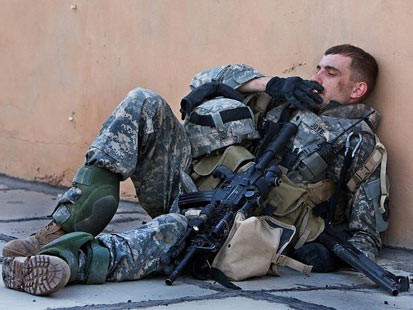
Some background is important here. A recent RAND report suggests that as many as 18.5% of combat troops have gone on to develop PTSD after serving in Iraq or Afghanistan; alarming as that number is, it nonetheless demonstrates that the vast majority of combat-exposed individuals do not develop PTSD. However, most of the veterans I’ve spoken with – even those without a formal PTSD diagnosis – report experiencing some PTSD symptoms for a period of time following their combat deployment. Many of them dealt with such symptoms for a while – a month, three months, a year – before passing through this period of processing their memories and going on with their lives. They may be changed by their experiences in the war zone, but they are not broken by them, and may even describe them as resulting in personal growth and other positive effects.

Continue reading “Cultural Aspects of Post-Traumatic Stress Disorder: Thinking on Meaning and Risk”