Blogging and Public Intellectuals?

Todd, who commented on the Wending post, has an interesting discussion of “On Being A Public Intellectual” over at his blog Todd’s Hammer.  He engages Russel Jacoby’s argument that public intellectuals have basically perished given the post-modern turn, the professionalization of the academy, and the rise of modern media.  

I might counter that we have a new breed of public intellectual—people like Steven Pinker.  The star professors who write popular books and who appear on television, and who command super-sized salaries from universities.  They sell ideas and, in many cases, reassurances to the American public.  To take a comment by Robert Steele, a top 50 reviewer on Amazon, about Joseph Nye’s book, Soft Power:  

This book, perhaps deliberately so, but I suspect not, is out of touch with mainstream scholarship such as the last 50 books I have reviewed for Amazon. It is one massive “Op-Ed”, and its sources are virtually all “Op-Eds” (a number of them not written by the purported authors), with the result that this book gets an A for a good idea and a C-, at best, for scholarship. One simple example: the sum total of the author’s references on “virtual communities”, one of the most important ideas of this century, is one Op-Ed from the Baltimore Sun.

But in looking at the posts on this blog, the ones that have attracted the most attention are ones in the public domain—the critique of Steven Pinker or the Time Magazine article on love—as well as ones that address issues of everyday discussion—our mood affecting our health, IQ and race, our sense of balance. 
Continue reading “Blogging and Public Intellectuals?”
Wending between Faust and Wimsatt

Is neuroanthropology just “social theory with technical jargon,” giving us “street cred”?  Are we doing anything “different from interpretive anthropology with its system of symbols”?  Why invoke brain biology, we haven’t spent years studying the minutiae of brain circuitry and chemical interactions like real brain experts.  Why even bother with the mention of neurotransmitters and such, which bastardizes the rich contribution that anthropology makes to understanding ourselves. 

These are some of the comments I’ve seen about our site, some on the Internet, some in emails.  In an initial answer to that, I pointed to Greg’s introduction, of listening to our informants and building explanations based on ethnography as well as to some of the limitations we bump up against in the dominant forms of social theory today. 
Continue reading “Wending between Faust and Wimsatt”

Steven Quartz, Brains, and Meaning

I recently came across this post from Edge: The World Question Center, where Steven Quartz, a neuroscientist also interested in anthropology, answers the following question: “What are the pressing scientific issues for the nation and the world, and what is your advice on how I can begin to deal with them?”  

He opens his letter to “the president” with the following summary: “Studies of our biological constitution make it increasingly clear that we are social creatures of meaning, who crave a sense of coherence and purpose. Yet, our modern way of life seems to provide fewer and fewer opportunities to engage in the group life that satisfies these human needs—indeed, many of its structures and institutions stunts these very needs.”  
Continue reading “Steven Quartz, Brains, and Meaning”

Re-training the damaged brain

There’s a good article today, “Coaching the Comeback,” about an occupational therapist working with patients recovering from traumatic brain injuries.  From physical training, nerve stimulation and direct social interaction (e.g., maintaining eye contact, talking to them), the therapist helps her patients along.  It’s a nice summary of several themes that we’ve said in different ways about brains.  And, the therapist with her collection of skills, her education of families, her moral views on recovery also shows the importance of culture in interaction.  It’s also a nice story in itself…

Steven Pinker and the Moral Instinct

By Daniel Lende 

Steven Pinker is selling something.  Here’s what’s on the table: “the human moral sense turns out to be an organ of considerable complexity.”  This organ has been built into our brains by evolution, culture-free except for how its five domains (harm, fairness, community, authority, and purity) are “ranked” and “channeled” in different places around the globe.  Ready to buy? 

Let’s sweeten the deal.  Pinker is offering his “deeper look” which will help you “rethink your answers” about life and morality.  He’s providing “a more objective reckoning” to help people get over their moral “illusions.”  And he’s got the data to show it, from people in the lab, Web sites, and brain scanners.  (I can’t help asking, these are his moral examples?  People in artificial situations, people who don’t physically interact, and a series of images?)  Continue reading “Steven Pinker and the Moral Instinct”

Paul Mason: Slides on Neuroanthropology

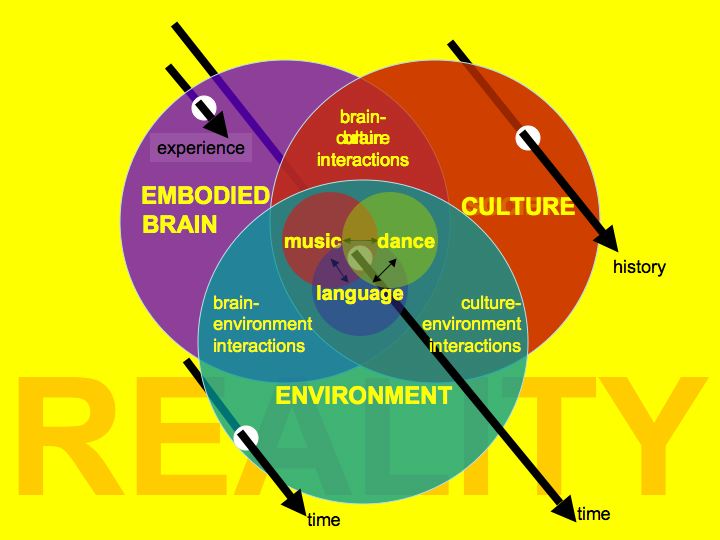
Paul Mason has sent me PowerPoint slides on Neuroanthropology that draw upon a lot of the same resources that he cited in an earlier post I put up on his behalf. Paul’s in the field in Indonesia, and he writes in sometimes from internet cafes, but we should eventually have him as a regular contributor when he’s back with some regular Internet access. And then he can also tell us more, too, about his own research.

Paul includes a number of choice quotes, but I wanted to make sure that everyone got a chance to see his diagram of a systems-based approach to ‘fight-dancing’ in cultural, biological, and ecological context (in both Indonesia and Brazil). It’s a rich diagram, and I think that we, as neuroanthropologist, will need to do a lot of complex visualization in order to make our points to a broad audience. Paul must get all the credit for this one.Mason slideIn the meantime, i don’t yet have a complete bibliography on this material, so we’ll have to get in touch with Paul if anyone really wants to get the sources he’s using. He sent this about a month ago, and I was not clear on how to post PowerPoint slides, but I think it’s pretty straightforward. We’ll see….neuroanthropology.ppt