Trained as a cultural anthropologist at the University of Chicago, I have gone on to do fieldwork in Brazil and the United States. I have written one book, Learning Capoeira: Lessons in Cunning from an Afro-Brazilian Art (Oxford, 2005). I have also co-authored and co-edited several, including, with Dr. Daniel Lende, The Encultured Brain: An Introduction to Neuroanthropology (MIT, 2012), and with Dr. Melissa Fisher, Frontiers of Capital: Ethnographic Reflections on the New Economy (Duke, 2006).
My research interests include neuroanthropology, psychological anthropology, sport, dance, human rights, neuroscience, phenomenology, economic anthropology, and just about anything else that catches my attention.
There’s a beautiful, albeit animal-centric, video on the evolutionary ‘tree of life’ narrated by David Attenborough and produced by the BBC. I’ll embed the HD version below, but you can also go to the ‘Tree of Life’ website to find more.
According to the site’s blog, they’ve attempted to address the absence of discussions of plants in the interactive version of the tree:
We’ve already had some feedback about the lack of plants in the interactive tree. The key point is that what we’ve put up for now is pretty much the interactive version of the film. We used the same tools and data structures to build both. Obviously the film has its own narrative structure and logic, but the choice of species might make less sense when on its own in the interactive. This is the situation at launch but it will not be the case in the future.
The irony of a ‘tree’ without sufficient mention of plants is a bit rich, but it’s well worth a look. It’s a beautiful little animation and Attenborough’s voice makes me want to drink port and sit by the fireside, even though it’s about 90 degrees here and we haven’t seen rain in what feels like months…
We’ve all read some of the discussions about differences in men’s and women’s brains, but the case of throwing overhand offers a cautionary tale about thinking we’ve found something inherent in being male or female. The danger is that we accept too quickly observed differences without digging a bit deeper into their variation and potential causes. In the United States, most of our readers will have run across the idea that women throw like, well, … girls.
Jennie Finch can strike you out.In fact, the empirical gulf between average throwing ability in men and women is huge (just as it is symbolically important), dwarfing virtually any other measurable difference between the sexes, even things like aggression, frequency of masturbation, attitudes towards casual sex, and spatial abilities on paper-and-pencil tests.
Janet Shibley Hyde, one of the leading proponents of the ‘gender similarity hypothesis,’ concedes that there are some marked differences between men and women, singling out throwing ability as the most pronounced among them (2007: 260; see also 2005).
Thomas and French (1985: 266 & 276), in a meta-analysis reviewing all available research on sex differences in throwing, found that the gap stood at 1.5 standard deviations at three years of age, and increased over time, widening to between three and five standard deviations by puberty. By contrast, the much discussed ‘math gap’ between boys and girls, in Hyde’s meta-analysis of 48 studies, was a +0.08 on problem solving and +0.16 on national math tests (Hyde 2005; 2007: 260). In other words, if you’re impressed by the gap in math scores (I’m not), you should be awestruck at the gap in throwing ability.
I just finished writing the draft of a potential book chapter on throwing ability for a volume Prof. Robert Sands is putting together on biocultural approaches to sports. The chapter steps off from my observations that most of my colleagues in Brazil, men included, ‘threw like girls’ even though they were incredibly talented athletes, some of the most astounding capoeira practitioners I have ever seen. The book chapter is linked to some other work I’ve been doing, so I’ve got notes enough for several chapters – I thought I might put some up on Neuroanthropology.net because they were especially related to some of the things we focus on here.
This is probably going to wind up being at least two or three posts, so in this one, I’m only going to discuss the neurological issues surrounding throwing and the likely mechanical or technical issues that make (some) women (and Brazilian men and others) ‘throw like girls.’ At least one more post is going to deal with physiological plasticity beyond the nervous system, such as the way throwing remodels the shoulder, to explore anatomical plasticity more broadly, but you’re going to have to come back later for that one…
It’s not exactly neuroanthropology, but if you’re one of those energetic psychology-neurology-anthropology-psychiatry hybrid grad students who contacts us from time to time, you may want to consider applying for the following fellowhip. I got the announcement through the Society for Psychological Anthropology:
Society for the Study of Psychiatry and Culture
Call for Papers: Charles Hughes Fellowship in Cultural Psychiatry
The Society for the Study of Psychiatry and Culture announces its 8th annual call for papers for the Charles Hughes Fellowship in Cultural Psychiatry, an annual award presented to a graduate student who has an interest in and commitment to cultural psychiatry and mental health. Graduate students in the social sciences who are interested in competing for this award should submit an original scholarly paper on a topic in cultural psychiatry, along with a CV and a letter of recommendation from his/her department or committee chair, to:
Joan D. Koss-Chioino, Ph.D.
2753 Bon Haven Lane
Annapolis, MD 21401
or Email all 3 documents to: joan [dot] koss@asu [dot] edu
The deadline is February 28, 2009. The Society will pay partial travel costs for the awardee to present his or her paper at its annual meeting to be held May 15 -17,2009 in San Francisco, California.
For more information, contact Dr. Joan Koss-Chioino at joan [dot] koss@asu [dot] edu.
In this week’s The Times Magazine of The NY Times, Daniel Bergner has a piece on women’s sexuality and research that’s already in preprint causing a bit of controversy as well as a convulsion of 1950s era humor in the online response. The title, ‘What do women want?’, that nugget of Freudian wonder, no doubt will raise the readership, as will the pictures of models simulating states of arousal (Greg Mitchell is in a bit of snit about them in, Coming Attraction: Preview of ‘NYT Magazine’ With Semi-Shocking Sex Images on Sunday. ‘Semi-Shocking’? I can imagine how that goes… ‘Are you SHOCKED by these photos?’ ‘Well, I’m at least SEMI-shocked, yes!’).
Chivers is portrayed as arguing that women are existentially divided ‘between two truly separate, if inscrutably overlapping, systems, the physiological and the subjective,’ Diamond is made to stand in for the ‘female desire may be dictated… by intimacy, by emotional connection,’ and Meana stands in for the argument that women are narcissists desiring to submit. Whether or not these are accurate portrayals—and they might be—the model is prevalent in science writing: get characters to represent lines of thinking, even though many of us are not so clearly signed on with a single theoretical team. Here, we know the score: Diamond arguing women want intimacy, Meana that they want a real man to take them, and Chivers that women want it all, even if they don’t realize it and contradict themselves.
The irony is that, with such a tangle, the conclusion is foreordained: women will seem enigmatic, inconsistent, and irremediably opaque. As I’ll suggest in this, I think that the conclusion is built into the way the question is being asked. If a similar question were asked about nearly any group, in nearly any domain of complex human behaviour, and then a simple single answer were demanded, the questioner would face nearly identical frustration.
Prof. Marlene Zuk (University of California Riverside), author of Riddled with Life: Friendly Worms, Ladybug Sex and the Parasites That Make Us Who We Are (Amazon, Google books), has a very nice short essay in The New York Times on the recent discussion of whether or not our dietary problems stem from our bodies being ‘out of step’ evolutionarily with things like Mars bars and Big Macs: The Evolutionary Search for Our Perfect Past. We’ve seen these sorts of arguments all over the place, that a ‘Paleolithic diet’ can make you healthy and banish bulges from inopportune places, after all, just look at Raquel Welch in 10,000 BC!Paleolithic dieter? Not exactly...
When I talk about diet and human evolution in my freshman class, I have to point out that there are a tremendous number of complications, including the fact that the vast majority of us do not have the cultural knowledge to get ANY nutritional resources out of the environment around us (see my earlier post with my slides from that lecture, if you like). It’s all well and good to say, ‘Eat meat, roots and berries,’ but that just means spending our time in the grocery store aisles a bit differently for most of us, not actually transforming the ways that we get food, how we relate to our environment, or even the quality of the meat, roots and berries we’re getting (after all, even the meat we get is from the animal world’s equivalent of couch potatoes, not the wild stuff on the hoof– or for that matter, dead on the ground where we can scavenge it).
Zuk draws on Leslie Aiello’s concept of ‘paleofantasies,’ stories about our past spun from thin evidence, to label the nostalgia some people seem to express for prehistoric conditions that they see as somehow healthier. In my research on sports and masculinity, I frequently see paleofantasies come up around fight sports, the idea that, before civilization hemmed us in and blunted our instincts, we would just punch each other if we got angry, and somehow this was healthier, freer and more natural (the problems with this view being so many that I refuse to even begin to enumerate them). It’s an odd inversion on the usual Myth of Progress, the idea that things always get better and better; instead, paleofantasies are a kind of long range projection of Grumpy Old Man Syndrome (‘Things were so much better in MY day…’), spinning fantasies of ‘life before’ everything we have built up around us.
SharpBrains, the weblog responsible for hosting the latest Encephalon (the 61st edition), also brings us a year’s end Top 30 Brain Health and Fitness Articles of 2008. I know that a lot of our readers are interested in brain health, including the health-related implications of some of the basic research that we discuss here at Neuroanthropology. Although I’m sometimes reluctant to wade into this sort of prescriptive discussion, SharpBrains does a very good job of exploring the effects of practices like brain ‘exercises,’ meditation, physical exercise, play, education, sleep, and a host of others.
There’s a number of the posts that are worth checking out, but I appreciated that were some here that I missed the first time around, including Why do You Turn Down the Radio When You’re Lost?, which used an example of something I do all the time (I get lost a lot in Sydney as I’m still unfamiliar with the city), and hadn’t really noticed; and the critical discussion of the concept of ‘brain age,’ Posit Science, Nintendo Brain Age, and Brain Training Topics. But there’s lots more good stuff in this list, especially if you are interested in ‘brain training’ of all sorts.


 In this week’s The Times Magazine of The NY Times, Daniel Bergner has a piece on women’s sexuality and research that’s already in preprint causing a bit of controversy as well as a convulsion of 1950s era humor in the online response. The title,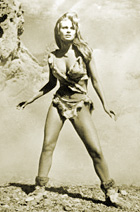
 Neuroanthropology