Roid Age: steroids in sport and the paradox of pharmacological puritanism

Photo by Pixabay on Pexels.com

The following post is based on a lecture I gave in the course, ‘Drugs Across Cultures,’ on steroids and performance-enhancing drugs. A very-beta version of a Prezi is available for the lecture on my Prezi account, but it still needs updating. I’m eventually hoping to do a webcast version of the lecture, so I’d love to hear your feedback — the lecture isn’t as detailed as this post. The original post is from 9 July 2012 on the PLOS Blogs Neuroanthropology, a site that was closed down (archived: https://web.archive.org/web/20170907050452/http://blogs.plos.org/neuroanthropology/2012/07/09/roid-age-steroids-in-sport-and-the-paradox-of-pharmacological-puritanism/)

Introduction

In 1998, when I was living in New York, my family managed to get tickets to a baseball game between the St. Louis Cardinals and the Chicago Cubs. I had been a Cardinals fan since before I ate solid food, and 1998 was a very good year to catch a Cards-Cubs game. Baseball fans around the US, still demoralized after the 1994 players strike forced the cancellation of the World Series, were thrilled in 1998 by a chase for the record in US Major League Baseball (MLB) for the most home runs in a season by a single player. Fans flocked back to stadiums for a carnival of power hitting that summer.

When I went to the game, Cardinal Mark McGwire and Cub Sammy Sosa were both on pace to break the record of 61 home runs in a season set by Roger Maris, a record that had stood for almost four decades. By the end of the year, both McGwire and Sosa would shatter the previous mark. Sosa finished that season with 66, McGwire with 70. The afternoon that I flew in from New York for the game, both McGwire and Sosa hit home runs, and I had one of my best days watching professional baseball. St. Louis was drunk on the excitement; ‘Big Mac’ jerseys were selling like school uniforms in July, and the hot, humid St. Louis air was crackling with the energy (or maybe we were all just drunk on the insane pollen count). After the sordid spectacle of millionaire players and multi-multi-millionaire owners kicking sand on each other and taking their toys home a few years earlier, it felt good to be a baseball fan again.

Continue reading “Roid Age: steroids in sport and the paradox of pharmacological puritanism”

New project in evolutionary theory and cultural anthropology

As a cultural anthropologist, I am thrilled that cultural variation is increasingly recognized as significant in a wide range of fields, cognitive science, psychology, and evolutionary theory among them. From our discipline’s long, rich history of exploring human creativity and adaptability, what advice can I offer my colleagues from other disciplines eager to consider human variation? What valuable conceptual resources can cultural anthropologists share? How do we translate the lessons of over a century of research — including periods of bitter disciplinary self-critique and external criticism — into actionable, testable models for human variation?

We are starting a major new project that explores precisely this: how do we distill insights from cultural anthropology and anthropology more broadly into models of human variation useful for theorizing about human evolution. Agustín Fuentes of Princeton University and I at Macquarie University (Sydney), with an amazing multi-institution, multi-national team, secured a generous grant from the John Templeton Foundation to study, as the title of the application put it, “Concepts in Dynamic Assemblages: Cultural Evolution and the Human Way of Being.”

The team is so large I will not try to list everyone in it (and we are still recruiting), but also heavily involved are Jennifer French (U. of Liverpool), Jeffrey Himpele (Princeton U.), Marc Kissel (Appalachian State U.), and Carolyn Rouse (Princeton U.). At Macquarie University, our team includes John Sutton (emeritus, Cognitive Science) and Alex Gillett (Philosophy). In addition, our Macquarie based team will include two post-doctoral fellows, two doctoral students, and other folks. The doctoral scholarships are already being advertised here.

The project is bold but is also likely to look a little odd to some of my colleagues in cultural anthropology, maybe even to some people who might be good additions to the team. This post attempts to share why I got involved with “Concepts in Dynamic Assemblage” as a cultural-psychological researcher and neuroanthropologist including what we mean by “dynamic assemblage” and why we chose “concepts” as the pivot point. These motivations and ideas are my own, and other team members no doubt have vastly different goals and working theories, but sharing this might help someone considering whether to apply for a post-doctoral position or doctoral scholarship or deciding if they want to follow this project.

Continue reading “New project in evolutionary theory and cultural anthropology”

Not allowed to have a small heart: Tourette Syndrome

Sometimes I feel ashamed to be close with my friends.
“How come you’re so distant? Just come over here, it’s no problem, you know.”
I’m not allowed to have a small heart.

(I am republishing a lot of my ‘legacy content’ from our PLOS Neuroanthropology weblog, which has been taken down, along with many of the other founding PLOS Blogs. Some of these, I am putting up because I teach with them. If you have any requests, don’t hesitate to email me at: greg (dot) downey @ mq (dot) edu (dot) au. I suspect many of the links in this piece will be broken, but I will endeavour to try to slowly rebuild this content. Originally published 16 May 2012.)

Gusti Ayu Ketut Suartini, a young Balinese woman, shares how hard it is to be close to her new-found friends; they have to remind her that they are not afraid of her unusual movements, grunts, strange facial expressions and unexpected tics, the symptoms of her Tourette Syndrome. She remembers too well how the neighbours in her home village made fun of her awkward tics, calling her ‘bird dancer’ because her odd movements – so out of line with Balinese norms of placid, graceful comportment – resembled Manuk Rawa trance dancers, possessed by spirits. The neighbours even suggested she might be suffering a kind of permanent possession by the spirits who only temporarily inhabited the dancers.

Photo by Artem Beliaikin on Unsplash

We meet Gusti, and see how her life is shaped by the way other people interpret her tics, spitting, and uncontrollable movements, in Robert Lemelson’s movie, The Bird Dancer. The Bird Dancer doesn’t show us Tourette Syndrome (TS) as a disease, or discuss its neurological underpinnings. Instead, the movie is an exploration of Tourette as ‘illness’: local, meaningful, social, demoralizing, and driving Gusti and her family to despair.

Continue reading “Not allowed to have a small heart: Tourette Syndrome”

2 legs good, 4 legs better: Uner Tan syndrome, part 2

Image by massaoud el allaoui from Pixabay

(I am republishing a lot of my ‘legacy content’ from our PLOS Neuroanthropology weblog, which has been taken down, along with many of the other founding PLOS Blogs. Some of these, I am putting up because I teach with them. If you have any requests, don’t hesitate to email me at: greg (dot) downey @ mq (dot) edu (dot) au. I suspect many of the links in this piece will be broken, but I will endeavour to try to slowly rebuild this content. Originally published 5 September 2010.)

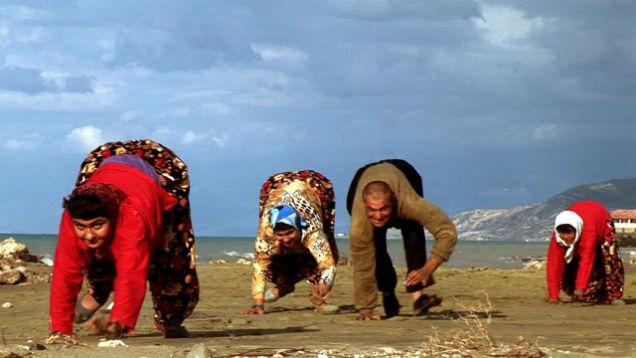
Members of a Turkish family with Uner Tan Syndrome

Beginning in 2005, reports by Prof. Üner Tan of Cukurova University in Turkey alerted the world to a number of families in which some members walked quadrupedally. This is the second part of a (so far) two-part post on Uner Tan Syndrome. Although you’re welcome to read the first part, I’ll give you the one sentence summary if you just want to push on and a piece of video clip on the cases. I should warn you though, before you read the first part, that the whole thing is sort of like the straight set-up for this piece, which is a bit of a googly (kind of like a knuckleballer for all you non-cricket followers):

Üner Tan described four consanguineous Turkish families with fourteen individuals who habitually walked quadrupedally; subsequent genetic research showed that some of the families had defects in a gene known to be essential in cerebellar formation, but not all of the cases had the gene, and at least one family member with the gene walked normally, leading most researchers to argue UTS was genetically heterogeneous in origin; some theorists, including Tan, argued that quadrupedalism was either ‘reverse evolution’ or an atavism, but not everyone was buying that explanation (including me for reasons I didn’t make entirely clear in the first post).

Well, that was — technically — one sentence.

Nova preview: The Family that Walks on All Fours

But if you read that first post, I know what you’re saying: ‘Bloody loooong post, mate, laffed mi head off at the picture… but eef thas what yous blokes do at Newroant-whatevs, well, I’m not heaps intristed.’ (Apparently, you have a bogan Australian accent, at least in my head.)

Photo by Eadweard MuybridgeAu contraire – we’re just getting started! We’ve still got bipedal dogs and goats, kids who only get down on all four when in a hurry, Johnny Eck (aka the ‘Half Boy’), capoeira training in Brazil and some other surprises up our sleeve. We’ll show you how we roll at Neuroanthropology, with lots of weird SFW videos and obscure case studies!

One of the things that we try to bring to ‘neuro-’ to make it truly ‘neuroanthropology’ is a much more open consideration of human variation. This can sometimes take us to some extraordinary case studies, not simply out of a fascination with the exotic, but because a comparative look at extreme cases – like Uner Tan Syndrome – helps us to better understand human potential. So let’s go back to Prof. Tan…

Continue reading “2 legs good, 4 legs better: Uner Tan syndrome, part 2”

Asifa Majid on language and olfaction

(I am republishing a lot of ‘legacy content’ from our PLOS Neuroanthropology weblog, which has been taken down, along with many of the other founding PLOS Blogs. Some of these, I am putting up because I teach with them. If you have any requests, don’t hesitate to email me at: greg.downey @ mq (dot) edu (dot) au. I suspect many of the links in this piece will be broken, but I will endeavour to try to slowly rebuild this content. I originally published this on 10 September 2014. I have also included at the end some of the most substantial comments from the comment thread.)When I first ran across Asifa Majid’s  article with Ewelina Wnuk in Cognition, about how speakers of Maniq, a language indigenous to southern Thailand, have a vocabulary for talking about smell, I was taken aback. In anthropology, especially since the work of people like David Howes, Constance Classen, and Andrew Synott, we know very well that different cultures privilege olfaction and other senses more than Westerners do. The anthropology of the sense has made it clear that the ideological privileging of vision in the West, and relative underdevelopment of sense of smell or proprioception, is not matched elsewhere.

Prof. Asifa Majid

However, Wnuk and Majid were attacking, with empirical observations and psychometric testing, one of the pillars of Western philosophical accounts of how human senses evolved: the idea that human evolution had tipped the balance decisively away from olfaction. The alleged weakness and imprecision of olfaction was taken for granted in perceptual psychology.

Some of these theories of sensory evolution hold that our ancestors had, in a way, paid for our distinctive cognitive and perceptual development by sacrificing olfactory acuity. Vision increased precision at the expense of olfaction.

In fact, some theorists of brain evolution go so far as to suggest that there was a kind of neurological trade-off: language use could only grow as our ancestors lost a capacity for smelling. The restraint and remove from the immediate sense-world necessary for logic and abstract thought was opposed to the kind of complete immersion and sensory triggering of behaviour that other animals had because of the way aromas dominated their perception. Were the senses in a zero-sum exchange where visual acuity and a distinctly human way of life made acute olfaction impossible?

Research conducted by Asifa Majid, together with her collaborators, suggests that language and olfaction are not at odds; the right language can actually enhance the perception of aroma, as language has also enhanced, inflected and refined our other senses. Rather than a fact of human being, the neglect of olfaction in the West is a result of our own cultural presuppositions and sensory biases: smell suffers from neglect, not an inescapable evolutionary trade-off. (Majid’s research got a mention recently from Tanya Luhrmann in an op-ed in the New York TimesCan’t Place That Smell? You Must Be American: How Culture Shapes Our Senses.)

Continue reading “Asifa Majid on language and olfaction”

Giving names to aromas in Aslian languages

The sanitary and mechanical age we are now entering makes up for the mercy it grants to our sense of smell by the ferocity with which it assails our sense of hearing. – Havelock Ellis

How do you smell?, by Harald Hoyer, 2011 (CC BY SA)

(I am republishing a lot of ‘legacy content’ from our PLOS Neuroanthropology weblog, which has been taken down, along with many of the other founding PLOS Blogs. Some of these, I am putting up because I teach with them. If you have any requests, don’t hesitate to email me at: greg.downey @ mq (dot) edu (dot) au. I suspect many of the links in this piece will be broken, but I will endeavour to try to slowly rebuild this content. I originally published this on 9 March 2014. I have also included at the end some of the most substantial comments from the comment thread.)

My wife and I disagree about how one should judge whether milk has gone bad or is still fresh enough to drink. She consults the date on the carton. I smell it.

My aroma-based strategy is part of my well-developed theory that milk, even when it goes “off,” simply becomes a different dairy product, maybe not quite so pleasant to drink, but perfectly serviceable in other functions such as making pancakes. My father taught me this, or at least I blame him — he grew up on a farm in Iowa — but I also recall reading with great satisfaction about the Nuer and Dinka, and how a range of fermented milk products were essential to their diet. But that’s a story for a different day…

The key is that my wife and I disagree fundamentally about the value of olfaction in judging milk even though she has a quite remarkable sense of smell. She often stumps me by quizzing me about which flowering shrubs are in bloom from their aroma. She can always tell. Like many people in the US and Australia, and elsewhere in the West, we’re ambivalent about the value of the sense of smell, using it only quite narrowly for specific tasks.

Throughout Western philosophy and psychology runs a conviction that smell is an imperfect and inexact sense. Charles Darwin, in The Descent of Man, for example, wrote that the sense was “of extremely slight service” to humans; philosopher Immanuel Kant that it was the “most dispensable” of our senses. As Ewelina Wnuk and Asifa Majid of the Max Plank Institute summarize, a range of Western thinkers from Condillac to Pinker argue that aroma offers humans little of value, that the sense is vestigial, rudimentary, and under-developed (see Wnuk and Majid 2014: 125).

In fact, the human sense of smell is far more acute than we might realize, and new linguistic research emerging from a cluster of groups in southeast Asia suggests that our inability to smell might be a cultural problem, not an invariant fact of human nature. Our language hampers our ability to perceive aroma.

Continue reading “Giving names to aromas in Aslian languages”