The Everyday Brain and Our Everyday Life

Earlier this week I wrote about Jean-Pierre Changeux and Gerald Edelman, drawing on the New York Review of Books essay by Israel Rosenfield and Edward Ziff, How The Mind Works: Revelations. As I blogged then, “In the end I was still left with a ‘So what?’ Their hints at subjective psychology, the acting brain, and relational representation remained the side dishes, rather than the main course. I’ll deal with that main course later this week.” It’s Saturday, so I better keep to that promise.

Let me begin by just giving you the essay excerpts.

In general, every recollection refers not only to the remembered event or person or object but to the person who is remembering. The very essence of memory is subjective, not mechanical, reproduction; and essential to that subjective psychology is that every remembered image of a person, place, idea or object invariably contains, whether explicitly or implicitly, a basic reference to the person who is remembering.

The “rigid divide,” [Giacomo] Rizzolatti and Corrado Sinigaglia write in their new book, Mirrors in the Brain, “between perceptive, motor, and cognitive processes, is to a great extent artificial; not only does perception appear to be embedded in the dynamics of action, becoming much more composite than used to be thought in the past, but the acting brain is also and above all a brain that understands.”

For Edelman, then, memory is not a “small scale model of external reality,” but a dynamic process that enables us to repeat a mental or physical act: the key conclusion is that whatever its form, memory itself is a [property of a system]. It cannot be equated exclusively with circuitry, with synaptic changes, with biochemistry, with value constraints, or with behavioral dynamics. Instead, it is the dynamic result of the interactions of all these factors acting together.

Together, subjective psychology, an acting and embedded brain, and representation and action that are dynamic and relational present us with a new starting point when we talk about the intersections of neuroscience and psychology with anthropology. Starting with their conclusions, making it the beginning of something better, that would have been a really exciting essay for me to read.

As I wrote a couple days ago, Howard Gardner does get us closer to this new individuality. “Gardner brings a refreshingly unique take, neither the individual of science, bounded and rational, or the individual of philosophy and art, lone thinker and creative genius. Nervous system, individual experience, and subjective interpretation move us into a radically different domain—an individuality that lies firmly in the continua Gardner describes.”

Continue reading “The Everyday Brain and Our Everyday Life”

Brain vs. Philosophy? Howard Gardner Gets Us Across!

Jean-Pierre Changeux and Paul Ricoeur, both French scholars, wrote a book together entitled What Makes Us Think?: A Neuroscientist and a Philosopher Argue about Ethics, Human Nature, and the Brain. It consists of a series of discussions and debates the two held, an oral approach to knowledge given to us as written and translated word.

Together these two ably illustrate the biology/culture and science/humanities divide we have discussed recently. Changeux sees brains as more than just the material substance of knowledge and self; neurons serve as author as well. In contrast, Ricoeur brings phenomenology, interpretation, and reflexivity to the table, as well as a keen appreciation of the limits of human knowledge (and thus materialist claims, like those made by Changeux). Yet the first chapter of their book is entitled A Necessary Encounter, and then covers topics such as Body and Mind, The Neuronal Model and The Test of Experience, and Desire and Norms.

It was a true pleasure to encounter a lengthy and excellent review of this book by Howard Gardner, the psychologist and educator whose best known work is Frames of Mind: The Theory of Multiple Intelligences (Gardner even gives us a 25th year retrospective on the work). Entitled Mind and Brain: Only the Right Connections, Gardner sets up the theoretical debate at stake, provides us background on both scholars, and then perceptively takes us through their entire debate.

Here’s one excerpt to give you a sense of how Gardner sees Changeux, riding triumphant science, and Ricoeur, on the defensive, debating the brain:

When Changeux explains that the nervous system is active as well as reactive, Ricouer cautions that one should first speak of mental activities and not of the brain: “The discourse of the mental includes the neuronal and not the other way around.” Changeux responds: “What we wish to do is to link up the two discourses (material and mental) with each other” (p. 44). Here as elsewhere, Changeux seeks to effect connections, while Ricoeur insists on the ontological separation of the two realms.

Continue reading “Brain vs. Philosophy? Howard Gardner Gets Us Across!”

Wired for Belief?

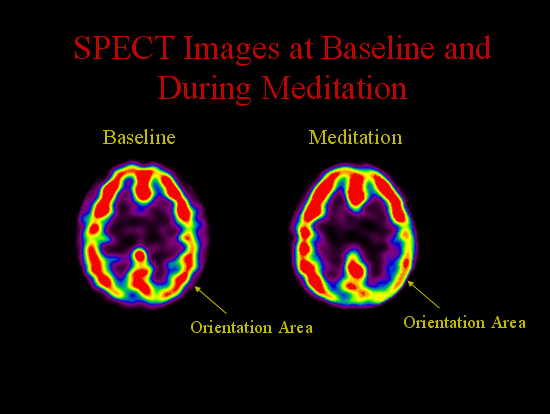
The Pew Forum on Religion and Public Life brought together the neuroscientist Andrew Newberg and the journalist David Brooks (yes, of neural buddhists fame) for joint presentations back in May, followed by a round-table Q&A discussion with a prominent group of journalists. The transcript of the entire event is now up, and that includes the audio as well as plenty more of the pretty brain graphics that you see here and some good event photos.

The presentations and discussions covered a wide range of topics, ably summarized and linked at the beginning of the transcript, including the physiology of beliefs and brains in meditation and prayer from Newberg and the revolution in brain research and neuroscience and soft-core Buddhism from Brooks. The discussion was also wide-ranging, going over issues such as Is religious Darwinism valid? and Brain physiology in party politics. As befits a Pew gathering, there is a considerable amount of attention focused on religion, atheism, and the like.

Newberg covers a lot of his take on the biology of belief as well as imaging research he has done on people praying or meditating. Here’s an excerpt on belief:

So our brain is trying to put together a construction of our reality, a perspective on that reality, which we rely on heavily for our survival, for figuring out how to behave and how to act and how to vote. But again, the brain is filling in a lot of gaps and helping us think certain things that may or may not really be there… So what are beliefs? Again, I apologize, but I always come at this from a scientific perspective. I am defining beliefs biologically and psychologically as any perception, cognition, emotion, or memory that a person consciously or unconsciously assumes to be true. The reasons I define beliefs in this way are several-fold. One is that we can begin to look at the various components that make up our beliefs. We can talk about our perceptions. We can talk about our cognitive processes. We can talk about how our emotions affect our beliefs. And we can also look at how they ultimately affect us. Are we aware of the beliefs we hold? Or are they unconscious? And which ones are unconscious and which ones are conscious?


And an excerpt connecting belief to the practice of religion.

The practices and rituals that exist within both religious and non-religious groups become a strong and powerful way to write these ideas into our brain. Again, go back to the idea that the neurons that fire together, wire together. The more you focus on a particular idea, whether it is political or religious or athletic, the more that gets written down into your brain and the more that becomes your reality. So that is why when you go to a church or a synagogue or a mosque, and they repeat the same stories, and you celebrate the same holidays that reinforce that, you do the prayers, and you say these things over and over again, those are the neural connections that get stimulated and strengthened. That is a strong part of why religion and spirituality make use of various practices valuable for writing those beliefs strongly into who you are.

Brooks aims to place these sorts of ideas into a social and cultural context.

Continue reading “Wired for Belief?”

Wednesday Round Up #15

Anthropology

Clifford Geertz, Very Bad News
The late great American anthropologist takes on Jared Diamond’s book Collapse: How Societies Choose to Fail or Succeed

Erik Davis, BBC Documentary: Tales from the Jungle: Malinowski
YouTube videos of the BBC documentary on one of the founders of modern anthropology, Bronislaw Malinowski

Integral Praxis, Investigating Global Health
Nice video and links on Paul Farmer’s work

John Hawks, Numbers, Amazon-Style
Numbers: universal phenomenon or cultural invention? Looks like Western linearity is acquired. Nice summary of a Science article by Stanislas Dehaene et al. that goes from the Mundurucu in Brazil to neural mapping

Ian Kuijt, The Regeneration of Life: Neolithic Structures of Symbolic Remembering and Forgetting
The abstract for a new Current Anthropology paper on archaeology and the “social construction of identity and memory… expressed through public ritual”

Terry Eagleton, Culture Conundrum
Civilization vs. barbarism? Why civilization needs (popular) culture

Keith Axline, Inside the Architecture of Authority
Photographer Richard Ross shows institutions in their concrete power

Social Fiction, On Ethnographic Surrealism
Gives us a pdf link to James Clifford’s classic paper, plus a cool image and plenty of playfulness

Mark Dingemanse, Under the Spell of Ideophones
Ghanian newspapers, vivid sensory language, and the uses of persuasion

Liam Stack, In Egypt, “Dramatic” Push For Women’s Voices
Anthropology and drama combine: An Egyptian women’s troupe takes on stereotypes Muslim and Western

Elitism in the US

En Tequila Es Verdad, Carnival of the Elitist Bastards #1
Just what it says! A blog carnival celebrating experts, smart people, and other bad-ass riff-raff

John Pieret, Be All The Bastard You Can Be
“Our elitisim is not exclusionary. We welcome everyone to join.”

Continue reading “Wednesday Round Up #15”

The New York Neuroanthropology Times Today

A series of articles today in the New York Times nicely captures several of the themes of Neuroanthropology—(1) the importance of evolution, with an emphasis on comparative work, variation, and mechanism in addition to adaptive function; (2) examining the interaction between the environment and behavioral biology, where the environment can significantly shape and even alter basic behavioral biology; (3) that brains are there not just to process information or create accurate representations, but are designed for doing things; and (4) social context matters, shaping what people do and what they experience (again, brain-environment interaction), so a focus on the brain alone will not explain significant social patterns or problems.

Evolution and social context are both necessary to successful neuronanthropology, which in turn focuses on what people do and feel through the lens of person-environment interaction. Our approach avoids placing analysis into any one academic category (saying something is an anthropological or a neurological problem alone) and eschews the essentialism that most academic fields incorporate into their causal explanations (culture or biology or psychology made them do it). So here are the articles.

–//–

Nicholas Wade reports on new research that shows that the evolution of brain complexity is related to synaptic structure, and not just to the number of neurons (the older “bigger brain” theory). The following graphic shows the sequence well.

Synapses had been viewed as a standard feature across animal brains. “In fact the synapses get considerably more complex going up the evolutionary scale, Dr. Grant and colleagues reported online Sunday in Nature Neuroscience. In worms and flies, the synapses mediate simple forms of learning, but in higher animals they are built from a much richer array of protein components and conduct complex learning and pattern recognition, Dr. Grant said… ‘From the evolutionary perspective, the big brains of vertebrates not only have more synapses and neurons, but each of these synapses is more powerful — vertebrates have big Internets with big computers and invertebrates have small Internets with small computers’.”

Continue reading “The New York Neuroanthropology Times Today”

Channeling Encephalon

Channel N has the latest edition of Encephalon up, and it’s quite a collection of neuroscience and mind-related materials. I also want to plug Channel N–a great resource for brain-related videos!

As befits the site, there is a video theme to this Encephalon, with a Steven Pinker intro, Bjoern Brembs covering spontaneous behavior (in drosophila), Jonathan Haidt on morality and happiness, Laura Collins on anorexia, The Karen Carpenter Story (also anorexia), Albert Bandura and social aggression, and a sleep walking robot all featured onsite!

A couple other posts that jumped out at me were Modern Medicine for Manipulation of the Mind on oxytocin, trust and pharmacological treatment and Socializing Promotes Survival of New Nerve Cells and May Preserve Memory on zebra finches and neurogenesis.

Also to note, we will be hosting the next Encephalon on June 23rd, so please send in your submissions to encephalon dot host @ gmail dot com before then!