The Commons

A big hat-tip to Keith Hart, where you can go explore his ideas about the common wealth.

Want some online commons? Try Flickr’s The Commons public photo project. Or Savage Minds’ arguments for Open Access Open Source scholarly material. Or the Opensource Handbook of Neuroscience.

You can also read about the classic Science article by Garrett Hardin, The Tragedy of the Commons. And explore more broadly at OnTheCommons.org

Forever at War: Veterans’ Everyday Battles with Post-traumatic Stress Disorder

ptsd-iwo-jima“To this day, every time I smell firecrackers or fire arms being shot, I feel like I am right back there. All I have to do is close my eyes and I see the whole scenario over and over again. I can’t erase it.”

Hundreds of thousands of US veterans are not able to leave the horrors of war on the battlefield. They bring the combat home and re-experience it in their minds each and every day, no matter how much time has passed.

“I don’t like people. I just live my life.”

Many PTSD veterans live a life riddled with divorce, unemployment, and loneliness because they are unable to form lasting social networks within civilian life. It is not uncommon for a war veteran plagued with PTSD to desire a solitary life in the mountains. One informant described Montana as the ideal locale – far away and quiet.

“I should have buried him.”

This veteran is still tormented by the fact he did not give an honorable burial to a fellow soldier. He knows he would have met a similar fate if he tried to leave his foxhole; yet his inability to act haunts his memory. He asks himself everyday why he didn’t even try to honor his fallen comrade. He also has never been able to justify why he wasn’t the soldier left unburied on that remote Pacific island.

“I didn’t even have the motivation to kill myself.”

Many of these men and women believe their situation will never improve. Some contemplate suicide as their only relief from the symptoms of PTSD. A number of the veterans we spoke with had thought about or even tried to end their own lives. They also participate in risky activities, threatening their life in a deliberate yet indirect way.

“I always feel like there is someone behind me – following me.”

Being on edge is the only way to survive in combat. Unfortunately, many PTSD veterans are unable to readjust within the civilian world. Everyday life becomes a battlefield.

Something as mundane as walking through a crowded grocery store aisle can be a source of intense anxiety for a veteran suffering from PTSD. Overwhelmed by a feeling that the shoppers behind them are enemies, PTSD veterans always feel as if they are under attack. A trigger as simple as the clashing of shopping carts can make them jump in fear of an imminent explosion. They are forever at war.

OUTREACH

Over the course of 4 months, South Bend veterans with Posttraumatic Stress Disorder (PTSD) have revealed their daily realities to us, five undergraduates at the University of Notre Dame. In conjunction with a course taught by Dr. Daniel Lende entitled Researching Disease: Methods in Medical Anthropology, we have engaged in community-based research with members and supporters of PTSD, Vets, Inc. Here, with the approval and encouragement of these vets, we seek to give their experiences a well-deserved voice.

Continue reading “Forever at War: Veterans’ Everyday Battles with Post-traumatic Stress Disorder”

More Than A Waiting Room

main-waiting-room1By Jillian Brems, Erin Brennan, Katrina Epperson, Jordan Pearce & Anna Weber
“I just don’t want this to be the visit that changes my life,” said the middle-aged woman waiting for a mammogram at the Regional Breast Care Center. For an estimated 240,510 women diagnosed with breast cancer in 2007, their visit to the waiting room did change their lives. This is the concern that patients and their friends, families, and significant others face every time they visit the center.

This feeling of stress and anxiety isn’t just for first-time visitors either. Even women who have had many mammograms worry before a visit because, as one patient put it, “You just never know.” Women are forced to come to terms with the uncertainty factor when they enter the hospital clinic. “It’s the results I’m absolutely terrified of,” another patient said, “not the procedure.”

During this past fall the five of us—all anthropology students at the University of Notre Dame—evaluated the waiting rooms at the Regional Breast Care Center (RBCC). It has been nine years since the waiting room at RBCC last changed, and our ethnographic research focused on determining how to better meet the needs of all who use the space. The director and staff had basic questions whether the waiting rooms still fulfilled the diverse needs of their patients and those who accompany them, and what new things could be done to improve patient satisfaction and comfort.

Continue reading “More Than A Waiting Room”

Just a Place to Talk: Women and HIV/AIDS

By Christine, Dorian, Kristine, Tom & Vanessa
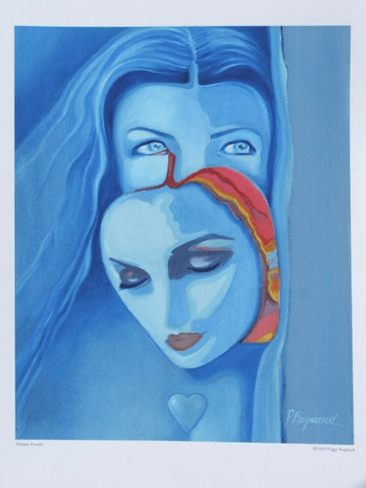
femme-facade-by-peggy-bonnett-begnaud
Nine months ago, Maria birthed a healthy baby girl. Just two days later, the joyous ecstasy of new life quickly led to a striking reality: Maria’s husband was diagnosed with HIV.

“He thought I was going to leave him, but of course I wouldn’t. We’re in this together.” At the time, she didn’t know quite how personal her statement would become. Just three months later Maria and her newborn daughter were also diagnosed with HIV.

“Initially I was able to handle it in the moment, but then it hits. In time, it’s become much more difficult to deal with.”

Maria certainly feels stigmatized and has refrained from telling her other children. In this Midwestern town, the needs of Maria (a pseudonym) and other women with HIV are ripe with concern and lack of viable opportunity. She told us, “What I, and other women need, is just a place to talk.”

Currently there are HIV/AIDS support groups offered locally through a community center. Our community-based student project, focused on understanding and empowering women suffering from HIV/AIDS locally, brought us to these groups. What we found was a support group for homosexual men that did not offer the support women need.

Through research concerning sexual orientation and HIV/AIDS, we discovered that homosexual men and heterosexual women have different coping mechanisms and symptoms. Women experience more illness as a result to their HIV/AIDS status than homosexual men. They also are more likely to need social support to deal with the pain and fear of being HIV/AIDS positive. (Mosack 2009:137) Although the group that exists can be literally defined as a place to talk, it may not be the best place to be heard and understood as a woman.

Continue reading “Just a Place to Talk: Women and HIV/AIDS”

Wednesday Round Up #47

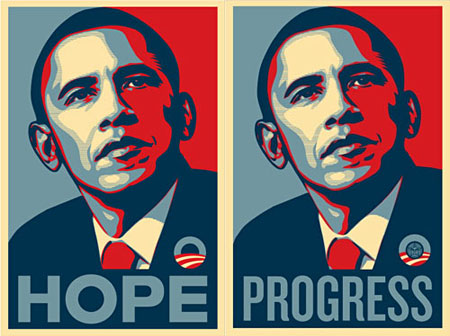
shepard-fairey-barack-obamaThis week, in celebration of Barack Obama’s inauguration yesterday, I have put together a collection on how Obama intersects with the themes of this site. In other words, Obama is a neuroanthropologist!

Let me just start off by saying that Barack Hussein Obama hit it right in his speech yesterday when he said, “The question we ask today is not whether our government is too big or too small, but whether it works.” We are switching from party and field-specific ideologies to seeing what works and what does not. As you’ll see below,a diverse background proves a great help for engaging in that process.

His Parents and Their Legacies

Paula Bender, Legacy of the President’s Mother
A profile of Stanley Ann Dunham, an anthropologist, from her alma mater, University of Hawaii at Manoa

Janny Scott, Obama’s Mother – An Unconventional Life
More on Obama’s mother, with this tagline “Anthropologist disliked ethnic barriers, sought to aid world’s poor”. For more, see her Wikipedia profile.

Ruth Behar, The Anthropologist’s Son
A good portion of the well-known anthropologist’s Chronicle of Higher Education piece on Obama and his anthropologist mother. John Jackson reacts and reflects in his piece, America’s Anthropological President

Sally Jacobs, A Father’s Charm, Absence
An extended profile of the “self-confident, complex dreamer”, Barack Obama Sr.

Continue reading “Wednesday Round Up #47”

Making Sense of Language: Readings in Culture and Communication

making-sense-of-languageSusan Blum, professor of anthropology at Notre Dame, has brought together an outstanding compendium of linguistic anthropology readings in the new book Making Sense of Language: Readings in Culture and Communication.

Published by Oxford University Press, Making Sense of Language features forty-five readings (table of contents here) that together illuminate the human phenomenon of language.

The volume is divided into six sections: (1) What is language, (2) Language and thought, (3) Multilingualism, (4) Language and identity, (5) Discourse, performance and ritual, and (6) Language and ideology. It’s a preeminent selection of authors, including icons such as de Saussure and Whorf, opposing views such as Pinker vs Lakoff, and anthropologists like Keith Basso and Elinor Ochs. Plus this title, The Whiteness of Nerds!

Susan Blum previously authored the book Lies That Bind: Chinese Truths, Other Truths and has the forthcoming My Word! Plagiarism and College Culture.

You can see Susan in action here, discussing China and the recent Beijing Olympics.