SlowTV: Mind and Its Potential


The Mind and Its Potential Conference was hosted in Sydney, Australia back in November.

Mind & Its Potential is your opportunity to hear the world’s top scientists, psychologists and philosophers explain how to apply the new science of the brain in education, medicine, business and your life.

After we previewed it, Paul wrote up a nice review of the conference. Now SlowTV is featuring the videos of several of the talks.

Michael Valenzuela, Neuroplasticity and the ‘Use it or Lose it’ Brain

“Dr Michael Valenzuela describes the concept of neuroplasticity in the brain. He cites the tangible benefits that mental and physical activity have on the development and ongoing functioning of the brain to demonstrate how our neural pathways work on a ‘use it or lose it’ basis.”

Dr Daniel Siegel MD on We Feel, Therefore We Learn: The Neuroscience of Social Emotion.

Here Siegel speaks about “Interpersonal Neurobiology…an interdisciplinary view of life experience that draws on over a dozen branches of science to create a framework for understanding of our subjective and interpersonal lives.”

Baroness Susan Greenfield, The Brain, the Mind and Life in the 21st Century.

“A lively presentation” on “mind function and dysfunction in the modern world,” i.e., technology is killing your brain, but within the broader context of how the brain helps you be you (snarky, I know, but actually it’s a good presentation on relating plasticity with individuality and experience up until 14:50 or so).

And a group discussion featuring Susan Greenfield, Daniel Siegel, Michael Valenzuela, and Jane Burns that is hosted by Alan Saunders, Changing the Brain: Mind over Matter?

“This expert panel addresses how recent discoveries in neuroscience have changed the way we conceive of brain function. Recent thinking proposes that the brain is an infinitely malleable organ, constantly changing and heavily influenced by its surroundings and by the functions that it is required to perform.”

As a bonus, you can also get Prof Jason Mattingley on SlowTV speaking on What Can Neuroscience Tell Us about Consciousness?

“Mattingley looks at the different understandings of consciousness and what the field of neuroscience can add to our collective understanding of how the mind works.”
Wednesday Round Up #101

Back to the old categories approach, with thanks to my student Casey Dolezal for help. So top of the list, then anthropology and writing for a broader public, mind, a nature/culture mix of anthropology, health, and finally some good stuff on addiction at the end.

Top of the List

Sharon Begley, The Depressing News about Anti-Depressants
Prozac Nation needs to face the data – anti-depressants don’t work as well as we thought, especially for more mild cases of depression (no better than placebos in the meta-analysis)

Michael Greenwell, Howard Zinn – 1922 to 2010
The “radical historian” Howard Zinn is remembered.

Lorenz, Pecha Kucha – The Future of Presenting Papers?
Papers presented the Pecha Kucha way – a visual speed presentation – is becoming more popular. Papers are not read but instead shown on a screen in 20 images, displayed for twenty seconds each.

Natalie Angier, Abstract Thoughts? The Body Takes Them Literally
The NY Times gets embodied!

Rosa Golijan, A Virtual Jam Session
Very cool music video – a rap/jazz fusion – put together by people playing virtually together

Kirstin Butler, Reading the Red Book
Carl Jung’s lifework now published and reviewed

Eric Taub, The Web Way to Learn a Language
A useful overview of how to learn a language online

Writing and Anthropology’s Public Presence

Chris Kelty, Why Is There No Anthropology Journalism?
A call to report more queries, debates, and findings from anthropology

Continue reading “Wednesday Round Up #101”

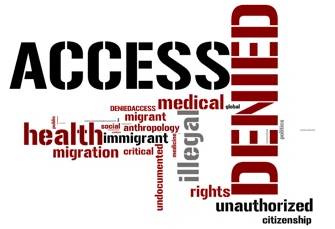
Access Denied


Access Denied is a great new anthropology blog on immigration and health. In particular, the editorial team focuses on the “vital global health challenge: unauthorized migrants’ and immigrants’ lack of access to health care services.”

As they write about their initiative:

Do unauthorized im/migrants have a right to health? To medical care? To publicly funded care? In this blog, medical anthropologists host a lively conversation among scholars, activists, policymakers and others on the complex and contentious issue of unauthorized migration and health. We approach the issue comparatively, with attention to power, cultural context, and historical depth. Through empirically grounded, critical dialogue, we aim to rethink current debates and inform policy about unauthorized migration and the right to health care.

Recent posts include What do Haitian Earthquake Survivors and the Super Bowl Have in Common?, which addresses the mounting controversy over stopping survivors of the Haitian earthquake from entering Florida to receive urgently needed health care, and Chutes and Ladders: Comprehensive Immigration Reform and Health Care Access for Undocumented Workers, which provides a long-term view of immigration and health using the lens of Mexican illegal immigrants to Idaho.

The Access Denied team also puts together regular News Round Ups, with the most recent one delving into the serious problems surrounding deaths among immigrants held in custody by US Immigration and Customs Enforcement.

The overall site delivers a complete package, including an extensive working bibliography, a good list of web resources on immigration and health, and most importantly Access Denied’s recommendations for Action Steps you can take to address the problems surrounding immigration and health.

Access Denied was founded by a great group of people, including Sarah Willen, a friend of mine from graduate school and now assistant professor at Southern Methodist University, and Heide Castañeda, an assistant professor at the University of South Florida, whom I had the pleasure of meeting on my recent trip there.

Other founding members include Nolan Kline, a graduate student at the University of South Florida, and Jessica Mulligan, a post-doc at the Holleran Center for Community Action and Public Policy. You can see the entire team here, including profiles of the founders and guest contributors.

Those guest contributors have included some outstanding senior people, including Didier Fassin, who just joined the prestigious Institute for Advanced Study at Princeton, on Illegal Immigrants as the Last Frontier of Welfare, and Peter Guarnaccia, Professor in Human Ecology at Rutgers, on Health Care Reform Is Intimately Linked to Immigration Reform.

For even more, go check out the new medical anthropology blog Access Denied.

Wednesday Round Up #100

Made it to 100! Still the mash-up form, but I stuck a bunch on video games at the game over…

Carolyn Sargent, Who Are We in the Public Imagination?
The Society for Medical Anthropology has a new blog Voices from Medical Anthropology. Here the current SMA president asks how we present ourselves as medical anthropologists. Comments encouraged!

Chris Kelty et al., Outlaw Biology? Public Participation in the Age of Big Bio
Looks like a fascinating symposium this coming Friday and Saturday (Jan 20th & 30th) at UCLA. Plus just a fun site to explore.

Dr. Shock, The Neuroscience of Jazz
Tom Beek playing, plus fMRI studies of jazz improvisation

Mary Hrovat, Civilization Founded on Beer?
“Patrick McGovern, an archaeologist who studies human exploration of fermented beverages, believes that it might have been the desire for reliable access to alcohol, not food, that spurred the farming revolution that swept Neolithic culture…”

Continue reading “Wednesday Round Up #100”

Wednesday Round Up #99

Dirk Hanson, The Addiction Inbox Top Ten
The most popular posts over at very well done The Addiction Inbox: The Science of Substance Abuse

Ethan Watters, How the US Exports Its Mental Illnesses
Another great piece by Watters over at New Scientist of the globalization of US mental health concepts (or ethnopsychologies). For more, see some good commentary over at Mind Hacks

Michiko Kakutani, A Rebel in Cyberspace, Fighting Collectivism
The artist and computer scientist Jaron Lanier fights against the hive mind and digital Maoism (i.e., the wisdom of the crowd) and the importance of developing a unique voice in his new book You Are Not A Gadget

Vaughan Bell, The Ominous Power of Confession
125 proven cases of wrongful conviction based on false confessions – Mind Hacks covers an excellent yet disturbing paper

Stephen Casper, Book Review: Warwick Anderson, The Collectors of Lost Souls: Turning Kuru Scientists into Whitemen
“This marvelous book deliberately forces us to re-imagine the meaning of sojourn, scientific discovery, colonialism, and sorcery, while at the same time providing us with an account of the discovery of Kuru, a lethal neurological disease, and the science that ultimately determined its etiology. In a narrative grounded in sources found in archives in Papua New Guinea, Australia, and the United States, and further developed through oral histories with scientists, anthropologists, and the Fore people, Anderson shows us that the prion – an infectious protein supposedly discovered in the laboratories of Britain and the United States – was a thing constructed first through colonial aspirations and global imaginations.”

Continue reading “Wednesday Round Up #99”

Wednesday Round Up #98

Enjoy another week, all mashed together once again.

3 Quarks Daily, Michael Moshen Performs the Triangle
An amazing display of skilled performance, integrating timing, music and throwing – definitely one I threw in here for Greg!

Robin Young, Rehab for Terrorists
NPR’s Here and Now speaks with the British journalist Owen Bennett-Jones, who has investigated the Saudi’s rehab program for terrorists. Striking to me both because of the dilemmas of this approach (or any like it) in a probabilistic age that still wants ideal absolutes, and also because of the striking difference in the portrayals of “terrorists” (see the NY Times’ recent piece, The Terrorist Mind) and how young men and women become involved and hence why rehab can work.

Institute of Psychiatry – King’s College, Post Doctoral Research Worker
Looking for a post-doc in neuroanthropology? King’s College in London’s Institute of Psychiatry wants you! The research is on cognitive models of dissociation and the subjective and neural correlates of automatic speech and writing.

Ray Tallis, You Won’t Find Consciousness in the Brain
“My argument is not about technical, probably temporary, limitations. It is about the deep philosophical confusion embedded in the assumption that if you can correlate neural activity with consciousness, then you have demonstrated they are one and the same thing, and that a physical science such as neurophysiology is able to show what consciousness truly is.”

John Cloud, Why Your DNA Isn’t Your Destiny
Epigenetics makes Time magazine! Hunger, abundance, and multi-generational effects in Sweden is the lead case study.

David Dobbs, Neuron Culture’s Top Five from December
Get the links to the posts on David’s Orchid and Dandelion series, which talks about genetic sensitivity and the environment – really looking forward to his book on the subject

Continue reading “Wednesday Round Up #98”