Linguistic Anthro Round Up #12

The Society for Linguistic Anthropology is featuring its round up #12, which has a great collection of posts which fall under the broad domain of language and culture, or more specifically “comparative study of the ways in which language shapes social life.”

Lots of quality posts to check out, but really it’s the collection of videos included in the round up that is the stand out. Worth it for that alone.

There is a very funny one if you have been following the parodies of Hitler/downfall. It’s over at Funny or Die, and called Hitler finds out about another Downfall parody.

Link to Linguistic Anthropology Round Up #12

Darwin, US Children, and Morals

The United States recently ranked 20th out of 21 rich countries in a UNICEF study of child well-being. The effects of childhood can last a life-time. Darcia Narvaez, writing with Jaak Panksepp and Allan Schore, argue in their post The Decline of Children and the Moral Sense:

American culture may be deviating increasingly from traditional social practices that emerged in our ancestral “environment of evolutionary adaptedness” (EEA). Empathy, the backbone of compassionate moral behavior, is decreasing…

In fact, the way we raise our children it seems that the USA is increasingly depriving them of the practices that lead to well being and a moral sense.

Together Narvaez and Panksepp are organizing a conference on Human Nature and Early Experience: Addressing the “Environment of Evolutionary Adaptedness”, where Schore will be one of the featured speakers.

Charles Darwin had high hopes for humanity. He pointed to the unique way that human evolution was driven in part by a “moral sense.” Its key evolutionary features are the social instincts, taking pleasure in the company of others, and feeling sympathy for fellow humans. It was promoted by intellectual abilities, such as memory for the past and the ability to contrast one’s desires with the intentions of others, leading to conscience development, and, after language acquisition, concern for the opinion of others and the community at large…

What Darwin considered the moral-engine of positive human thriving may be under threat. Ill-advised practices and beliefs have become normalized without much fanfare, such as the common use of infant formula, the isolation of infants in their own rooms, the belief that responding too quickly to a fussing baby is spoiling it, the placing of infants in impersonal daycare, and so on. We recommend that scientists and citizens step back from and reexamine these common culturally accepted practices and pay attention to potential life-time effects on people. It is an ethical issue.

Link to The Decline of Children and the Moral Sense

Conference: Human Nature and Early Experience

A pioneering symposium Human Nature and Early Experience: Addressing the “Environment of Evolutionary Adaptedness” is coming October 10th through 12th at the University of Notre Dame.

It is becoming increasingly clear that the ways we are rearing our children today are not the ways humans are designed to thrive. The ill effects of these missing ancestral practices are becoming evident as children’s well being in the USA is worse than 50 years ago (Heckman, 2008) and is among the worst in the industrialized world (20th in family and peer relationships and 21st in health and safety; UNICEF, 2007). We have epidemics of ADHD, anxiety and depression among the young, indeed all age groups (USDHHS, 1999). Too many children are arriving at school with poor social skills, poor emotion regulation, and habits that do not promote prosocial behaviors…

Now is the time to reexamine the influence of early experience on child outcomes for two main reasons. First, the emergence of the cognitive, affective and social neurosciences (Cacioppo & Bernsten, 2004; Panksepp, 1998) has provided a greater focus on intrinsic aspects of social functioning. These disciplines have helped identify the types of brain functions that are typically found in mammalian brains, but they have not specified how these functions are normally expressed in humans, or how they are developed and expressed in response to cultural practices

Second, in recent years a host of public, personal and social health problems have been skyrocketing in the USA, and increasingly around the world, for which science does not have consistent or reliable answers… Animal, human psychological, neurobiological and anthropological research provides converging evidence for the importance of early life conditions for optimal brain and body system development. At the same time, epigenomic studies are beginning to better demonstrate the influence of caregiver behavior on offspring.
An impressive group of speakers will present, beginning withJaak Panksepp from Washington State University.  Panksepp is responsible for coining the term ‘affective neuroscience,’ and is renowned for his research in neural mechanisms of emotion.

James Prescott will speak on origins of violent behavior; Alan Schore, UCLA, will also speak, with his integrative neuroscience approach to affect regulation and development.

Also presenting: Michael Meaney from the Douglas Institute specializing in maternal care, stress, and gene expression and Wenda Trevathan of NMSU whose concentrations include evolutionary and biocultural factors underlying human reproduction, specifically childbirth and maternal behavior.

The full schedule is available for viewing accompanied by a detailed list of speakers and their biographies.

Darcia Narvaez, associate professor of psychology at Notre Dame, is the lead organizer for the conference.  Narvaez was previously featured in the post Triune Ethics: On Neurobiology and Multiple Moralities.  You can find out more about her views on the issues at the core of the conference over at her blog Moral Landspaces in the post, written with Jaak Panksepp and Allan Schore, The Decline of Children and the Moral Sense.

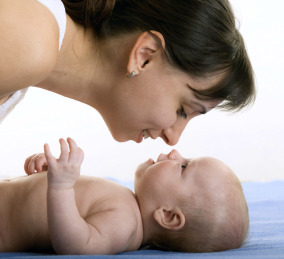
Mother and child photo is the featured photo for the Human Nature and Early Experience conference.

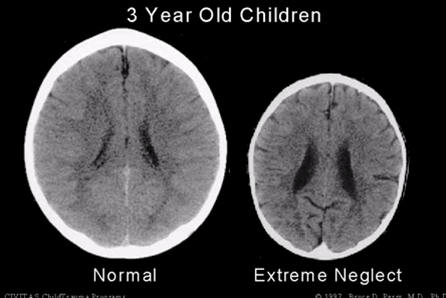
Brain image from Child Welfare Information Gateway.

Link to the website for the conference Human Nature and Early Experience: Addressing the “Environment of Evolutionary Adaptedness”


Chronicle on Marc Hauser

Big update on the Marc Hauser affair, and the seriousness of the research misconduct allegations and the irony of this from the author of Moral Minds. The Chronicle for Higher Education has a piece out today which sheds light on the internal investigation and the assertions by research assistants in Hauser’s Harvard lab of misconduct.

The research assistant who analyzed the data and the graduate student decided to review the tapes themselves, without Mr. Hauser’s permission, the document says. They each coded the results independently. Their findings concurred with the conclusion that the experiment had failed: The monkeys didn’t appear to react to the change in patterns.

They then reviewed Mr. Hauser’s coding and, according to the research assistant’s statement, discovered that what he had written down bore little relation to what they had actually observed on the videotapes. He would, for instance, mark that a monkey had turned its head when the monkey didn’t so much as flinch. It wasn’t simply a case of differing interpretations, they believed: His data were just completely wrong.

Here’s the link for more – Document Sheds Light on Investigation at Harvard

And if you’re looking for more background, Nicholas Wade at the NY Times had a very good piece a week ago, In Harvard Lab Inquiry, a Raid and 3-Year Wait.

Update: Nicholas Wade came out with further coverage at NYT in the article Harvard Finds Scientist Guilty of Misconduct.

Harvard University said Friday that it had found a prominent researcher, Marc Hauser, “solely responsible” for eight instances of scientific misconduct.

Hours later, Dr. Hauser, a rising star for his explorations into cognition and morality, made his first public statement since news of the inquiry emerged last week, telling The New York Times, “I acknowledge that I made some significant mistakes” and saying he was “deeply sorry for the problems this case had caused to my students, my colleagues and my university.”

Also, you can find the entire letter/email here sent by Harvard Dean Michael Smith to the faculty, where he confirms the scientific misconduct to the entire Faculty of Arts and Sciences