The Royal Society: State of the Life Sciences


The Royal Society is celebrating its 350th anniversary, and giving the gift of free online articles across the breadth of the life sciences. The Philosophical Transactions of the Royal Society B Biological Sciences has put together a special issue edited by Georgina Mace on Personal Perspectives in the Life Sciences for the Royal Society’s 350th Anniversary.

In her editorial Mace outlines the three broad topics this special issue covers. To paraphrase, they are:

(1) environmental degradation and the intricate linkages between human societal norms and structures

(2) genome to organism processes, both in a theoretical and methodological sense, as well as questions about the origins of life and the sources and maintenance of variability

(3) and complex biological systems, especially the brain and genetic control of organism function, and the nature of intelligence and biological and technological information processing.

You can access all eighteen articles either online or as pdfs through the Table of Contents. These full-length review articles range from Partha Dasgupta on Nature’s role in sustaining economic development to Sydney Brenner on sequences and consequences. Ecosystems, biodiversity, food security, reproductive diversity, ageing, and stem cells are among the topics covered.

The most relevant article for us is Uta Firth and Chris Firth’s “The Social Brain: Allowing Humans to Boldly Go Where No Other Species Has Been (pdf).”

The biological basis of complex human social interaction and communication has been illuminated through a coming together of various methods and disciplines. Among these are comparative studies of other species, studies of disorders of social cognition and developmental psychology. The use of neuroimaging and computational models has given weight to speculations about the evolution of social behaviour and culture in human societies. We highlight some networks of the social brain relevant to two-person interactions and consider the social signals between interacting partners that activate these networks. We make a case for distinguishing between signals that automatically trigger interaction and cooperation and ostensive signals that are used deliberately. We suggest that this ostensive signalling is needed for ‘closing the loop’ in two-person interactions, where the partners each know that they have the intention to communicate. The use of deliberate social signals can serve to increase reputation and trust and facilitates teaching. This is likely to be a critical factor in the steep cultural ascent of mankind.

You can also see Colin and Uta Firth in a video interview.

Finally, the article by Geoffrey Hinton on Learning to Represent Visual Input looks fascinating, examining how “Recent progress in machine learning shows that it is possible to learn deep hierarchies without requiring any labelled data. The feature detectors are learned one layer at a time and the goal of the learning procedure is to form a good generative model of images, not to predict the class of each image… This module looks remarkably like modules that have been proposed by both biologists trying to explain the responses of neurons and engineers trying to create systems that can recognize objects.”

For access, access the entire special issue Personal perspectives in the life sciences for the Royal Society’s 350th anniversary.

150 years since the Origin of Species (Darwin 1859)

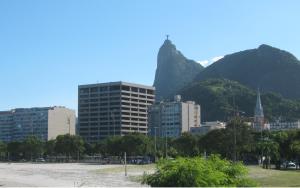
This year we celebrate the 150th anniversary of the publication On the Origin of Species and I thought that I should write a brief post on https://neuroanthropology.net/ to mark the occasion before the year is up. During my fieldwork in Brazil I did some work tangential to my thesis and went out looking for sites which had previously been painted by Conrad Martens (Botafogo Bay) and Augustus Earle (Salvador da Bahia). Earle and Martens were painters on board the Beagle during its famous voyage in the 19th century. Last week I looked at population growth in Brazil as a case-study of urbanisation, pollution and the future of developing countries. This week, I would like to share with you a visual comparison of what Brazil looked like over 150 years ago and what it looks like today.

Botafogo Bay 1842 Botafogo 2009

Before: Botafogo Bay, Rio de Janeiro, 1842-1843             After: Botafogo Bay, Rio de Janeiro, April, 2009
Lithograph: W. Loeillot (26 x 37 cm)                                      Photo: Paul H. Mason

Brazil was Darwin’s first landfall on board the HMS Beagle. 150 years after the publication of The Origin of Species, what has happened to the landscape since the voyages of Charles Darwin? The above photos of Rio (Darwin’s second landfall on board the Beagle) demonstrate just a very small example of what has happened in that period. The city of Rio has had to claim land from the sea in order to accomodate a growing population, construct tall high-rise buildings to fit in more people and consequently Botafogo bay has become so polluted that on the three occasions I visited this beach I saw no one enjoying a swim. Since Darwin’s publication, carbon dioxide emissions have increased by 10 000% per year, the human population is almost seven times larger, and we are fast-tracking ourselves into the next great evolutionary bottle-neck of natural history. What modes of thinking, cultural practices and social behaviours must change as we face our greatest challenge to population thinking? 

Continue reading “150 years since the Origin of Species (Darwin 1859)”

Complete this quote: “…the theories, technologies and findings…can be productively combined to…”

How will you complete this quote?

“…the theories, technologies and findings of molecular biology, evolutionary developmental biology, neuroscience, cognitive psychology, linguistics and anthropology can be productively combined to…” 

Continue reading “Complete this quote: “…the theories, technologies and findings…can be productively combined to…””

Stone Encephalon


A new Encephalon is out, rounding up the best mind/brain blogging. The Mouse Trap is hosting, and this edition includes a good selection of posts.

Visit Encephalon #79.

The latest Four Stone Hearth rounds up anthropology blogging over at Spider Monkey Tales. I really have to highlight the spectacular photos of a male drill monkey, with an accompanying post. I worked with drill monkeys for a year, so this was great to see!

Visit Four Stone Hearth #81.

Wednesday Round Up #93

Here’s this week – top, mind, teaching & new media, anthropology, and science & life.

Top of the List

David L. Chandler, Rethinking Artificial Intelligence
A broad-based MIT project that aims to reinvent artificial intelligence for a new era. By going back and fixing mistakes, researchers hope to produce ‘co-processors’ for the human mind.

Petra Boynton, Celebrating This Blog’s Fifth Birthday!
“Sex educator, Agony Aunt, Academic” – here’s to five more years!

Sandra Kiume, Brain-Based Sex Differences
Mythbusting sex differences in the brain. Includes a video with Lise Eliot.

Sarah Kershaw, Addiction on 2 Fronts: Work and Home
Explains why Dr. A. Thomas McLellan accepted the nomination to be the government’s number two drug-control official – his life and his research surrounded by addiction.

Jessica Palmer, Beautiful Hunger
A YouTube video on swarming sea creatures. Another great one from Bioephemera is Eat Your Veggies.

ScienceDaily, First Evidence of Brain Rewiring in Children: Reading Remediation Positively Alters Brain Tissue
New white matter from 100 hours of reading – communication matters!

Mind

Benedict Carey, Study Suggests Methods and Timing to Treat Fears
Testing variations in extinction training for traumatic memories/associations – the sooner the better. Ed Yong provides greater depth about the actual research.

Continue reading “Wednesday Round Up #93”

Copenhagen Climate Change

All eyes in the world should be on the Copenhagen Climate Change Conference as we wait with a stuttering heartbeat to learn about the policies that will guide humanity through the next great evolutionary bottleneck. The topic I will be keeping an eye on is overpopulation.

Overpopulation is the greatest ethical problem we face as a species as we begin to recognise our pivotal impact on the planet and start to actually do something about carbon emissions, pollution and poverty. If there weren’t so many of us, our levels of consumption would be reduced, our effluent would be minimised and our cultural habits would be manageable. But how do we go about ethically addressing the issue of population growth? I find it hard to condone China‘s one-child policy, but could the rest of the world be owing carbon credits to China in light of new research which shows that for every $7 spent of family planning we can reduce more than one tonne of CO2 emissions? One thing is clear, reducing the world’s population is a necessity but it is an issue that can only be approached through education not enforcement. A decade of lost opportunities to increase contraceptive prevalence was noted as recently as the 1980s (Diczfalusy, 1991). It is clear that now, more than ever, widespread distribution of family planning and contraceptive technology is crucial to our future on this planet.

To what degree is our concern about climate change altruistic? I do not believe that we are concerned about the health of our planet as much as we are concerned about our existence on it. At the Copenhagen Climate Change Conference, are we discussing what changes need to be made or merely what changes we are prepared to make? And if so, how effective will such egocentric, ethnocentric and anthropomorphic changes be?

There are a few things I would like to know about the Copenhagen Climate Change Summit. Did the attendees travel by plane or did they sail the northerly trade-winds to Denmark? Will the menu be meat free? Are they travelling by car from their hotels to the conference? Or will they choose public transport? I’m not sure if meat, cars and planes are things that many people are willing to go without! Slipping on a condom, however, might just be the barrier between our greed and our hypocrisy. During the UN conference, there will need to be unbiased decisions about what measures we need to go to, which cultural habits will be sustainable and what solutions we can implement in order to reduce our impact on the ecology of our world.

Continue reading “Copenhagen Climate Change”