Addiction Round Up

The posts go from the biological all the way through policy, so pick the spot that suits you best.

PZ Myers, Evolution of Alcohol Synthesis
Yeast fermentation and learning to drink your own poison

NewsWise, New Research Tracks Effects of Addictive Drugs on Brain
Summary of the Science article “Design Logic of a Cannabinoid Receptor Signaling Network that Triggers Neurite Outgrowth”—how signaling driven by drugs can lead to changes in cell connections and cytoarchitecture (surprises? roles for breast cancer proteins and “distributed decision-making” in neurite outgrowth)

Alok Jha, Scans Pinpoint Alcohol’s Effects on the Human Brain
Dampening fear and avoidance, and upping reward

BlogMeister, Genes and Environment Shape Women’s Path to Alcoholism
Study of the transitions towards alcoholism; genetics all the way through, different environmental factors at different stages (see the original study here)

The Neurocritic, Wake Up and Smell the Coffee?
Now this is epigenetics! Smelling coffee gets the genes going

Continue reading “Addiction Round Up”

The Everyday Brain and Our Everyday Life

Earlier this week I wrote about Jean-Pierre Changeux and Gerald Edelman, drawing on the New York Review of Books essay by Israel Rosenfield and Edward Ziff, How The Mind Works: Revelations. As I blogged then, “In the end I was still left with a ‘So what?’ Their hints at subjective psychology, the acting brain, and relational representation remained the side dishes, rather than the main course. I’ll deal with that main course later this week.” It’s Saturday, so I better keep to that promise.

Let me begin by just giving you the essay excerpts.

In general, every recollection refers not only to the remembered event or person or object but to the person who is remembering. The very essence of memory is subjective, not mechanical, reproduction; and essential to that subjective psychology is that every remembered image of a person, place, idea or object invariably contains, whether explicitly or implicitly, a basic reference to the person who is remembering.

The “rigid divide,” [Giacomo] Rizzolatti and Corrado Sinigaglia write in their new book, Mirrors in the Brain, “between perceptive, motor, and cognitive processes, is to a great extent artificial; not only does perception appear to be embedded in the dynamics of action, becoming much more composite than used to be thought in the past, but the acting brain is also and above all a brain that understands.”

For Edelman, then, memory is not a “small scale model of external reality,” but a dynamic process that enables us to repeat a mental or physical act: the key conclusion is that whatever its form, memory itself is a [property of a system]. It cannot be equated exclusively with circuitry, with synaptic changes, with biochemistry, with value constraints, or with behavioral dynamics. Instead, it is the dynamic result of the interactions of all these factors acting together.

Together, subjective psychology, an acting and embedded brain, and representation and action that are dynamic and relational present us with a new starting point when we talk about the intersections of neuroscience and psychology with anthropology. Starting with their conclusions, making it the beginning of something better, that would have been a really exciting essay for me to read.

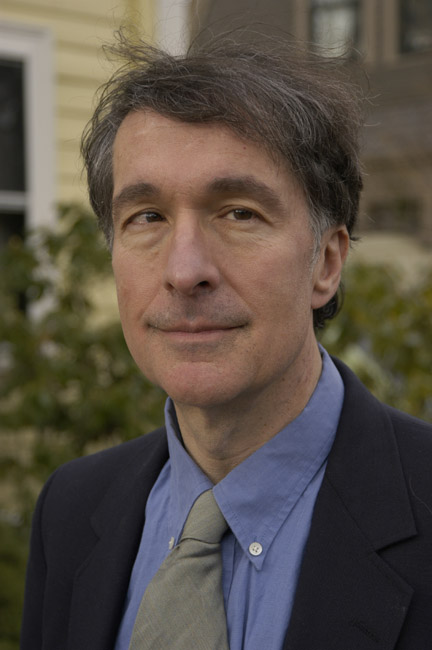
As I wrote a couple days ago, Howard Gardner does get us closer to this new individuality. “Gardner brings a refreshingly unique take, neither the individual of science, bounded and rational, or the individual of philosophy and art, lone thinker and creative genius. Nervous system, individual experience, and subjective interpretation move us into a radically different domain—an individuality that lies firmly in the continua Gardner describes.”

Continue reading “The Everyday Brain and Our Everyday Life”

Brain vs. Philosophy? Howard Gardner Gets Us Across!

Jean-Pierre Changeux and Paul Ricoeur, both French scholars, wrote a book together entitled What Makes Us Think?: A Neuroscientist and a Philosopher Argue about Ethics, Human Nature, and the Brain. It consists of a series of discussions and debates the two held, an oral approach to knowledge given to us as written and translated word.

Together these two ably illustrate the biology/culture and science/humanities divide we have discussed recently. Changeux sees brains as more than just the material substance of knowledge and self; neurons serve as author as well. In contrast, Ricoeur brings phenomenology, interpretation, and reflexivity to the table, as well as a keen appreciation of the limits of human knowledge (and thus materialist claims, like those made by Changeux). Yet the first chapter of their book is entitled A Necessary Encounter, and then covers topics such as Body and Mind, The Neuronal Model and The Test of Experience, and Desire and Norms.

It was a true pleasure to encounter a lengthy and excellent review of this book by Howard Gardner, the psychologist and educator whose best known work is Frames of Mind: The Theory of Multiple Intelligences (Gardner even gives us a 25th year retrospective on the work). Entitled Mind and Brain: Only the Right Connections, Gardner sets up the theoretical debate at stake, provides us background on both scholars, and then perceptively takes us through their entire debate.

Here’s one excerpt to give you a sense of how Gardner sees Changeux, riding triumphant science, and Ricoeur, on the defensive, debating the brain:

When Changeux explains that the nervous system is active as well as reactive, Ricouer cautions that one should first speak of mental activities and not of the brain: “The discourse of the mental includes the neuronal and not the other way around.” Changeux responds: “What we wish to do is to link up the two discourses (material and mental) with each other” (p. 44). Here as elsewhere, Changeux seeks to effect connections, while Ricoeur insists on the ontological separation of the two realms.

Continue reading “Brain vs. Philosophy? Howard Gardner Gets Us Across!”

Monkeys can learn symbols

Ah, crap, now I have to change another lecture slide… No, this is cool. From Science Daily, The Symbolic Monkey? Animals Can Comprehend And Use Symbols, Study Of Tufted Capuchins Suggests discusses research that appeared in PLoS ONE. Some theorists refer to humans as ‘the symbolic species,’ but like so many distinctions that used to seem so clearly differentiating of ‘human nature,’ we find that the distinction is more of degree than kind. For example, studies of chimpanzees and gorillas taught manual or token languages have shown that great apes are capable of using symbols to communicate; whether or not monkeys could was less clear.

In this experiment, the researchers used the equivalent of ‘food standard’ money with monkeys to see how they understood the value of tokens which were equated to different types of food. The Science Daily article explained:

In the experiment, five capuchins engaged in “economic choice” behavior. Each monkey chose between three different foods (conventionally referred to A, B and C), offered in variable amounts. Choices were made in two different contexts. In the “real” context, monkeys chose between the actual foods. In the “symbolic” context, monkeys chose between “tokens” (intrinsically valueless objects such as poker chips) that represented the actual foods. After choosing one of the two token options, monkeys could exchange their token with the corresponding food.

Turns out that the monkeys’ choices were ‘transitive,’ that is, they demonstrated the same preferences whether they were transacting in real food or in intrinsically meaningless tokens that represented the food. It turned out that tufted capuchins preferred Cheerios to parmesan cheese (dumb bastards); however, when transacting in tokens, the rate of exchange between foods became more pronounced. They held out for more parmesan cheese for their Cheerios when using tokens; in actual food, the exchange rate was one Cheerio for two pieces of cheese, but this inflated to one Cheerio for four pieces of cheese (for example) in tokens.

Continue reading “Monkeys can learn symbols”

We hate memes, pass it on…

Vaughn at Mind Hacks has a short post, Memes exist: tell your friends (clever, Vaughn, very clever), which links to a couple of meme-related talks at TED. Daniel linked to a lot of the TED talks back in April (TED: Ideas Worth Spreading), but Vaughn focuses on videos of Daniel Dennett and Susan Blackmore, both of whom are ardent meme advocates.

I’ve watched both talks, more than a half hour of my finite lifespan that I will never get back (okay, I’ve wasted part of my finite life doing worse… I think), so I need to unburden myself. I think ‘memetics’ is one of the bigger crocks hatched in recent decades, hiding in the shadow of respectable evolutionary theory, suggesting that anyone who doesn’t immediately concede to the ‘awesome-ness’ of meme-ness is somehow afraid of evolutionary theory. Let me just make this perfectly clear: I teach about evolutionary theory. I like Charles Darwin. I have casts of hominid skulls in my office. I still think ‘memetics’ is nonsense on stilts on skates on thin ice on borrowed time (apologies to Bentham), as deserving of the designation ‘science’ as astrology, phrenology, or economic forecasting.

What’s hard for me to understand is that I LIKE some of Daniel Dennett’s work, and I can’t cite Dennett’s other work confidently when he has picked up a ‘meme franchise,’ and is plugging away with the ‘meme’ meme, making it appear that I’m down with this later material. Blackmore, on the other hand, is a reformed para-psychologist, so she’s, at worst, made a lateral move in terms of respectability. I get particularly irritated during her talk because I think she does an enormous disservice to Darwin’s Origin of Species, but I will try not to late my irritation show too much (even though our regular readers know I won’t be able to manage). I wasn’t going to really heap scorn on Blackmore until I read her own account of TED on the Guardian’s website; gloves are now off.

But I digress, back to the content of the concept and Vaughn’s comments…

Continue reading “We hate memes, pass it on…”

Wired for Belief?

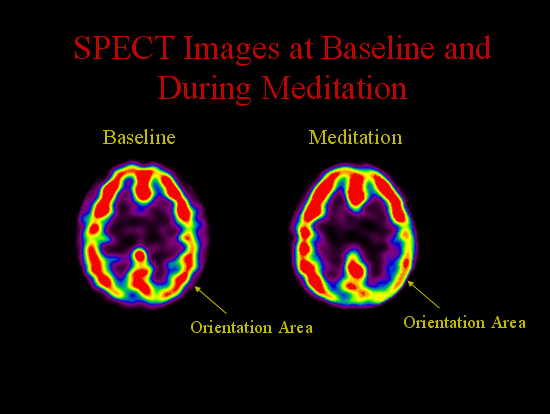
The Pew Forum on Religion and Public Life brought together the neuroscientist Andrew Newberg and the journalist David Brooks (yes, of neural buddhists fame) for joint presentations back in May, followed by a round-table Q&A discussion with a prominent group of journalists. The transcript of the entire event is now up, and that includes the audio as well as plenty more of the pretty brain graphics that you see here and some good event photos.

The presentations and discussions covered a wide range of topics, ably summarized and linked at the beginning of the transcript, including the physiology of beliefs and brains in meditation and prayer from Newberg and the revolution in brain research and neuroscience and soft-core Buddhism from Brooks. The discussion was also wide-ranging, going over issues such as Is religious Darwinism valid? and Brain physiology in party politics. As befits a Pew gathering, there is a considerable amount of attention focused on religion, atheism, and the like.

Newberg covers a lot of his take on the biology of belief as well as imaging research he has done on people praying or meditating. Here’s an excerpt on belief:

So our brain is trying to put together a construction of our reality, a perspective on that reality, which we rely on heavily for our survival, for figuring out how to behave and how to act and how to vote. But again, the brain is filling in a lot of gaps and helping us think certain things that may or may not really be there… So what are beliefs? Again, I apologize, but I always come at this from a scientific perspective. I am defining beliefs biologically and psychologically as any perception, cognition, emotion, or memory that a person consciously or unconsciously assumes to be true. The reasons I define beliefs in this way are several-fold. One is that we can begin to look at the various components that make up our beliefs. We can talk about our perceptions. We can talk about our cognitive processes. We can talk about how our emotions affect our beliefs. And we can also look at how they ultimately affect us. Are we aware of the beliefs we hold? Or are they unconscious? And which ones are unconscious and which ones are conscious?


And an excerpt connecting belief to the practice of religion.

The practices and rituals that exist within both religious and non-religious groups become a strong and powerful way to write these ideas into our brain. Again, go back to the idea that the neurons that fire together, wire together. The more you focus on a particular idea, whether it is political or religious or athletic, the more that gets written down into your brain and the more that becomes your reality. So that is why when you go to a church or a synagogue or a mosque, and they repeat the same stories, and you celebrate the same holidays that reinforce that, you do the prayers, and you say these things over and over again, those are the neural connections that get stimulated and strengthened. That is a strong part of why religion and spirituality make use of various practices valuable for writing those beliefs strongly into who you are.

Brooks aims to place these sorts of ideas into a social and cultural context.

Continue reading “Wired for Belief?”