Funerals and Food Coping in Rural Lesotho

Lesotho Funeral Home
By Brandon Sparks

Imagine you are hungry. You have been hungry for weeks, with no end in sight due to a heavy drought that severely diminished your land’s production. Your gravely ill sister lives with you, as do her two young children, further straining your limited food supply. Then your neighbor dies. You do mourn, but you also feel relief – relief because you will be able to take your family to the funeral. There they will be able to eat.

This post examines food crises in Lesotho and the role funerals play in coping with these food shortages within a rural town and neighboring villages. In my senior thesis written on the costly funerals in Lesotho and the impact of HIV/AIDS on their practice, I found that the local Basotho people use funerals as a food coping mechanism. Lesotho often suffers from periods of drought that place a burden on food resources and force people to look for methods to supplement their daily food.

Lesotho VillageI will begin with a brief look at the factors behind the food shortages, followed by a description of funeral practices and how families are able to use them to for food coping. Lesotho is a small country in southern Africa. Through a quirk in British rule, it remained independent from South Africa and is now the only country to have its entire border completely surrounded by another country. The terrain is mountainous and has earned Lesotho the nickname of “the roof of Africa.” Less than eleven percent of the land is arable and farmers are at the peril of periodic droughts.

Lesotho also has one of the highest HIV/AIDS prevalence rates in the world, with some estimates as high as thirty-one percent of its over two million population carrying the virus (Brummer 2002). The high percentage stems from Lesotho’s history of labor migration to the gold and diamond mines of South Africa, where Basotho men would contract the disease and then bring it home to their families in Lesotho.

The attraction of mining employment to Basotho (from Lesotho) men comes partially from the lack of opportunities at home. Agriculture production has dropped in the past fifty years due to deterioration of the land through erosion, mono-cropping, and overgrazing, insecurities in the system of land tenure that inhibited farmers from securing their holdings, population pressure that increased exploitation of arable land, and environmental factors like hail, frost, and drought (Murray 1981). These factors, coupled with population growth, mean that the frequency and severity of food crises has increased in the last century.

Continue reading “Funerals and Food Coping in Rural Lesotho”
Getting it into print, anthropology edition

Our colleague Lisa Wynn has put up a massive post on academic publishing based on a workshop she did this past week (that is, Lisa was the workshop giver). Especially for anthropologists, it’s a great resource, with many a suggestion for how to get your next great ethnographic of anthropological masterwork into print.

Surf over to Culture Matters to check it out: Academic Publishing Workshop for grad students and more.

There’s discussions of all the traditional subjects (journals, book chapters, books) as well as a consideration of newer forms of reaching the anthropological public.

How Bright Might A “Neuro Future” Be?

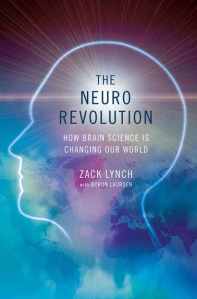
Neuro Revolution
By Stephan Schleim

Looking for a “Neuro Revolution”? Zack Lynch wants to offer you one in his new book.

With a title like Neuro Revolution: How Brain Science Is Changing Our World and the author celebrated as a leading technology consultant and market researcher in marketing blurbs, readers might expect the author’s opinion to be based on the state of the art of neuroscience. However, frequent mistakes and shortcomings in his presentation of the scientific findings and methodology seriously call into question whether Lynch is the right person to sketch a possible “neuro future” and to address the prospects and limitations of neurotechnology.

The first surprise comes on page 3, where Lynch describes his first experience with a Magnetic Resonance Imaging (MRI) scanner, one of the most frequently-used research tools in contemporary cognitive neuroscience. He explains that “the machine’s computer had recorded and analyzed data about how those loud thumping noises had bounced back from the structures under my skin.” To uninformed people, the noise of high-field MRI scanners will indeed be one of their most salient features. However, it is a mere epiphenomenon subject to the sophisticated technology necessary to change strong magnetic fields in short intervals. The technique itself is based on inaudible electromagnetic waves (like those emitted by a cellphone) to investigate brain structure and function.

Continue reading “How Bright Might A “Neuro Future” Be?”

Institute for General Semantics conference

‘Tis the season for conference announcements! This one was forwarded to me by Joan Jocson at the Metropolitan Museum of Art (thanks, Joan!).

The Institute of General Semantics is now taking registrations for the 57th Alfred Korzybski Memorial Lecture & Dinner and 3-Day International IGS Conference. Anthropologist Mary Catherine Bateson will be giving the keynote lecture: “The Changing Shapes of Lives: Making Meaning Across Time.’

Joan passed along the mission statement of the IGS, which I have to share with our readers:

The Institute of General Semantics (IGS) promotes a scientific approach to understanding human behavior, especially that related to symbol systems and language, and the application of proven principles that guide advancements in critical thinking, rational behavior, and general sanity.

Amen, people! Proven principles to promote GENERAL SANITY — that’s something I can certainly get behind. If only I could persuade all the administrators at my university to get on board with that one!

For more information on the conference and registration, just follow this link over to the IGS website. The jump over to their site is worth it just to check out the silent movie clips of the earlier conferences (gestures from other eras just seem so odd — the past is another country, eh?) and the great quotes on prejudice, communication and other semantic issues running down the left of the page. Personal favourite: ‘The trouble with people is not so much with their ignorance as it is with their knowing so many things that are not so’ (William Alanson White).

Conference: Brain Health Day

SharpBrains and the American Society on Aging are co-producing a Brain Health Day during ASA’s West Coast Conference on Aging. It will happen on Friday, Sept 11th, at the Oakland Marriot City Center, Oakland, California. SharpBrains has all the details on planned activities, talks, registration, and more. Registered participants will even get a complementary copy of the book The SharpBrains Guide to Brain Fitness.

Here is the description:

Since 2006, healthy aging pioneers have been actively evaluating and implementing an expanding menu of stimulating brain health programs. The American Society on Aging and SharpBrains have partnered to introduce aging professionals to the best practices in a variety of community-based and residential settings, discuss emerging trends that will affect your work in years to come, and offer you resources to understand and navigate through the growing array of options.

Brain Health Day details and registration

Conference: “Across the Generations: Legacies of Hope and Meaning”

September 11-13 will see the conference “Across the Generations: Legacies of Hope and Meaning” hosted at Fordham University in New York City. The anthropologist Mary Catherine Bateson will be giving the keynote address, “The Changing Shape of Lives: Making Meaning across Time.” Jerome Bruner will also be part of a panel “Minds and Meanings” the first day. You can access the entire schedule here.

The conference is hosted by The Institute of General Semantics, whose website provides more info about the conference and the institute itself.