David Brooks and the Social Animal

In his NY Times op-ed The Social Animal, David Brooks writes that the “individualist description of human nature seems to be wrong. Over the past 30 years, there has been a tide of research in many fields, all underlining one old truth — that we are intensely social creatures, deeply interconnected with one another and the idea of the lone individual rationally and willfully steering his own life course is often an illusion.”

He goes on to say that the Republican party hasn’t kept up with science: “Recent Republican Party doctrine has emphasized the power of the individual, but underestimates the importance of connections, relationships, institutions and social filaments that organize personal choices and make individuals what they are.”

Brook then declares this worldview the main impediment to modernization of the Republican party: “These problems straining the social fabric aren’t directly addressed by maximizing individual freedom. And yet locked in the old framework, the Republican Party’s knee-jerk response to many problems is: ‘Throw a voucher at it’.”

Brooks misses two crucial points in his op-ed, as he does in most of his recent op-eds covering similar “human nature” issues. He does not get “culture” and he does not get “power and inequality.”

We are not just social animals, we are cultural animals! But the Republican party does not get this fundamental fact of human nature. For the Republicans, there is one set of values that matter, and we can impose those values on others. It’s not just an ideology of individualism, it’s an ideology of culture.

Continue reading “David Brooks and the Social Animal”

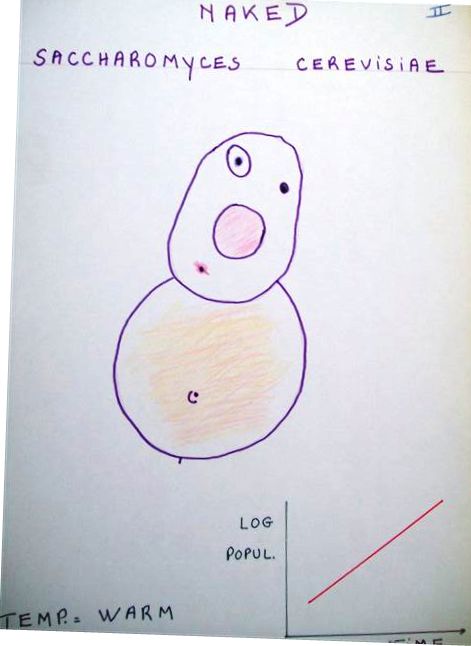
The Adventures of Little Sacc

Little Sacc was a happy little dude who liked to eat sugar and liked to make beer,

He was always polite and never rude, he liked to smile and he would never sneer.

But the story of Little Sacc isn’t so happy it’s true, his plight is somewhat tragic let me make that clear.

In all the happiness of making a drink, His real future just went down the sink.

But is his destiny so different from our very own?
Should we really smile on this fella whose death we condone?
Dying in his own excrement is no heroic fate,
But who are we to judge? Let me explain, just wait;


Continue reading “The Adventures of Little Sacc”

Sex and Gender

The female is softer in disposition, is more mischievous, less simple,
more impulsive, and more attentive to the nurture of the young;
the male, on the other hand, is more spirited, more savage,
more simple and less cunning. The traces of these characteristics are
more or less visible everywhere, but they are especially visible where
character is more developed, and most of all in man.

from Aristotle’s Historia Animalium,
in Barnes, J. Complete Works of Aristotle, Volume 1: The Revised Oxford Translation, Princeton University Press, 1984.


Continue reading “Sex and Gender”

Wednesday Round Up #28

This week it’s anthropology, the brain, HIV/AIDS, and some integrative interactions. Enjoy!

Anthropology

Paul Mason, Passion for Research and Music Combined
Our own Paul writes in the Macquarie Globe about his interdisciplinary interests. Includes this photo if you want to get a look at the man!

The Evolving Mind, Gaps in the Brain and Jack of Many Trades
Plasticity meets the Swiss army knife metaphor: ‘Any blade currently manifest, endowed in us by “nature,” is one nurture has extended.” For more, see a follow-up post on the creative confines of nature.

Mark Liberman, David Brooks, Social Psychologist
Language Log takes down Brooks’ facile “collectivist mentality” op-ed

Mark Liberman, One Question, Two Answers, Three Interpretations
Language Log turns from Brooks to David Nisbett’s research on US/East Asian differences, as well as James Flynn’s work on the social rise in IQ test scores

Science Daily, New Evidence Debunks ‘Stupid’ Neanderthal Myth
Recreating stone tools—were Neanderthal tools simpler to make? Not to modern hands at least

NPR, The Science of Getting a ‘Yes’
Social psychology and persuasion

Wray Herbert, Brrr, It’s Lonely Out There
Metaphor, meaning and basic perceptions

Clive Thompson, Brave New World of Digital Intimacy
NY Times Magazine on social networking and our changing forms of intimacy. Mind Hacks discusses the article here.

Brains

Neuronism, Dendritic Plasticity and ‘Input Feature Storage’
Synaptic plasticity meets computational neuroscience

Continue reading “Wednesday Round Up #28”