Freaky Franz

Franz de Waal, the renowed primatologist who has pushed reconciliation and morality alike into our primate past, answered some great questions about life, love, sex and happiness at the NY Times Freakonomics blog.

Here’s a taste about bonobos: “Bonobos often engage in sex with same-sex partners, but they’re not gay in that they also have sex with the opposite sex. They’re ‘bi.’ They seek sex often for social reasons, to reduce tensions, and to form friendships.”

And one of my favorite answers? Building from his work with capuchin monkeys and a sense of fairness, de Waal says, “This holds an important message for American society which is becoming less fair by the day. The Gini-index (which measures income inequality) keeps rising and is now more in line with that of third-world countries than of other industrialized nations. If monkeys already have trouble accepting income inequality, you can imagine what it does to us. It creates great tensions within a society, and we know that tensions affect psychological and physical well-being. Some attribute the dismal health statistics of Americans (now #42 in the world’s longevity ranking) to the social frictions of an unfair society.”

de Waal is also organizing a June 2009 conference called “The Primate Mind: Built to Connect with Other Minds.” My colleague Katherine MacKinnon, a primatologist herself, tipped me off about it. Here’s the blurb: “A high-level international meeting of cognitive ethologists, behavioral biologists, and neuroscientists that will address how the primate (including human) mind relates to other minds through empathy, imitation, and other social cognition.” The best part? It’s in Sicily! (Well, maybe June is hot there, but still, a great place for a conference.)

And, with a hattip to My Mind on Books, with recent coverage of Franz, here’s a video of his talk at the Autonomy, Singularity, Creativity conference.

Culture and Learning to Drink: What Age?


By: Micaela, Richard, Colleen, and Caitlin

In a 1983 landmark study conducted by Harvard psychiatrist Dr. George Valliant, it was found that young men who grew up in homes where alcohol was forbidden at the dinner table were seven times more likely to become alcoholics. The following year, the United States Congress voted to raise the legal drinking age to 21.

Responsibility is a lesson that all parents want to impart to their children. But because of this federal law forbidding alcohol consumption until the age of 21, most parents fail to teach their children responsible drinking habits. The question becomes, why is drinking different than any other life lesson?

In a New York Times article entitled, Can Sips at Home Prevent Binges? Eric Asimov confronts this very question. With two young boys who are fast approaching adolescence, Asimov discusses how difficult a decision he and his wife face. Should they slowly and responsibly introduce alcohol at the dinner table? Or should they, as the government mandates, forbid alcohol consumption altogether? The answer isn’t a simple one.

After the collapse of Prohibition, nearly all states instituted a minimum legal drinking age of 21. However, by the early 1970’s, twenty-nine states lowered the minimum legal drinking age to 18,19, or 20, while also extending other privileges, like the right to vote, to younger citizens.

In the late 1970s the national mood about teenage drinking underwent a drastic change because of several highly publicized studies that examined the correlation between the younger drinking age and motor vehicle crashes. Teenage alcohol abuse was deemed a devastating problem that corresponded to more traffic injuries and fatalities among America’s youth. The advent of these studies coupled with the nationwide campaign effort by Candy Lightner and her organization, MADD (Mothers Against Drunk Driving) primed the American people for major change in legislation.

Continue reading “Culture and Learning to Drink: What Age?”

It’s Our Fault: Denial, Disease and Addiction

By Danny Smith, Jimmy Wilson, Will Yeatman, Rachel Guerrera, and Mark Hinken

It’s our fault. But let’s spread the blame. The burden also lies on the shoulders of the educational community. And society itself. There is a serious misconception that exists. This misconception is that chemical dependence is not a disease. By not recognizing chemical dependence as a disease, society continues to hold harmful stereotypes about alcoholism and drug addiction.

The goal of this blog post is to address this major problem facing drug addicts and alcoholics. Society enables chemical dependence by causing denial. Denial helps create a vicious cycle that traps addicts. They tell themselves they do not have a problem and reject the idea to others that a problem exists.

However, denial is not just prevalent in cases of chemical reliance. It is common in everyday life, seen in issues concerning body image, gambling, sex and social interaction. In these cases, like addiction, denial stems from the social stigmas produced by society.

In today’s culture having a slim and fit body is heavily desired and expected. People who do not conform to the lofty standards set by models and Hollywood elite often feel abnormal and subject to ridicule. As a consequence anorexia, bulimia and dysmorphia have become more common among the current population. However, though these three eating disorders are labeled as real diseases, they are viewed as taboo in society. Therefore, people who suffer from anorexia often deny to others or even themselves that they really have a problem with a serious disease.

US society does not often pair diseases such as anorexia and alcoholism with diseases like cancer and Parkinson’s disease. Yet they are all chronic diseases. If the United States came to view chemical dependence with the same empathy as cancer, we could help eliminate the destructive low self-esteem and denial found in chemically reliant individuals.
Continue reading “It’s Our Fault: Denial, Disease and Addiction”

Understanding Brain Imaging


By Chris Dudley, Matt Gasperetti, Mikey Narvaez, and Sarah Walorski

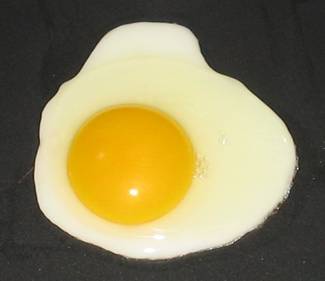
Do you remember the anti-drug public service announcement from the 1980s that showed an egg frying in a hot pan which represented your brain on drugs?

During the 1990s, brain imaging moved beyond fried eggs as computer technology allowed researchers to process large amounts of data required for functional imaging approaches. As a result, the PSA mentioned above no longer provides the most accurate analogy illustrating what happens to the brain when exposed to drugs.

Today, brain imaging research has helped create a sophisticated “disease model” of chemical dependence related to changes in the function of neurotransmitters and receptors in the brain. These circuits are responsible for reward processing, memory and learning, motivation and drive, in addition to control (Nora Volkow describes these circuits in a 2004 literature review).

This particular post focuses on the techniques used most commonly to study the brain’s role in addiction and other mental health problems. We will cover the principle behind each method, advantages and limitations of each, and provide an example of the results that can be obtained.

Beyond the Frying Pan: EEG and CT

Electroencephalography (EEG) and Computed tomography (CT) were two of the first methods used to study the brain. EEG utilizes electrodes placed on the scalp that measure electrical impulses, whereas CT creates a three-dimensional image of the brain with two-dimensional x-rays.

Continue reading “Understanding Brain Imaging”

Wednesday Round Up #10

Hierarchy

Anthropology.Net, The Social Brain Hypothesis: Are Our Brains Hardwired to Deal with Hierarchies?
Subconsciously processing dominance hierachies

Marc Dingman, Neuroimaging and the Social Ladder
Social hierarchy: can we see it in an fMRI?

Ira Flatow, Mapping the Social Brain
How the brain responds to social status

Constance Holder, A Head for Social Hierarchy
More on the work by Caroline Zink: superior players change our own thinking

Free Will

Cognitive Daily, Changing Belief in Free Will Can Cause Students to Cheat
No free will, more likely to cheat—if responsibility doesn’t count, who cares?

Foolish Green Ideas, Tight Fit
Very funny take on the “no free will” research

Brain Mechanisms

Chris/Mixing Memory, Emotion, Reason and Moral Judgment
Brain damage, moral scenarios, and general vs. personal rationality

Continue reading “Wednesday Round Up #10”