
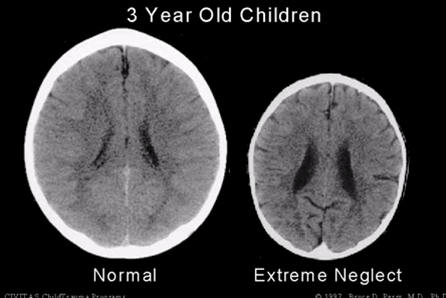
 The United States recently ranked 20th out of 21 rich countries in a UNICEF study of child well-being. The effects of childhood can last a life-time. Darcia Narvaez, writing with Jaak Panksepp and Allan Schore, argue in their post The Decline of Children and the Moral Sense:
American culture may be deviating increasingly from traditional social practices that emerged in our ancestral “environment of evolutionary adaptedness” (EEA). Empathy, the backbone of compassionate moral behavior, is decreasing…
In fact, the way we raise our children it seems that the USA is increasingly depriving them of the practices that lead to well being and a moral sense.
Together Narvaez and Panksepp are organizing a conference on Human Nature and Early Experience: Addressing the “Environment of Evolutionary Adaptedness”, where Schore will be one of the featured speakers.
Charles Darwin had high hopes for humanity. He pointed to the unique way that human evolution was driven in part by a “moral sense.” Its key evolutionary features are the social instincts, taking pleasure in the company of others, and feeling sympathy for fellow humans. It was promoted by intellectual abilities, such as memory for the past and the ability to contrast one’s desires with the intentions of others, leading to conscience development, and, after language acquisition, concern for the opinion of others and the community at large…
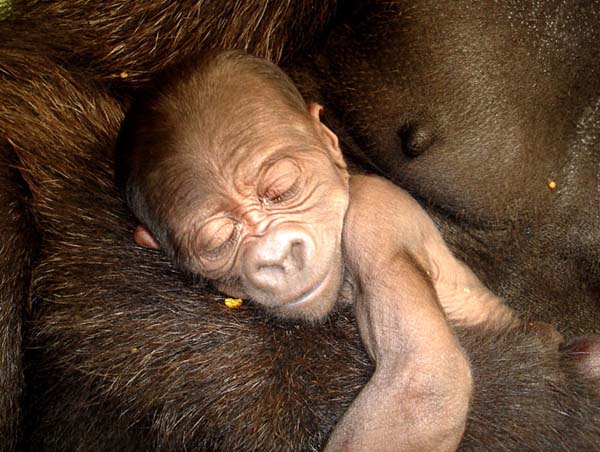
What Darwin considered the moral-engine of positive human thriving may be under threat. Ill-advised practices and beliefs have become normalized without much fanfare, such as the common use of infant formula, the isolation of infants in their own rooms, the belief that responding too quickly to a fussing baby is spoiling it, the placing of infants in impersonal daycare, and so on. We recommend that scientists and citizens step back from and reexamine these common culturally accepted practices and pay attention to potential life-time effects on people. It is an ethical issue.

 Neuroanthropology