
 By Jenny Heil, Brendan Durr, Jon Lopez, Mac Kenzie Nunez, Mark Flanagan
It’s 3:00 AM and you finally decide that it is safe to venture out to the 24-hour Wal-mart. Not totally safe, mind you, but at least almost no one will be there—less potential threats to worry about…
You get home, and sleep in your chair. Sleeping in the bed is too vulnerable…
You wake up, and hear a loud bang. Automatically, you know it’s a bomb, and grab the enemy by the throat…
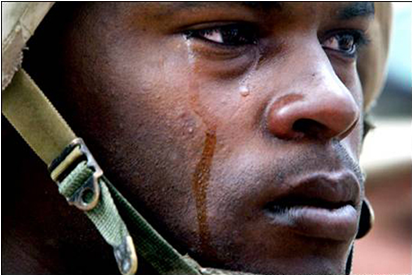
Veterans may leave the war zone, but they can never escape the war. For those who return from war with post traumatic stress disorder (PTSD), they constantly live as though their minds and bodies are still at war.
Fear of crowds and intense anxiousness around others. An inability to feel safe while sleeping. Flashbacks and nightmares, often triggered by sudden or loud noises. Always feeling like even the people closest to you are the enemy, poised for attack.
Veterans are living in this reality. As many as one in four veterans will experience PTSD, according to Dr. Michael Sheehan, a psychologist specializing in PTSD. PTSD is a disorder that can happen as a result of many kinds of trauma, and is especially prevalent in veterans of war.
People with PTSD may constantly relive the trauma of war (through flashbacks and nightmares), may try to avoid places and events that would cause memories, and may be easily startled and constantly feel on edge.
While PTSD is often not recognized as the same as other battle wounds, the experience of veterans verifies that PTSD is real. We hope that the information that we provide here will help you understand the experience of PTSD.
If you recognize the symptoms of PTSD as ones you experience yourself, please consider seeking help by joining a support group for veterans or talking to a psychologist or physician.
Our Research
We are a group of five Notre Dame undergraduate students who, over the course of a semester, have interacted with a group of veterans with PTSD in an attempt to better understand the experience of PTSD.
Continue reading “Post-Traumatic Stress Disorder: Getting Help Early to Feeling Welcomed”
 Neuroanthropology